
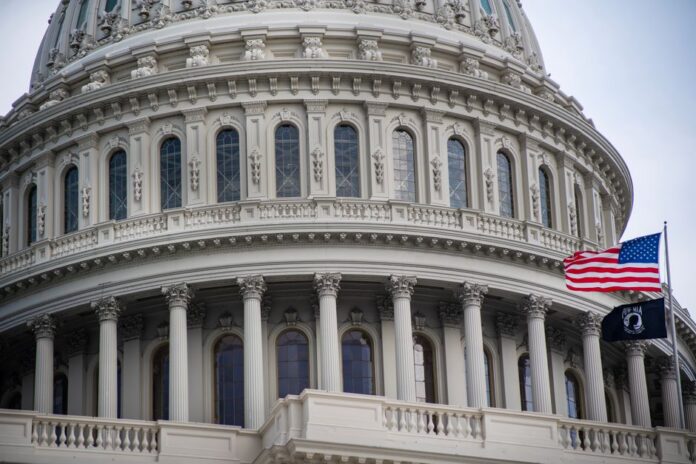
Photo: Ramaz Bluashvili / Pexels
By Political Watch Newsroom, Politics Desk — Published October 15, 2026
Table of Contents
- Key Takeaways
- The Background & Context
- Why This Matters
- Reactions & Analysis
- What Happens Next
- Frequently Asked Questions
The United States is confronting a moment of reckoning. We are seeing the extent of American decay across multiple fronts—from declining life expectancy to fraying political institutions. The evidence is mounting that the nation faces systemic challenges that transcend any single election cycle or legislative session. What was once dismissed as temporary turbulence now appears to be a deeper erosion of the foundations that made America a global exemplar of democratic governance and public health.
This convergence of crises—health, political, and institutional—demands attention from voters, policymakers, and citizens alike. The pandemic exposed vulnerabilities that experts now recognize extend far beyond COVID-19. Meanwhile, the political landscape has grown increasingly fractious, with campaign rhetoric and congressional gridlock reflecting deeper societal divisions. Understanding the scope of these interconnected problems is essential for anyone who cares about the country’s future trajectory.
The data tells a sobering story. American life expectancy has dropped, and research indicates the pandemic was merely one factor among many. Political dysfunction has become so normalized that it threatens the basic functioning of government. These are not abstract academic concerns—they affect real families, real communities, and the daily lives of millions of Americans who deserve better from their institutions.
Key Takeaways
- Multiple indicators suggest America is experiencing institutional and social decline that predates recent political upheavals
- Life expectancy in the United States has fallen, with causes extending beyond the COVID-19 pandemic according to university research
- Political dysfunction and leadership failures are contributing to a broader sense of national deterioration
- The convergence of health crises, political polarization, and institutional weakness presents unprecedented challenges for governance
- Citizens face consequences in their daily lives, from healthcare access to confidence in democratic processes
- Experts and analysts are increasingly sounding alarms about the cumulative effect of these trends on American power and prosperity
The Background & Context
For decades, Americans took certain things for granted. Life expectancy would continue rising. Democratic institutions would endure. The country would adapt and overcome challenges as it always had. That confidence has been shaken.
The decline in life expectancy represents a particularly stark reversal. According to research from the University of North Carolina at Chapel Hill, the drop was caused by more than the pandemic. This finding challenges the comfortable narrative that once COVID-19 receded, health outcomes would bounce back to previous trajectories. Instead, the data suggests deeper problems in the American healthcare system, social safety net, and public health infrastructure.
Simultaneously, the political system has shown increasing signs of strain. Congressional dysfunction has become routine, with basic functions like passing budgets and confirming appointments turning into protracted battles. Campaign seasons have grown longer and more expensive, yet voter satisfaction with their options has declined. Legislation that once enjoyed bipartisan support now founders in partisan gridlock.
The Trump era, as noted by political observers, has crystallized many of these trends. Whether one views the former president as a symptom or a cause, his political rise coincided with—and arguably accelerated—the erosion of institutional norms and civic discourse. Elections have become existential battles rather than routine democratic exercises. The peaceful transfer of power, once taken for granted, became a subject of genuine concern.
But the problems run deeper than any single political figure. Income inequality has widened. Infrastructure has crumbled. Educational outcomes have stagnated or declined in international comparisons. The social fabric has frayed, with declining trust in institutions, media, and even neighbors. These trends were visible before the pandemic and have only intensified since.
Why This Matters
The stakes could not be higher for ordinary Americans. When life expectancy falls, it means people are dying younger than they should. Families lose parents, grandparents, siblings. Communities lose experienced workers, volunteers, and leaders. The economic costs are staggering, but the human costs are incalculable.
Political decay has equally tangible consequences. When Congress cannot function effectively, needed legislation stalls. Infrastructure projects languish. Social programs fail to adapt to changing needs. Veterans wait for benefits. Small businesses struggle with outdated regulations. Citizens lose faith that their votes matter or that government can solve problems.
For voters trying to make informed decisions, the landscape has become bewildering. Campaign promises seem increasingly disconnected from governing reality. The 24-hour news cycle and social media amplify outrage while obscuring substantive policy debates. Citizens are left wondering whom to trust and how to hold their representatives accountable.
The international implications matter too. American decline affects global stability. Allies question whether the United States can be relied upon. Adversaries sense weakness and opportunity. The post-World War II international order, built largely on American leadership and credibility, faces unprecedented strain. Trade relationships, security alliances, and diplomatic initiatives all depend on a functioning, credible American government.
Young Americans face particularly acute consequences. They inherit mounting national debt, aging infrastructure, and political institutions that seem incapable of addressing climate change, healthcare costs, or student loan burdens. The American Dream—the promise that each generation would do better than the last—has become increasingly elusive for millions.
Reactions & Analysis
Political analysts and public health experts have sounded increasingly urgent warnings. The research from the University of North Carolina highlighting non-pandemic causes of life expectancy decline has prompted calls for comprehensive healthcare reform and greater investment in social determinants of health. These include addressing poverty, improving access to mental health services, and combating the opioid epidemic that has devastated communities across the country.
Opinion leaders across the political spectrum have weighed in on the broader decline narrative. Some see it as inevitable given demographic shifts and the rise of competing powers. Others argue it represents a failure of leadership and political will. The debate itself reflects deeper disagreements about what America is and should be.
Foreign policy experts have expressed particular concern about how domestic dysfunction undermines American influence abroad. When the United States cannot maintain its own infrastructure, address its own health crises, or conduct peaceful elections without controversy, it loses moral authority to lecture other nations about governance. This credibility gap has real consequences for diplomacy and international cooperation.
Congressional leaders, for their part, often acknowledge the problems in abstract terms while contributing to them in practice. Bipartisan rhetoric about “working together” and “putting country first” rarely translates into legislative action. The incentive structures of modern politics—gerrymandered districts, primary challenges from ideological extremes, constant fundraising pressures—reward partisan combat over problem-solving.
Citizens themselves are divided in their reactions. Some remain optimistic about American resilience and capacity for renewal. Others have grown cynical or disengaged entirely. Voter turnout patterns, trust surveys, and civic participation rates all tell a story of a public increasingly uncertain about their country’s direction and their own ability to influence it.
What Happens Next
The trajectory of American decline is not inevitable, but reversing it will require more than incremental adjustments. The interconnected nature of the challenges—health, political, economic, social—demands comprehensive responses that current institutions seem ill-equipped to deliver.
Healthcare reform will need to address not just insurance coverage but the underlying factors driving poor health outcomes: poverty, environmental toxins, food deserts, mental health crises, and addiction. This requires sustained investment and political will that transcends election cycles.
Political renewal demands more than personnel changes. The system itself—campaign finance, gerrymandering, Senate rules, the electoral college—may need fundamental reform. But such reforms require the very political consensus that current dysfunction makes nearly impossible. This creates a catch-22 that will be difficult to escape.
Economic policy will need to grapple with inequality, automation, and globalization in ways that provide genuine opportunity for working-class Americans, not just stock market gains for investors. Trade policy, tax policy, education policy, and labor policy all need reconsideration in light of 21st-century realities.
Perhaps most fundamentally, Americans will need to rediscover some shared sense of national identity and common purpose. Without it, every policy debate becomes an existential battle between incompatible visions of the country. With it, compromise and problem-solving become possible again.
The 2024 election cycle and beyond will test whether the political system can produce leaders capable of addressing these challenges. But elections alone cannot solve problems this deep. Citizens, community organizations, businesses, and civil society all have roles to play in rebuilding American institutions and renewing American purpose.
Frequently Asked Questions
What is causing American life expectancy to decline?
Research from the University of North Carolina at Chapel Hill indicates that the decline in U.S. life expectancy was caused by more than just the pandemic. Contributing factors include the opioid epidemic, rising suicide rates, chronic diseases linked to poverty and inequality, and systemic failures in the healthcare system. These problems predated COVID-19 and continue to affect mortality rates across demographic groups.
How does political dysfunction contribute to national decline?
When Congress cannot pass legislation, infrastructure deteriorates, social problems go unaddressed, and citizens lose faith in democratic institutions. Political gridlock prevents necessary investments in healthcare, education, and public services. Campaign-focused politics prioritizes short-term messaging over long-term problem-solving, creating a cycle where governance becomes increasingly difficult and public trust continues to erode.
Is American decline reversible?
History shows that nations can reverse decline through leadership, institutional reform, and renewed civic commitment. However, reversal is not automatic or inevitable. It requires sustained effort across multiple domains—political, economic, social, and cultural. The United States has overcome serious challenges before, but success depends on citizens and leaders choosing to prioritize national renewal over partisan advantage.
How does American decline affect ordinary citizens?
The effects are concrete and personal. Declining life expectancy means losing loved ones prematurely. Political dysfunction means roads and bridges fall into disrepair, schools lack resources, and healthcare remains unaffordable for millions. Economic stagnation means wages fail to keep pace with costs. Social fragmentation means communities become less cohesive and supportive. These are not abstract trends but daily realities affecting families across the country.
The extent of American decay is now undeniable. What remains to be seen is whether the country possesses the collective will to confront these challenges honestly and work toward genuine solutions. The answer will shape not just American lives but the trajectory of the 21st century itself.