
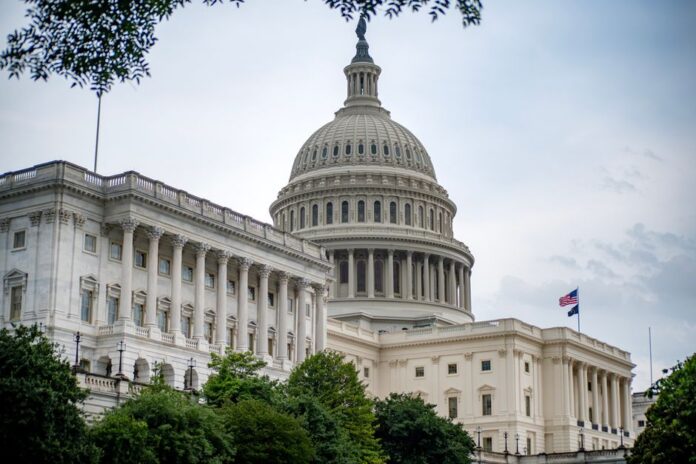
Senate Confirmation Hearings: How Nominees Are Vetted
By Newsroom, Congressional Affairs Desk — Published August 3, 2026
Table of Contents
- Understanding Senate Confirmation Hearings and Constitutional Authority
- The Vetting Process Before the Public Hearing
- The Public Hearing: Theater and Substance
- After the Hearing: Committee Votes and Floor Action
- When Nominations Fail
- Frequently Asked Questions
When a president nominates someone to lead a federal agency, serve on the Supreme Court, or fill another high-level position, the appointment doesn’t become official until the Senate weighs in. Senate confirmation hearings represent one of the most visible exercises of legislative branch powers, a constitutional duty that forces nominees to defend their records, explain their philosophies, and answer pointed questions from lawmakers and representatives who hold the power to approve or reject them. These proceedings can stretch over days, generate national headlines, and occasionally derail careers before they begin.
The process sits at the intersection of executive ambition and congressional oversight, a check-and-balance mechanism the framers embedded in the Constitution to prevent any single branch from accumulating unchecked authority. Understanding how these hearings actually work—who gets vetted, what happens behind closed doors, and why some nominees sail through while others face brutal interrogations—reveals much about how power flows through the bicameral legislature and across Capitol Hill more broadly.
Understanding Senate Confirmation Hearings and Constitutional Authority
Article II of the Constitution grants the president authority to nominate judges, cabinet secretaries, and other officers, but requires the advice and consent of the Senate. That phrase—advice and consent—has evolved into a multi-stage gauntlet. The Senate doesn’t vote on nominees as a whole body first. Instead, congressional committees with jurisdiction over specific agencies or courts take the lead, conducting hearings, gathering testimony, and issuing recommendations before the full chamber weighs in.
Not every federal job requires Senate approval. Thousands of positions are filled by presidential appointment alone, or by agency heads exercising delegated authority. But roughly 1,200 positions demand Senate confirmation, including all cabinet members, Supreme Court justices, federal appellate and district judges, ambassadors, and the heads of major regulatory agencies. The stakes vary: a cabinet secretary shapes national policy, while a district judge influences lives through individual rulings for decades.
The Senate Judiciary Committee handles judicial nominees and the attorney general. Armed Services reviews defense secretary picks. Banking Committee examines Federal Reserve nominees. Each congressional committee operates with its own culture, and the chair—always from the majority party—sets the tone. Some chairs schedule hearings quickly; others slow-walk nominations they dislike, exploiting the calendar as a weapon.
The Vetting Process Before the Public Hearing
By the time a nominee sits at the witness table facing senators, weeks or months of scrutiny have already occurred. The White House counsel’s office typically conducts preliminary vetting, reviewing a candidate’s writings, speeches, financial disclosures, and potential conflicts of interest. The FBI performs background checks, interviewing associates and digging into personal history. Nominees complete exhaustive questionnaires—some run hundreds of pages—detailing every job, every publication, every organization they’ve joined.
Committee staff from both parties review these materials, flagging potential problems. Majority staff look for strengths to highlight; minority staff hunt for vulnerabilities. This pre-hearing phase determines whether a nomination will be contentious or routine. A nominee with a thin paper trail and bipartisan support may face a perfunctory hearing. Someone with a controversial record, or nominated for a particularly sensitive post during a divided congressional session, can expect a grilling.
Nominees also make courtesy calls to senators, especially committee members. These private meetings allow lawmakers to preview questions, gauge temperament, and extract commitments. A senator might ask a judicial nominee about their views on precedent, or press an agency head about enforcement priorities. What’s said in these sessions rarely becomes public, but they can determine whether a senator becomes an ally or an adversary.
What Committees Look For
Senators evaluate nominees through several lenses, and priorities shift depending on the position and political moment:
- Qualifications and experience: Does the nominee have relevant expertise, or is this a patronage reward? A seasoned prosecutor nominated for a judgeship faces different scrutiny than a campaign donor tapped to lead an agency.
- Ideological alignment: Particularly for judicial nominees, senators probe legal philosophy. How does the nominee interpret the Constitution? What role should courts play in policymaking?
- Ethical concerns: Financial conflicts, past misconduct, or controversial statements can sink a nomination. Senators demand transparency about potential conflicts and expect nominees to recuse themselves when appropriate.
- Political loyalty: Majority-party senators generally support their president’s nominees, viewing confirmation as a partisan obligation. Minority senators often use hearings to score political points, knowing they lack votes to block confirmation but wanting to build a public record.
The Public Hearing: Theater and Substance
Confirmation hearings follow a predictable choreography. The committee chair gavels the session open, often delivering an opening statement praising or critiquing the nominee. The ranking minority member speaks next, framing the hearing from their party’s perspective. Other senators may offer brief remarks. Then the nominee is formally introduced—often by home-state senators, a courtesy that signals support—and sworn in.
The nominee reads an opening statement, typically thanking the president, praising the institution they’ve been tapped to lead, and acknowledging family in attendance. Then questioning begins. Senators take turns, usually in order of seniority, with time limits enforced by the chair. Each senator gets five or seven minutes in the first round; additional rounds may follow.
Questioning styles vary wildly. Some senators engage in genuine dialogue, probing how a nominee would handle hypothetical scenarios. Others deliver speeches disguised as questions, using their time to grandstand for cameras. Still others attempt gotcha moments, reading old quotes back to nominees and demanding explanations. Judicial nominees often decline to discuss specific cases that might come before them, a dodge that frustrates senators but has become standard practice.
Nominees walk a tightrope. They must appear knowledgeable without seeming arrogant, firm in their principles without appearing ideological, and respectful of senatorial prerogatives without being obsequious. A single gaffe—a tone-deaf answer, a perceived lie, an angry outburst—can derail a nomination. Conversely, a poised performance under hostile questioning can win over skeptics.
After the Hearing: Committee Votes and Floor Action
Once hearings conclude, the committee votes on whether to report the nomination favorably to the full Senate. A majority vote sends the nominee forward, though committees can also report a nomination without recommendation, or even unfavorably. In rare cases, a tie vote means the nomination advances without a positive recommendation. Committee approval isn’t required for a floor vote—the full Senate can discharge a nomination from committee—but it’s the standard path.
The Senate majority leader controls the floor schedule and decides when to bring nominations up for a vote. Filibuster and procedural tactics once allowed minorities to block nominees by extending debate indefinitely, requiring 60 votes to end discussion. Rule changes over the past two decades have lowered that threshold: executive branch nominees now need only a simple majority to overcome procedural hurdles, as do judges. This shift has made confirmation easier for presidents whose party controls the Senate, and harder for nominees to attract bipartisan support.
Floor debates on nominations are typically brief compared to Capitol Hill legislation battles. Senators may speak for or against, but minds are usually made up. The final vote often breaks along party lines, though some nominees—especially for non-controversial posts or lower courts—still win lopsided approval. Once confirmed, the nominee is sworn in and assumes office, their appointment complete.
When Nominations Fail
Not every nominee makes it through. Some withdraw before hearings, recognizing they lack support or unwilling to endure public scrutiny. Others are voted down in committee or on the floor. Still others languish without action, their nominations expiring at the end of a congressional session and requiring re-nomination if the president wants to try again.
Failed nominations often reflect deeper political currents. A president weakened by scandal or electoral losses struggles to confirm controversial picks. A Senate from the opposing party uses confirmation power as leverage, blocking nominees to extract concessions or simply to deny the president victories. Judicial vacancies, in particular, have become battlegrounds, with each party accusing the other of unprecedented obstruction.
Frequently Asked Questions
Can the House of Representatives votes affect Senate confirmations?
No. The Constitution assigns confirmation power exclusively to the Senate. The House of Representatives votes on legislation and impeachment, but has no formal role in approving presidential nominees. However, House members may publicly support or oppose nominees, influencing the broader political environment in which Senate confirmation hearings occur.
How long does the confirmation process typically take?
The timeline varies dramatically. Uncontroversial nominees for lower-level positions might be confirmed within weeks. Cabinet members are often approved shortly after a new president takes office, as both parties recognize the need for a functioning government. Judicial nominees, especially for appellate courts or the Supreme Court, can wait months or even over a year. Delays stem from committee schedules, political disputes, and the Senate’s packed legislative calendar.
What happens if the Senate is split evenly between parties?
When the Senate divides 50-50, the vice president casts tie-breaking votes on the floor. This applies to final confirmation votes, giving the president’s party effective control. Committee votes are trickier: if committees split evenly, nominations can still be discharged to the floor through procedural maneuvers, though the process becomes more cumbersome. Power-sharing agreements between party leaders typically govern committee ratios and procedures during tied Senates.
Do senators always vote along party lines on confirmations?
Not always, though party loyalty has grown stronger in recent decades. Senators sometimes cross party lines when a nominee has strong home-state ties, exceptional qualifications, or when voting against their party carries little political risk. Conversely, senators may defect from their own party if a nominee is deeply unpopular in their state or violates their core principles. These defections are relatively rare but can prove decisive in close votes.
Senate confirmation hearings remain a vital mechanism for accountability, forcing those who would wield government power to answer for their records and intentions. The process is imperfect, often partisan, and occasionally theatrical. But it ensures that no president can staff the government alone, and that the legislative branch retains meaningful oversight over who interprets our laws and executes our policies. In a system built on checks and balances, that tension between branches isn’t a flaw—it’s the whole point.