
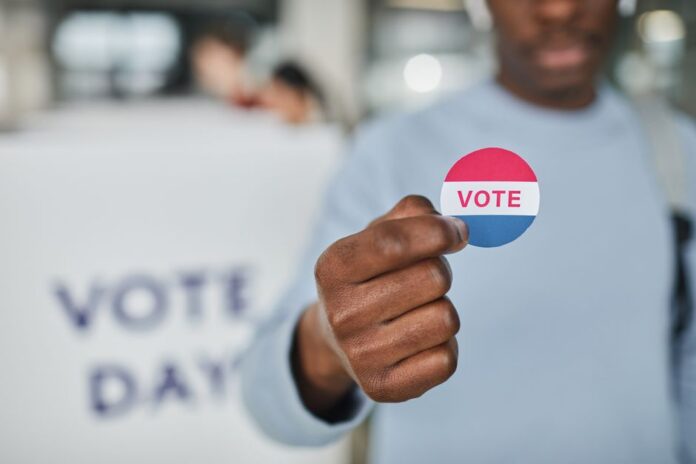
Photo: Edmond Dantès / Pexels
By Political Watch Newsroom, Politics Desk — Published October 5, 2026
Table of Contents
- Key Takeaways
- The Background & Context
- Why This Matters
- Reactions & Analysis
- What Happens Next
- Frequently Asked Questions
The Democratic Party stands on the threshold of a historic achievement in American politics. Party leaders project they will reach a symbolic milestone: seating 100 women in the U.S. House of Representatives. This watershed moment reflects decades of organizing, recruitment, and shifting electoral dynamics that have reshaped the face of Congress and the nature of legislative debate in Washington.
The projection comes as Democrats project party leadership looks toward upcoming elections with renewed focus on candidate diversity and gender representation. For a chamber that remained overwhelmingly male for most of its 235-year history, the arrival of a three-digit contingent of women from a single party marks a profound transformation in American representative democracy.
But numbers alone don’t tell the full story. The milestone raises fundamental questions about how Congress functions, what issues gain traction in legislation, and whether descriptive representation translates into substantive policy change for American families.
Key Takeaways
- Democratic Party officials project the party will seat 100 women in the House of Representatives, a first for any American political party in congressional history.
- The milestone reflects long-term trends in candidate recruitment, campaign infrastructure, and voter preferences that have accelerated women’s representation in recent election cycles.
- Historical precedents show that midterm elections have repeatedly served as inflection points that reshaped American politics and congressional composition.
- The achievement comes amid ongoing debates about representation, legislative priorities, and the role of identity in American electoral politics.
- Future election cycles, including the 2026 midterms, will test whether this milestone represents a permanent shift or a temporary peak in women’s congressional representation.
- The projected achievement positions Democrats significantly ahead of Republicans in gender diversity within their congressional caucus.
The Background & Context
Women’s representation in Congress has followed a slow, uneven trajectory since Jeannette Rankin of Montana became the first woman elected to the House in 1916. For decades, women remained a tiny minority on Capitol Hill, often relegated to ceremonial roles or dismissed as novelties rather than serious legislators.
The pace of change accelerated dramatically in recent decades. The 1992 elections, dubbed the “Year of the Woman,” saw a significant jump in female representation after the Clarence Thomas confirmation hearings galvanized women voters and candidates. But even that breakthrough left women far short of proportional representation in a chamber that makes laws affecting the entire population.
The Democratic Party has invested heavily in candidate recruitment and campaign support for women over the past decade. Organizations like EMILY’s List and other progressive groups built infrastructure to identify, train, and fund female candidates. Primary voters increasingly embraced these candidates, and general election results followed suit.
According to reports examining historical patterns, midterm elections have repeatedly served as pivotal moments that altered the course of American governance. These off-year contests, when presidential politics take a backseat, often become referendums on broader social and political trends. The composition of Congress emerging from midterms can determine whether ambitious legislation lives or dies, whether oversight intensifies or withers, and whether new voices gain platforms or remain marginalized.
The projected 100-woman milestone didn’t emerge in a vacuum. It reflects demographic shifts, generational change, and evolving attitudes about gender and leadership. Younger voters express fewer reservations about women in executive and legislative roles. Districts that once seemed inhospitable to female candidates have elected them in growing numbers.
Why This Matters
Raw numbers matter in Congress. They determine committee assignments, leadership positions, and the ability to shape legislative agendas. A caucus of 100 women within the Democratic conference wields significant collective power to prioritize issues, negotiate with leadership, and influence which bills reach the floor.
Research on legislative behavior suggests that women legislators, on average, sponsor more bills related to healthcare, education, childcare, and family economic security. They bring different life experiences to policy debates—experiences with pregnancy discrimination, wage gaps, caregiving responsibilities, and workplace harassment. Those perspectives can illuminate blind spots in legislation drafted without diverse input.
For American families, the milestone could translate into more robust debate on issues that directly affect household economics and quality of life. Paid family leave, affordable childcare, maternal mortality, and reproductive healthcare often receive more sustained attention when women hold substantial numbers in the legislative chamber.
The political implications extend beyond policy. Representation matters for democratic legitimacy. When citizens see people who look like them and share their experiences in positions of power, it strengthens faith in representative institutions. Young girls watching Congress see expanded possibilities for their own futures. That inspiration has tangible effects on political participation and civic engagement.
The milestone also sharpens partisan contrasts. If Democrats reach 100 women while Republicans lag significantly behind, it reinforces narratives about which party welcomes diverse candidates and which remains anchored to traditional power structures. Those narratives influence voter perceptions, particularly among suburban women who have trended Democratic in recent cycles.
Campaign dynamics shift when women comprise a critical mass rather than a token presence. Female candidates can form networks, share resources, and amplify each other’s messages. They face less pressure to represent all women and gain more freedom to stake out individual positions. That normalization of women’s political leadership ultimately benefits democracy regardless of partisan affiliation.
Reactions & Analysis
Democratic Party strategists view the projected milestone as validation of long-term investments in candidate development and voter outreach. The achievement demonstrates that systematic recruitment and support can overcome structural barriers that historically limited women’s access to congressional seats.
Political analysts note that the milestone arrives during a period of intense polarization and electoral volatility. As reports examining future election cycles indicate, the 2026 midterms and beyond will test whether Democrats can maintain or expand women’s representation amid shifting political winds. Historical precedents show that midterm elections can dramatically reshape congressional composition, sometimes reversing gains made in previous cycles.
Observers focused on electoral integrity and democratic institutions emphasize that representation gains mean little if election systems themselves face erosion. Issues like gerrymandering, voter access, and campaign finance remain central to whether diverse candidates can compete on level playing fields. The milestone occurs against a backdrop of ongoing debates about redistricting, voting rights legislation, and the mechanics of American democracy.
Some commentators caution against treating the milestone as an endpoint rather than a waypoint. Women still constitute less than half of the Democratic House caucus, even with 100 members. True parity remains distant. Other underrepresented groups—racial minorities, LGBTQ individuals, working-class Americans—continue seeking greater presence in Congress.
Republican responses to the Democratic milestone have varied. Some GOP leaders tout their own female candidates and officeholders, arguing that conservative women offer distinct perspectives that differ from their Democratic counterparts. Others dismiss identity-based milestones as distractions from policy debates. The contrast in approaches reflects broader partisan divisions over the role of diversity and representation in politics.
What Happens Next
The immediate question is whether Democrats can sustain and build on the milestone. Incumbency provides advantages, but electoral maps, national political moods, and individual campaign dynamics all influence whether the 100-woman benchmark becomes a floor or a ceiling.
Looking ahead to the 2026 midterm elections, analysts will watch several key factors. Can Democrats defend seats in competitive districts where women currently serve? Will Republican primary voters nominate more women, narrowing the representation gap between parties? How will redistricting battles affect districts currently held by Democratic women?
The milestone may also influence legislative strategy. A 100-member contingent of women could form a powerful voting bloc on issues where they share common ground across ideological lines within the party. That potential for collective action could push leadership to prioritize certain bills or resist compromises that undermine key priorities.
Longer term, the milestone sets a new baseline for expectations. Future Democratic leaders will face pressure to maintain or exceed current representation levels. Recruitment efforts will intensify. Primary voters will weigh gender diversity alongside other candidate qualities. The normalization of women’s congressional service will make backsliding more politically costly.
For the Republican Party, the Democratic milestone creates both pressure and opportunity. Pressure to demonstrate that conservatism and gender diversity aren’t incompatible. Opportunity to recruit women who can appeal to suburban voters while maintaining party orthodoxy on key issues. How Republicans respond will shape the broader trajectory of women’s representation in Congress.
The milestone also invites scrutiny of other representation gaps. If one party can reach 100 women in the House, why can’t Congress as a whole better reflect America’s racial, ethnic, and socioeconomic diversity? The achievement raises the bar for what’s possible while highlighting how far representative democracy still has to travel.
Frequently Asked Questions
When did the Democratic Party first project reaching 100 women in the House?
Democratic Party officials have recently projected that they will reach the milestone of seating 100 women in the U.S. House of Representatives, marking the first time any American political party has achieved this level of female representation in Congress. The projection reflects gains made over multiple election cycles and anticipates outcomes from upcoming contests.
How does this milestone compare to historical women’s representation in Congress?
The projected 100-woman milestone represents a dramatic increase from historical norms. For most of Congress’s history, women numbered in the single digits or low double digits in the House. The acceleration of women’s representation has occurred primarily over the past three decades, with particularly significant jumps following certain election cycles that energized female candidates and voters.
What role do midterm elections play in changing congressional composition?
According to historical analysis, midterm elections have repeatedly served as pivotal moments that transformed American politics and reshaped congressional membership. These contests, held between presidential elections, often reflect shifting public sentiments and can produce dramatic changes in party control and the demographic composition of Congress, making them critical opportunities for advancing or reversing representation gains.
Will the 2026 midterms affect women’s representation in Congress?
The 2026 midterm elections will be crucial for determining whether the 100-woman milestone represents a sustainable achievement or a temporary peak. Electoral dynamics, redistricting outcomes, candidate recruitment by both parties, and national political trends will all influence whether Democrats maintain or expand women’s representation and whether Republicans narrow the gender gap within their own caucus.
As Democrats approach this historic threshold, the milestone serves as both celebration and challenge. It validates decades of work to expand women’s access to political power while underscoring how recently such representation remained unthinkable. The true measure of success won’t be reaching 100, but whether that number becomes a foundation for continued progress toward a Congress that truly mirrors the America it serves.