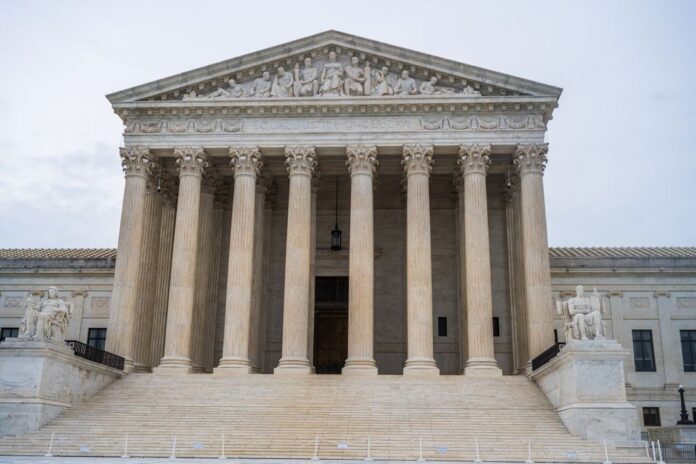
Photo: Guohua Song / Pexels
By Political Watch Newsroom, National Desk — Published October 27, 2026
Table of Contents
- Justice Dept. charges: Key Takeaways
- The Background & Context
- Why This Matters
- Reactions & Analysis
- What Happens Next
- Frequently Asked Questions
The Justice Department has charged James Comey for a third time, marking an extraordinary escalation in the Trump administration’s legal pursuit of the former FBI director who once led the investigation into Russian interference in the 2016 election. The charges represent an unprecedented move against a former law enforcement chief who became one of the most polarizing figures in recent American political history.
Comey, who was fired by President Trump in 2017, now faces his third set of charges from federal prosecutors. The repeated legal actions raise serious questions about prosecutorial independence and the potential weaponization of the justice system against political adversaries. For millions of Americans watching this unfold, the case touches fundamental concerns about accountability, the rule of law, and the boundaries of executive power.
This development comes at a moment when public trust in federal institutions remains fragile. The spectacle of a sitting administration pursuing criminal charges against a former top law enforcement official—particularly one who investigated that same administration—has ignited fierce debate across the political spectrum about whether justice is being served or perverted.
Justice Dept. charges: Key Takeaways
- The Justice Department has filed charges against former FBI Director James Comey for the third time under the Trump administration
- Comey previously served as FBI director from 2013 until his controversial firing by President Trump in May 2017
- The repeated prosecutions mark an unusual pattern of legal action against a former federal law enforcement leader
- The charges come years after Comey oversaw investigations into Russian election interference and potential Trump campaign connections
- Legal experts and political observers are divided on whether the prosecutions represent legitimate accountability or political retribution
- The case raises broader questions about the independence of the Justice Department from White House influence
The Background & Context
James Comey’s journey from respected law enforcement veteran to lightning rod for controversy spans decades. Before becoming FBI director in 2013, he served as Deputy Attorney General under President George W. Bush, where he famously rushed to a hospital bedside to prevent what he believed would be an unlawful surveillance program. That moment cemented his reputation as a principled institutionalist willing to stand against political pressure.
His tenure as FBI director, however, became inextricably linked to the 2016 presidential election. Comey’s decision to publicly discuss the investigation into Hillary Clinton’s private email server—including a controversial statement just days before the election—drew fierce criticism from Democrats who believed it cost Clinton the presidency. Republicans initially praised his actions.
The tables turned dramatically after Trump took office. When Comey refused to pledge personal loyalty to the new president and continued investigating potential ties between the Trump campaign and Russia, the relationship soured. Trump fired Comey in May 2017, initially citing his handling of the Clinton investigation but later suggesting the Russia probe played a role. That dismissal prompted the appointment of Special Counsel Robert Mueller.
Comey subsequently became a vocal Trump critic, writing a bestselling memoir and giving numerous media interviews in which he questioned the president’s fitness for office. He described Trump as “morally unfit” to be president and compared his leadership style to that of a mob boss. These public statements transformed Comey from government official to political combatant in the eyes of many Trump supporters.
The first two sets of charges against Comey emerged in earlier phases of the Trump administration’s tenure. Each prosecution fueled allegations that the Justice Department was being directed to pursue the president’s enemies. Career prosecutors and former Justice Department officials have expressed concern about the erosion of traditional independence that has long insulated federal law enforcement from partisan interference.
Why This Matters
For ordinary Americans, this case transcends the personal fate of one former government official. It strikes at the heart of how democratic institutions function—or fail to function—in a polarized era.
The principle of prosecutorial independence exists to ensure that criminal charges are based on evidence and law, not political convenience. When citizens lose confidence that the justice system operates fairly, regardless of political affiliation, the entire framework of accountability crumbles. If prosecutors can be directed to charge political opponents, then no one who crosses those in power is safe.
Conversely, the Trump administration and its supporters argue that high-ranking officials must face consequences for alleged misconduct. They contend that Comey abused his position, leaked sensitive information, and violated protocols—charges that, if true, would warrant prosecution regardless of political considerations. From this perspective, failing to charge Comey would represent a double standard where the powerful escape accountability.
The repeated nature of the charges—this being the third time—adds another dimension. Multiple prosecutions can suggest either that serious wrongdoing has been uncovered across different areas, or that prosecutors are searching for charges that will stick. The pattern raises questions about whether each case stands on its own merits or whether the cumulative effect is designed to punish and intimidate.
For federal employees across the government, the Comey prosecutions send a chilling message. Career officials may think twice before making decisions that could anger political appointees, knowing they might face legal jeopardy years later when political winds shift. This could fundamentally alter how government functions, replacing independent judgment with risk-averse deference to political leadership.
Reactions & Analysis
The legal and political establishments remain deeply divided over the Comey charges. Civil liberties organizations have expressed alarm about what they characterize as the politicization of federal law enforcement. Former Justice Department officials from both Republican and Democratic administrations have warned that using criminal prosecution as a tool of political warfare threatens constitutional norms that have endured for generations.
Legal scholars note that while attorneys general technically serve at the pleasure of the president, a long-standing tradition has maintained distance between the White House and specific prosecution decisions. This norm, though not legally binding, has been considered essential to preventing the kind of authoritarian abuse seen in other countries where leaders routinely jail political opponents.
Trump supporters, however, view the prosecution differently. They argue that the Russia investigation was itself a political witch hunt based on flimsy evidence, and that Comey played a central role in perpetuating what they see as a hoax designed to undermine a democratically elected president. From this vantage point, holding Comey accountable represents justice delayed, not justice denied.
The Supreme Court has not yet weighed in directly on this case, though its decisions on executive power and prosecutorial discretion may ultimately shape how such situations are evaluated. The federal judiciary will likely play a crucial role in determining whether the charges against Comey can proceed and whether they meet constitutional standards for fairness and due process.
Congressional reactions have largely fallen along partisan lines, with Republicans generally supporting the prosecution and Democrats condemning it as authoritarian overreach. This partisan split reflects the broader polarization that makes it difficult for Americans to agree on basic facts about what constitutes legitimate law enforcement versus political persecution.
What Happens Next
The immediate legal process will unfold through the federal court system, where Comey’s defense team will have the opportunity to challenge the charges on both factual and legal grounds. Motions to dismiss, discovery disputes, and pretrial hearings could stretch for months or years before any trial begins.
The political ramifications may prove even more significant than the legal ones. If Comey is convicted, it could embolden future administrations to pursue criminal charges against officials from previous governments, fundamentally altering the peaceful transitions of power that have characterized American democracy. If he is acquitted or charges are dismissed, questions will intensify about whether the prosecutions were ever justified.
The case also sets precedents that extend beyond Comey himself. Other former officials who have criticized sitting presidents or made controversial decisions may find themselves vulnerable to prosecution when political power shifts. This could create a cycle of retribution that makes government service increasingly risky and unappealing to qualified candidates.
Public opinion will continue to shape the narrative around these charges. In an era of partisan media, Americans increasingly inhabit separate information ecosystems where the same events are interpreted through radically different lenses. Whether citizens view Comey as a martyr for institutional independence or a corrupt official finally facing justice depends largely on which news sources they trust and which political tribe they identify with.
The defense strategies employed by Comey’s legal team will be closely watched by attorneys representing other officials who fear political prosecution. Successful arguments about prosecutorial misconduct, selective enforcement, or constitutional violations could provide templates for future defendants. Conversely, if prosecutors prevail, their legal theories may be replicated in cases against other political targets.
Frequently Asked Questions
Why is James Comey being charged for a third time?
The Justice Department under the Trump administration has filed a third set of charges against the former FBI director, though the specific allegations in this latest indictment have not been detailed in available reports. The repeated prosecutions follow Comey’s controversial firing in 2017 and his subsequent public criticism of President Trump, raising questions about whether the charges represent legitimate legal action or political retaliation.
What did James Comey do as FBI director that made him controversial?
Comey became a polarizing figure primarily due to his handling of the investigation into Hillary Clinton’s private email server during the 2016 election, and his leadership of the FBI’s investigation into Russian interference in that election and potential Trump campaign connections. His public statements about the Clinton investigation, particularly just days before the election, drew intense criticism from Democrats, while his investigation of Trump and refusal to pledge personal loyalty to the president angered Republicans.
Can a president direct the Justice Department to charge political opponents?
While the president has constitutional authority over the executive branch, including the Justice Department, long-standing norms and traditions have maintained a degree of independence for federal prosecutors to prevent the appearance or reality of politically motivated charges. These norms are not legally binding, however, and the extent to which they constrain presidential power remains a subject of ongoing legal and political debate, particularly in cases involving former officials who have become political adversaries.
What are the potential consequences if Comey is convicted?
A conviction could result in criminal penalties including potential imprisonment, fines, and the loss of certain civil rights. Beyond the personal consequences for Comey, a conviction would set a precedent that could encourage future administrations to pursue criminal charges against officials from previous governments, potentially transforming the American tradition of peaceful power transitions and creating a cycle of political prosecutions that could undermine democratic institutions and deter qualified individuals from public service.
As this case moves forward through the courts, Americans face uncomfortable questions about the health of their democratic institutions. The outcome will reveal not just James Comey’s fate, but something more fundamental about whether the United States can maintain the delicate balance between accountability and independence that has long defined its system of justice. The answer matters to every citizen who depends on fair treatment under law, regardless of political affiliation or personal popularity.