
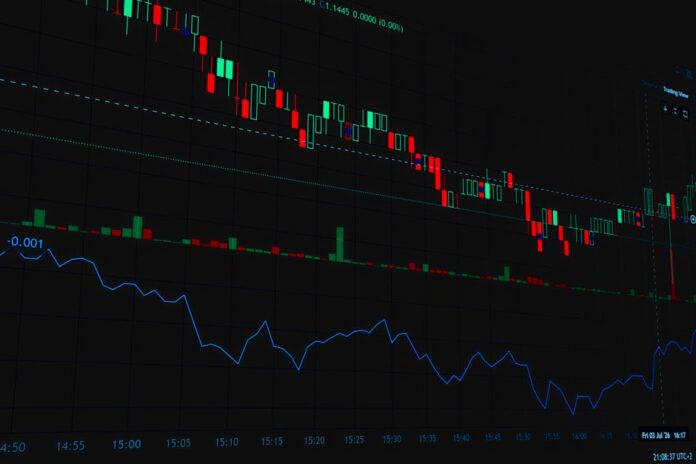
Photo: Rafael Minguet Delgado / Pexels
By Political Watch Newsroom, Economy Desk — Published November 25, 2026
Table of Contents
- Key Takeaways
- The Background & Context
- Why This Matters
- Reactions & Analysis
- What Happens Next
- Frequently Asked Questions
Wall Street is bracing for another turbulent session as stock futures fall sharply this morning, driven by renewed anxiety over artificial intelligence valuations and the looming release of critical inflation data. The pre-market decline signals investor jitters about a confluence of economic headwinds: persistent price pressures, new trade policy measures, and a dramatic selloff in the semiconductor sector that has rattled confidence in the tech-heavy markets.
The downturn comes at a particularly sensitive moment for the economy. Traders are awaiting the Personal Consumption Expenditures (PCE) price index, the Federal Reserve‘s preferred inflation gauge, which will offer fresh clues about whether interest rates might stay elevated longer than hoped. Meanwhile, the technology sector—which has powered much of the market’s gains over the past year—is experiencing a sharp correction, with chip stocks leading the retreat.
According to multiple market reports, the Nasdaq has been hit especially hard, sinking approximately 4% as the AI-driven rally that defined recent months shows signs of exhaustion. The Dow Jones Industrial Average and S&P 500 have also posted significant losses, reflecting broader concerns that the intersection of hot inflation readings and new tariff announcements from the Trump administration could derail the economic expansion just as the Federal Reserve contemplates its next policy moves.
Key Takeaways
- Stock futures fall across major indices as investors confront renewed volatility in artificial intelligence and semiconductor stocks, with the Nasdaq experiencing a roughly 4% decline.
- Markets are awaiting key PCE inflation data that will inform Federal Reserve decisions on interest rates, with recent readings overshooting expectations and raising concerns about persistent price pressures.
- The technology sector rout continues as the chip industry faces a sharp correction, calling into question the sustainability of AI-driven market valuations that have dominated investor sentiment.
- Fresh Trump administration tariff announcements have compounded market anxiety, introducing new uncertainty about trade policy and its potential impact on corporate earnings and economic growth.
- The convergence of inflation fears, Fed policy uncertainty, and sector-specific volatility has created what analysts describe as a fragile market environment vulnerable to further swings.
- Wall Street’s recent optimism about a soft economic landing is being tested as multiple risk factors emerge simultaneously, forcing investors to reassess their positions across asset classes.
The Background & Context
To understand the current market turbulence, it’s essential to recognize how dramatically investor sentiment has shifted in recent weeks. For much of the past year, Wall Street rode a wave of enthusiasm about artificial intelligence applications, with semiconductor companies and tech giants posting extraordinary gains on expectations that AI would revolutionize productivity and corporate profits. The Nasdaq, home to many of these high-flying technology stocks, became the standard-bearer for this optimism.
But markets rarely move in straight lines. The AI sector has begun showing signs of overextension, with valuations stretched and questions mounting about when—and whether—the massive investments in AI infrastructure will translate into actual revenue growth. This reassessment has triggered a sharp selloff in chip stocks, the backbone of AI computing power, creating ripple effects throughout the broader technology sector.
Simultaneously, the inflation picture has grown more complicated. After months of gradual progress toward the Federal Reserve’s 2% target, recent data suggests price pressures remain stubborn. The PCE inflation report, due for release shortly, has taken on outsized importance because it will help determine whether the Fed can proceed with anticipated interest rate cuts or must maintain its restrictive monetary stance longer than markets have priced in.
Adding another layer of complexity, the Trump administration has announced new tariffs, reviving concerns about trade tensions and their potential to fuel inflation while disrupting global supply chains. These policy moves come at a delicate moment when businesses and consumers are still adjusting to higher borrowing costs and an uncertain economic outlook. The combination of factors has left investors grappling with multiple sources of risk simultaneously, a situation that typically produces heightened volatility and defensive positioning.
Why This Matters
For ordinary Americans, the stock market’s gyrations are more than abstract numbers on a screen. They have real consequences for retirement accounts, college savings plans, and household wealth. When major indices like the Dow, S&P 500, and Nasdaq experience sharp declines, millions of workers see their 401(k) balances shrink. Retirees dependent on investment income face tougher decisions about spending and financial security.
The inflation dimension carries even more immediate weight. Persistent price pressures mean families continue paying more for groceries, housing, healthcare, and other essentials. If the PCE data confirms that inflation remains elevated, it strengthens the case for the Federal Reserve to keep interest rates high, which in turn means consumers and businesses face steeper borrowing costs for mortgages, car loans, and credit cards. Small businesses looking to expand or hire face tighter credit conditions that can stifle growth and job creation.
The technology sector’s health matters beyond Silicon Valley. Tech companies have been major engines of employment growth and innovation, with their success rippling through countless suppliers, service providers, and regional economies. A sustained correction in AI and semiconductor stocks could translate into hiring freezes, reduced capital spending, and slower wage growth in communities across the country that have benefited from the tech boom.
Trade policy adds another dimension of concern. New tariffs can raise costs for American manufacturers and consumers alike, potentially feeding into inflation while straining relationships with trading partners. For workers in industries exposed to international competition, tariff uncertainty creates anxiety about job security and economic stability. Farmers dependent on export markets worry about retaliatory measures from other countries.
The confluence of these factors creates what economists call a challenging policy environment. The Federal Reserve must balance fighting inflation against supporting economic growth and employment—a difficult needle to thread. If policymakers get the balance wrong, the consequences could include either a recession that destroys jobs or runaway inflation that erodes purchasing power. For voters and taxpayers, these aren’t academic questions but matters that directly affect their livelihoods and quality of life.
Reactions & Analysis
Market observers are describing the current environment as particularly fragile, with multiple sources of volatility converging at once. The chip stock rout has been especially dramatic, reflecting concerns that the AI investment cycle may be maturing faster than expected and that valuations had run ahead of fundamentals. Investors who poured money into semiconductor companies on AI enthusiasm are now reassessing whether those bets were premature or overextended.
The inflation data has generated considerable anxiety among traders and analysts. Reports indicate that recent readings have overshot expectations, complicating the Federal Reserve’s task and raising questions about whether the central bank’s inflation fight is truly won. This uncertainty about the Fed’s next moves has created hesitation across asset classes, with investors reluctant to make bold commitments until they have greater clarity on the interest rate trajectory.
The tariff announcements have added an unwelcome surprise to an already nervous market. Trade policy uncertainty tends to unsettle investors because it introduces variables that are difficult to model or predict. Companies struggle to plan capital investments and supply chain arrangements when they don’t know what trade barriers they might face. This uncertainty typically translates into wider bid-ask spreads, reduced trading volumes, and a general risk-off sentiment that pushes investors toward safer assets.
Financial analysts note that the breadth of the decline—affecting not just technology but also the broader Dow Jones Industrial Average—suggests that concerns extend beyond any single sector. When blue-chip industrial companies fall alongside tech stocks, it often signals that investors are worried about the overall economic outlook rather than isolated sector-specific issues. This broad-based weakness makes it harder for markets to find a floor, as there are fewer safe havens within equities.
What Happens Next
The immediate focus will be on the PCE inflation data release. If the report shows inflation cooling more than expected, it could provide relief and spark a market rebound by reinforcing expectations for Federal Reserve rate cuts. Conversely, another hot reading would likely deepen the selloff and force investors to price in a prolonged period of restrictive monetary policy. The stakes are high because this data point will shape not just near-term trading but also longer-term portfolio positioning.
The technology sector’s trajectory remains uncertain. AI and semiconductor stocks may stabilize if companies can demonstrate concrete revenue growth from artificial intelligence applications, justifying their valuations. But if the current correction deepens, it could trigger a broader reassessment of growth stock valuations and shift investor preferences toward more defensive, value-oriented investments. This rotation would have significant implications for market leadership and could reshape sector performance for months to come.
Trade policy developments will require close monitoring. If tariff measures escalate or provoke retaliation from trading partners, the economic fallout could be substantial. Supply chain disruptions, higher input costs, and reduced export opportunities would weigh on corporate earnings and potentially tip the economy toward slower growth or even contraction. Conversely, if tariffs remain limited or are used as negotiating leverage rather than permanent policy, the economic impact may prove more manageable.
The Federal Reserve faces difficult decisions in the coming months. Policymakers must weigh persistent inflation against signs of economic slowing and financial market stress. If they maintain high interest rates too long, they risk triggering a recession. If they cut rates prematurely, they risk allowing inflation to resurge. This balancing act will dominate economic policy discussions and market sentiment as the year progresses.
For investors, the current environment suggests elevated volatility is likely to persist. Multiple sources of uncertainty—inflation, monetary policy, sector rotation, trade tensions—create conditions where markets can swing dramatically on new information. This environment favors nimble traders over buy-and-hold investors in the near term, though long-term investors may find opportunities to accumulate quality assets at more attractive valuations if the correction continues.
Frequently Asked Questions
Why are stock futures falling today?
Stock futures are declining due to a combination of factors including renewed volatility in the AI and semiconductor sectors, anticipation of key inflation data that could influence Federal Reserve policy, and new tariff announcements from the Trump administration. The Nasdaq has been particularly hard hit, falling approximately 4% as investors reassess technology valuations and worry about persistent inflation pressures that could keep interest rates elevated longer than expected.
What is PCE inflation data and why does it matter?
The Personal Consumption Expenditures (PCE) price index is the Federal Reserve’s preferred measure of inflation, tracking changes in the prices consumers pay for goods and services. It matters because the Fed uses this data to make decisions about interest rates—if inflation remains high, the central bank is more likely to keep rates elevated, which affects borrowing costs for mortgages, car loans, and business investments. Recent PCE readings have overshot expectations, raising concerns that inflation remains stubborn and could delay anticipated rate cuts.
How does the chip stock selloff affect ordinary investors?
The semiconductor selloff impacts ordinary investors in several ways. Many retirement accounts and mutual funds hold significant positions in technology stocks, including chip companies, so a sharp decline reduces portfolio values. Additionally, the tech sector has been a major driver of job creation and wage growth, so a sustained correction could lead to hiring freezes and reduced economic opportunity. The selloff also signals that the AI-driven market rally may be losing momentum, which could affect broader market sentiment and returns across asset classes.
What do new tariffs mean for the economy and inflation?
New tariffs typically raise costs for businesses that import goods or components, which can translate into higher prices for consumers and contribute to inflation. They can also provoke retaliatory measures from trading partners, hurting American exporters and farmers. In the current environment, tariffs add another layer of uncertainty at a time when the Federal Reserve is trying to control inflation and support economic growth. The combination of tariffs and elevated interest rates could slow economic expansion and affect employment, making the Fed’s policy decisions even more challenging.
As Wall Street digests these converging pressures, the coming days will prove critical in determining whether markets can stabilize or whether the current correction deepens into a more sustained downturn. For American workers, savers, and businesses, the outcome will shape economic conditions and financial security in the months ahead. The interplay of inflation data, monetary policy, and sector-specific volatility ensures that investors and policymakers alike will be watching closely as this complex economic moment unfolds.