
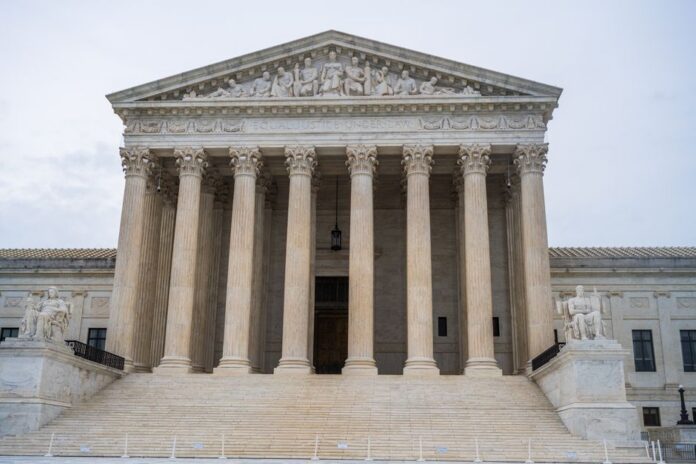
Photo: Guohua Song / Pexels
By Political Watch Newsroom, National Desk — Published November 24, 2026
Table of Contents
- Key Takeaways
- The Background & Context
- Why This Matters
- Reactions & Analysis
- What Happens Next
- Frequently Asked Questions
A federal court has delivered a significant victory for voter privacy advocates and state election officials, ruling that the Department of Justice overstepped its authority in demanding sensitive voter data. The decision, stemming from the case Common Cause v. U.S. Department of Justice, represents a critical check on federal power at a time when tensions between national security concerns and individual privacy rights continue to escalate.
The ruling establishes that federal court sides with citizens and states in drawing clear boundaries around voter information. At stake is not merely abstract legal doctrine but the practical question of who controls election data and how much access federal agencies can demand without trampling on constitutional protections.
This decision arrives amid broader national debates about election integrity, data security, and the proper balance of power between state and federal governments. For millions of American voters, the implications touch directly on whether their personal information remains protected or becomes vulnerable to federal scrutiny without adequate safeguards.
Key Takeaways
- A federal court ruled that Department of Justice demands for voter data violate both voter privacy protections and states’ authority over their own election systems.
- The case, Common Cause v. U.S. Department of Justice, was brought forward by civil liberties organizations including the American Civil Liberties Union and Protect Democracy.
- The decision reinforces constitutional limits on federal power to access sensitive voter information maintained by state election authorities.
- Voter privacy advocates view the ruling as a crucial safeguard against government overreach that could chill democratic participation.
- The case highlights ongoing tensions between federal oversight interests and state sovereignty in managing elections.
- The ruling may set precedent for future disputes over voter data access and privacy protections nationwide.
The Background & Context
The American electoral system operates on a fundamental principle: states bear primary responsibility for administering elections. This decentralized structure, enshrined in the Constitution, means that voter registration data, participation records, and related information typically reside with state and local officials rather than federal agencies.
Yet federal authorities periodically assert interests in accessing this data. Sometimes the rationale involves investigating potential fraud. Other times national security concerns drive the requests. Occasionally civil rights enforcement provides the justification. Whatever the stated purpose, such demands inevitably create friction between competing values: the federal government’s legitimate oversight functions versus individual privacy and state autonomy.
The Department of Justice’s data demands in this case apparently crossed the line that separates reasonable federal inquiry from impermissible intrusion. While the specific details of what information DOJ sought remain limited in publicly available sources, the court’s determination that these requests violated both voter privacy and states’ election authority suggests the demands were sweeping in scope or insufficiently justified.
Civil liberties organizations mobilized to challenge the DOJ’s actions. Common Cause, a nonpartisan government watchdog group, took the lead as plaintiff. The American Civil Liberties Union and Protect Democracy, both prominent defenders of constitutional rights and democratic norms, participated in the legal effort to block the federal data grab.
These organizations argued that unchecked federal access to voter information could produce a chilling effect on democratic participation. Citizens might hesitate to register or vote if they fear their personal information will be swept into federal databases without clear limits or oversight. The concern is not merely theoretical. History provides numerous examples of government surveillance discouraging civic engagement, particularly among vulnerable or marginalized communities.
Why This Matters
For ordinary Americans, this ruling protects privacy in one of democracy’s most fundamental acts: casting a ballot. Voter registration requires citizens to provide sensitive personal information including names, addresses, dates of birth, and sometimes Social Security numbers. States collect this data to maintain accurate rolls and prevent fraud, not to feed federal databases.
The decision reinforces that voter information deserves special protection. Unlike many government records, voter data directly connects to First Amendment rights of political expression and association. Knowing that federal agencies might access and analyze this information without clear constraints could discourage participation, especially among communities already wary of government surveillance.
The ruling also vindicates principles of federalism that structure American government. States are not mere administrative subdivisions of a unitary national government. They possess sovereign authority in certain domains, and election administration has historically been one of them. When federal agencies demand state-held data without proper legal foundation, they undermine this constitutional architecture.
Election officials nationwide face constant pressure from multiple directions. Some demand stricter verification and more aggressive fraud prevention. Others emphasize access and ease of registration. Federal data demands add another layer of complexity and potential conflict. This court decision provides clarity and protection, allowing state officials to resist overreach while still cooperating with legitimate federal interests.
The broader context matters too. Public trust in elections remains fragile. Polls consistently show significant portions of the electorate harbor doubts about system integrity, security, and fairness. Some of these concerns are well-founded; others reflect misinformation. Either way, federal actions that appear to threaten voter privacy or state control risk further eroding confidence in democratic processes.
Reactions & Analysis
Civil liberties advocates celebrated the decision as a crucial victory for constitutional rights and democratic participation. Organizations like the ACLU and Protect Democracy have long warned about government overreach in the name of security or fraud prevention. This ruling validates their concerns and establishes legal precedent that may deter future intrusions.
The decision likely resonates differently across the political spectrum. Some conservatives, particularly those emphasizing federalism and limited government, may welcome constraints on federal power regardless of which administration exercises it. State officials jealous of their prerogatives will appreciate judicial backing for their authority over election administration.
Others, especially those prioritizing aggressive fraud prevention or national security, might view the ruling with concern. They argue federal authorities need access to voter data to investigate crimes, protect election integrity, or identify foreign interference. From this perspective, the court’s decision could hamper legitimate law enforcement and security functions.
Legal experts will parse the decision’s reasoning and scope. Does it establish absolute protection for voter data against federal demands? Or does it merely require stronger justification and narrower requests? The answers will shape future litigation and potentially influence how federal agencies approach similar situations.
State election officials, often caught between competing pressures and legal requirements, gain clearer ground to stand on. When federal agencies come calling with data demands, these officials can now point to judicial precedent supporting their authority to refuse requests that lack proper legal foundation or threaten voter privacy.
What Happens Next
The Department of Justice faces a decision: accept the ruling or appeal to a higher court. If DOJ believes the decision misinterprets law or unduly restricts legitimate federal functions, an appeal seems likely. That could eventually bring the matter before appellate courts or even the Supreme Court, particularly if the issue involves significant questions of federal-state relations or constitutional interpretation.
Meanwhile, the ruling provides a template for other challenges to federal data demands. States and advocacy groups now have precedent supporting their resistance to overreach. Expect similar litigation if other federal agencies or future administrations attempt comparable intrusions into voter information systems.
Congress might weigh in too. Legislators could clarify federal authority over voter data through new statutes, either expanding protections or establishing clearer parameters for legitimate access. Given current political divisions, however, consensus legislation seems unlikely without a catalyst like a major security breach or fraud case.
State legislatures may respond by strengthening their own voter privacy laws. Some states already impose strict limits on who can access voter data and for what purposes. This federal court decision could encourage more states to adopt similar protections, creating a patchwork of varying standards nationwide.
The decision’s long-term impact depends partly on future election controversies. If major fraud cases emerge where federal investigators claim they were hampered by lack of data access, pressure could build to revisit these restrictions. Conversely, if federal overreach or data breaches occur, calls for stronger protections will intensify.
Frequently Asked Questions
What specific voter data was the Department of Justice demanding?
The publicly available information about this case does not detail the specific types of voter data the Department of Justice requested. However, the court’s determination that the demands violated voter privacy and states’ election authority suggests the requests were substantial enough to raise significant constitutional concerns about both individual rights and federalism principles.
Does this ruling mean federal authorities can never access voter information?
Not necessarily. The ruling establishes that federal agencies cannot demand voter data in ways that violate privacy rights or improperly intrude on state election authority. However, properly justified requests with adequate legal foundation and appropriate privacy safeguards might still be permissible. The decision draws boundaries rather than creating absolute prohibitions.
How does this affect regular voters?
For individual voters, this ruling provides reassurance that personal information provided during registration receives meaningful legal protection against federal government overreach. It helps ensure that the act of registering and voting does not expose citizens to unwarranted government surveillance or data collection that could chill democratic participation.
Could this decision be overturned on appeal?
Yes, the Department of Justice could appeal the ruling to higher courts, potentially including the Supreme Court. Whether an appeal succeeds would depend on how appellate judges interpret the relevant constitutional provisions, federal statutes, and the balance between legitimate federal interests and voter privacy protections. Until any appeal is resolved, however, the current ruling stands.
This federal court decision marks an important moment in the ongoing negotiation between security, privacy, and democratic participation. The ruling reminds us that even well-intentioned government actions require legal foundation and respect for constitutional limits. As technology makes data collection easier and more comprehensive, such judicial checks become increasingly vital to preserving the delicate balance between effective governance and individual liberty that defines American democracy.