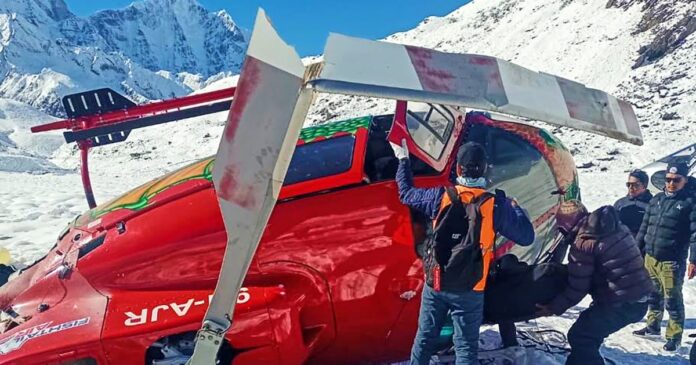
Two helicopters collided while attempting to land near Mount Everest’s base camp on Tuesday, killing an Indian tourist and injuring two others in a tragic accident during Nepal’s peak trekking season.
Fatal Crash at High Altitude
The collision occurred at Pheriche village, located at 13,780 feet above sea level, as both aircraft transported trekkers down from the mountain. A 47-year-old Indian national died in the crash, according to Bhupendra Thapa, a local district administration officer. The helicopters were ferrying hikers who had been making their way to and from Everest base camp when the accident happened.
A New Zealand passenger sustained injuries requiring transport to Kathmandu, Nepal’s capital, for medical treatment. A Nepali pilot also suffered injuries but received treatment locally. Officials have not disclosed the total number of people aboard the two helicopters at the time of the collision.

Two helicopters collide while landing. 1 fatality reported.
Watch VIDEO @EmergencyStream
Critical Transportation on Everest
Helicopters serve as the only mechanized transportation option in the Everest region, where no roads exist. These aircraft provide essential evacuation services for trekkers and guides who become sick or exhausted from the extreme cold and high altitude conditions. The Mount Everest base camp trek typically lasts up to two weeks, beginning at Lukla’s airstrip and climbing to base camp at 17,380 feet elevation.
The accident occurred during a particularly busy period. Heavy snowfall had blocked the trekking route until weather conditions improved on Sunday, allowing thousands of stranded hikers to resume movement. This created increased demand for helicopter services as trekkers rushed to complete their journeys or required evacuation due to adverse conditions they encountered while waiting.
Peak Season Tragedy
The fall trekking season represents one of Nepal’s most popular periods for mountain tourism. Visitors flock to the region immediately after the rainy monsoon season ends and before harsh winter conditions make travel dangerous or impossible. This timing creates optimal weather windows but also concentrates large numbers of tourists in a relatively short period, straining transportation and support services.
Nepal’s tourism industry depends heavily on Everest-related activities, making helicopter safety crucial for both visitors and the local economy. The country’s mountaineering sector has faced scrutiny over safety standards and infrastructure limitations as tourism numbers continue growing. This latest incident highlights the inherent risks of operating aircraft in extreme high-altitude environments where thin air affects helicopter performance and unpredictable mountain weather can change rapidly.