
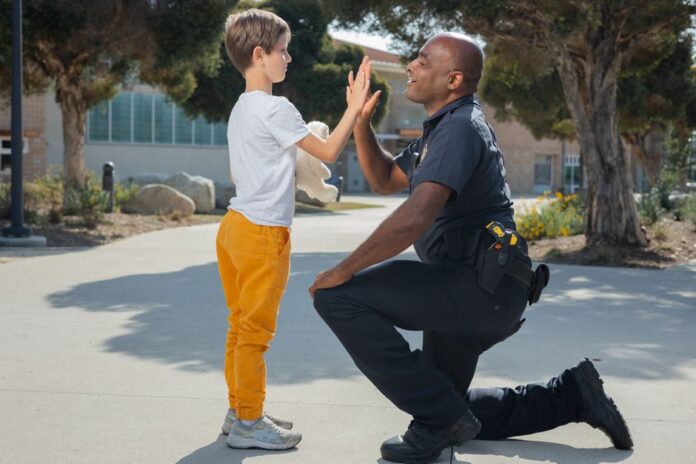
Community Policing Models: How Partnerships Build Trust
By Newsroom, General News Desk — Published August 4, 2026
Table of Contents
- The Core Principles Behind Community Policing Models
- What Implementation Looks Like on the Ground
- The Trust Deficit and How Partnerships Address It
- Challenges and Limitations Worth Acknowledging
- Measuring What Matters in Regional Developments
- Frequently Asked Questions
Walk through most neighborhoods today and you’ll notice something different about how police interact with residents. Officers chat with shopkeepers, attend block parties, coach youth sports teams. This shift reflects a broader movement toward community policing models—an approach that treats public safety as a shared responsibility rather than a purely enforcement function. The idea sounds simple enough: when police and residents work together as partners, trust grows and crime falls. But making that vision real requires rethinking everything from patrol routes to performance metrics.
Community policing represents a fundamental departure from traditional reactive law enforcement. Instead of responding only after crimes occur, officers become embedded in the fabric of everyday life topics and neighborhood happenings. They learn the rhythms of their beats, recognize faces, understand local concerns that might never show up in a 911 call. This knowledge transforms officers from outsiders enforcing rules into problem-solvers who understand context.
The Core Principles Behind Community Policing Models
At the heart of these models sits a deceptively radical premise: police legitimacy flows from community consent, not just legal authority. When residents view officers as partners invested in their wellbeing, they’re more likely to report crimes, serve as witnesses, and cooperate with investigations. This reciprocal relationship creates a positive feedback loop that strengthens public safety and civic engagement activities simultaneously.
Three pillars support most community policing frameworks. First, organizational transformation—departments must decentralize decision-making, giving officers the autonomy to address local problems creatively. A patrol officer who spots teenagers loitering near a convenience store might organize a basketball tournament rather than simply dispersing the group. That requires freedom from rigid protocols.
Second, genuine partnership with community members. Police don’t simply inform residents of their plans; they collaborate on identifying priorities and developing solutions. A neighborhood concerned about speeding might work with officers to design traffic calming measures, lobby for stop signs, or organize a community speed watch program. The community becomes co-producer of safety, not passive consumer.
Third, proactive problem-solving that addresses root causes. Officers analyze patterns, asking why certain corners attract drug deals or why domestic disputes spike on particular blocks. Solutions might involve working with code enforcement to improve lighting, connecting families with social services, or partnering with local business spotlights to create youth employment opportunities. The work extends far beyond traditional law enforcement.
What Implementation Looks Like on the Ground
Translating philosophy into practice demands concrete structural changes. Many departments assign officers to fixed geographic beats for extended periods—sometimes years. This permanence allows relationships to deepen. An officer who patrols the same twelve blocks every shift learns which elderly residents live alone, which corner store owner keeps an eye on the street, which apartment building has a broken security door.
Regular community meetings create forums for dialogue. These aren’t just public announcements where police talk and residents listen. Effective sessions involve genuine conversation about priorities, concerns, and accountability. Residents might challenge enforcement patterns they see as unfair. Officers might explain resource constraints or legal limitations. The friction itself builds understanding.
Foot and bicycle patrols replace some car-based policing. Officers moving at human speed can stop for conversations, notice details, and appear approachable rather than intimidating. A cruiser speeding past sends one message; an officer walking the block, greeting people by name, sends another entirely.
Performance metrics shift away from arrest quotas toward quality-of-life indicators. Departments might track resident satisfaction surveys, problem-solving initiatives completed, or partnerships formed with community organizations. An officer who mediates a dispute between neighbors or connects a homeless person with services might contribute more to long-term safety than one who makes numerous low-level arrests.
The Trust Deficit and How Partnerships Address It
In many communities—particularly those with histories of over-policing or discriminatory enforcement—trust doesn’t exist to build upon. It must be earned from scratch. Community policing models acknowledge this reality by creating accountability mechanisms and transparency practices that go beyond minimum legal requirements.
Citizen advisory boards provide civilian oversight and input on policy decisions. Youth councils give young people—often most impacted by police interactions—a voice in shaping department priorities. Regular public forums allow residents to question leadership directly about use-of-force incidents, complaint procedures, or demographic disparities in stops and arrests.
Some departments embrace radical transparency, publishing detailed data on stops, searches, arrests, and complaints broken down by neighborhood, officer, and demographic factors. This information allows community members to identify patterns and hold leadership accountable. The vulnerability required for such openness signals genuine commitment to partnership.
Officers receive training not just in tactics but in cultural competency, implicit bias, de-escalation, and trauma-informed approaches. They learn to recognize how their presence might trigger fear in communities with fraught police histories. They practice communication skills that build rapport rather than assert dominance. The training acknowledges that technical proficiency alone doesn’t create trust.
Challenges and Limitations Worth Acknowledging
Community policing isn’t a panacea, and honest assessments must grapple with its limitations. Implementation requires resources many departments lack. Building relationships takes time—a luxury when staffing shortages leave barely enough officers to answer emergency calls. Departments serving multiple communities may struggle to provide the consistency and presence that relationships require.
The model can also mask rather than resolve deeper tensions. Friendly interactions don’t necessarily change enforcement patterns that disproportionately impact certain groups. A department might excel at community events and local interest stories while maintaining problematic practices in arrests or use of force. Style changes without substantive reform can become a public relations strategy rather than genuine transformation.
Some critics argue community policing expands surveillance and social control under a friendlier veneer. When officers know everyone’s business, that intimate knowledge can be weaponized. A youth who confides in a community officer about personal struggles might find that information used against them later. The blurred lines between helper and enforcer create ethical complexities.
Success also depends heavily on community capacity and willingness to engage. In neighborhoods where residents work multiple jobs, lack transportation, or distrust institutions generally, sustaining participation proves difficult. The model risks becoming most effective where it’s needed least—in stable communities with resources to organize.
Measuring What Matters in Regional Developments
Evaluating community policing effectiveness requires moving beyond simple crime statistics. While reduced crime rates matter, they don’t capture the full picture. Surveys measuring residents’ sense of safety, trust in police, and willingness to cooperate provide crucial data. Tracking the number and quality of police-community partnerships offers another metric. Are officers collaborating with schools, faith communities, business associations, and social service agencies? Do those partnerships produce tangible results in addressing quality-of-life concerns?
Departments should also monitor their own officers’ satisfaction and retention. Community policing done well is deeply rewarding work that attracts people motivated by service rather than authority. Officers who feel empowered to solve problems creatively, who develop meaningful relationships, tend to stay in the profession longer and perform better. High turnover suggests structural problems that undermine the model’s sustainability.
Key indicators that community policing is working include:
- Increased reporting of crimes and cooperation with investigations from previously reluctant communities
- Reduced complaints about police conduct and use of force
- Successful collaborative problem-solving initiatives that address persistent neighborhood concerns
- Diverse participation in community meetings and advisory boards that reflects actual neighborhood demographics
- Officers who can articulate detailed knowledge about their beats and relationships with residents
- Demonstrated changes in enforcement patterns that reduce disparities while maintaining public safety
Frequently Asked Questions
How does community policing differ from traditional law enforcement approaches?
Traditional policing emphasizes rapid response to crimes after they occur, with officers rotating through different areas and focusing on arrests and citations. Community policing prioritizes prevention through ongoing relationships, assigns officers to fixed geographic areas for extended periods, and treats residents as partners in identifying problems and developing solutions. The shift moves from reactive enforcement to proactive problem-solving embedded in neighborhood life.
Does community policing actually reduce crime rates?
Research shows mixed results that depend heavily on implementation quality. Well-executed community policing programs typically reduce fear of crime and improve police-community relations consistently. Impact on actual crime rates varies—some studies show modest reductions in property crime and disorder, while effects on violent crime are less clear. The model works best when combined with other evidence-based strategies rather than treated as a standalone solution. Quality of relationships and genuine partnership matter more than simply labeling a program “community policing.”
What role do residents play in community policing beyond attending meetings?
Effective community policing requires residents to actively participate in identifying priorities, not just react to police proposals. This might involve organizing neighborhood watch groups, participating in problem-solving initiatives like community cleanups or youth mentoring programs, serving on advisory boards that shape department policy, or collaborating with officers to address specific concerns like abandoned properties or dangerous intersections. The relationship works both ways—residents gain influence over policing priorities while taking on some responsibility for community safety and wellbeing.
Can community policing work in communities with deep distrust of law enforcement?
Building trust from a deficit is possible but requires sustained commitment, transparency, and accountability that go beyond surface-level engagement. Departments must acknowledge past harms, implement meaningful reforms in enforcement practices, embrace civilian oversight, and demonstrate through actions—not just words—that they’re willing to change. Progress typically happens slowly, relationship by relationship. Some communities may reasonably conclude that their energy is better spent on alternative public safety models rather than trying to reform traditional policing. Community policing isn’t appropriate everywhere or a substitute for addressing systemic issues in how law enforcement operates.
The promise of community policing lies not in any single tactic but in its fundamental reorientation of what police work means. When officers see themselves as community members invested in neighborhood wellbeing rather than outside enforcers, and when residents view police as partners rather than occupiers, the nature of public safety itself transforms. That transformation remains incomplete in most places, more aspiration than reality. But in neighborhoods where genuine partnerships have taken root, the results suggest a different kind of policing is possible—one built on relationships, accountability, and shared responsibility for the places we all call home.