
Photo: Mark Stebnicki / Pexels
By Political Watch Newsroom, National Desk — Published September 19, 2026
Table of Contents
- Key Takeaways
- The Background & Context
- Why This Matters
- Reactions & Analysis
- What Happens Next
- Frequently Asked Questions
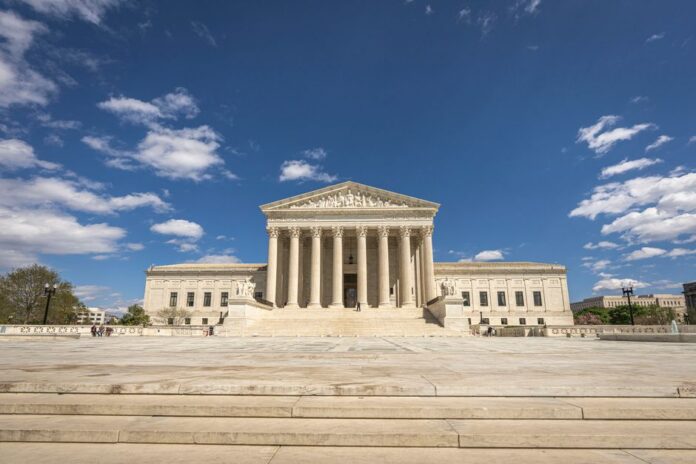
The Trump administration petitions the nation’s highest court to intervene in a rapidly escalating dispute over federal research grants to California’s public universities. The move comes after lower courts blocked the administration’s attempt to terminate billions of dollars in funding based on searches for diversity, equity, and inclusion keywords in university programs and documents.
At stake is not just the financial lifeblood of one of America’s premier public university systems. The case raises fundamental questions about executive power, academic freedom, and the limits of federal oversight over institutions that depend on government grants for cutting-edge research in medicine, technology, and national security.
The petition arrives amid a broader campaign by the administration to reshape federal spending priorities and eliminate what it characterizes as ideological programs in publicly funded institutions. California officials and university leaders have denounced the grant terminations as arbitrary, unconstitutional, and devastating to scientific research that serves the national interest.
Key Takeaways
- The Trump administration has asked the Supreme Court to overturn lower court rulings that blocked the termination of University of California research grants
- Federal officials used keyword searches for diversity, equity, and inclusion terms to identify and cancel billions in grants to California universities
- The grant terminations affect research across multiple fields, including medical research, technology development, and defense-related projects
- Lower courts found the administration’s actions raised serious constitutional concerns about due process and federal overreach
- The dispute represents a major test of executive authority over federal grant programs and academic institutions
- The case coincides with broader immigration policy changes, including pauses on asylum applications, reflecting the administration’s aggressive regulatory approach
The Background & Context
The University of California system stands as one of the world’s leading public research institutions. Its campuses conduct groundbreaking work in fields ranging from cancer research to climate science, much of it funded through competitive federal grants from agencies like the National Institutes of Health, the National Science Foundation, and the Department of Defense.
According to reports, federal officials conducted systematic searches of university documents, websites, and grant applications looking for specific keywords related to diversity, equity, and inclusion initiatives. When those terms appeared, the administration moved to terminate the associated grants—even when the diversity language represented only a small component of much larger research projects.
The scale proved staggering. Billions of dollars in funding faced cancellation. Research teams suddenly confronted the prospect of shutting down experiments, laying off staff, and abandoning work that had taken years to develop. Graduate students worried about losing their stipends. Laboratories that had invested in expensive equipment faced an uncertain future.
California officials responded swiftly, filing emergency lawsuits in federal court. They argued the terminations violated basic principles of administrative law, denied universities due process, and exceeded the executive branch’s authority. University leaders emphasized that much of the threatened research had nothing to do with diversity programs—the keyword searches had simply flagged incidental language in broader project descriptions.
Lower courts agreed with California’s position, at least preliminarily. Judges issued injunctions blocking the grant terminations while the legal challenges proceeded. Those rulings emphasized the potential for irreparable harm to ongoing research and raised serious questions about whether the administration had followed proper procedures.
Why This Matters
For American taxpayers, the implications extend far beyond campus politics. Federal research grants represent investments in discoveries that drive economic growth, improve public health, and maintain national security advantages.
Consider medical research. University laboratories conduct clinical trials for new cancer treatments, develop vaccines, and study chronic diseases that affect millions of Americans. Disrupting that work doesn’t just harm researchers—it potentially delays breakthroughs that could save lives.
The defense dimension carries its own weight. Universities conduct classified research on technologies critical to military readiness. They train the next generation of scientists and engineers who will work in defense industries. Arbitrary grant terminations could compromise projects vital to national security.
The case also tests fundamental constitutional boundaries. Can federal agencies cancel lawfully awarded grants based on keyword searches, without detailed review of individual projects? What process is due to institutions and researchers who depend on federal funding? How much discretion does the executive branch possess to reshape spending priorities that Congress has already authorized?
These questions matter to every institution that receives federal money—not just universities. Hospitals, nonprofits, state agencies, and private companies all participate in federal grant programs. The precedent set here could affect how the government interacts with all of them.
Academic freedom concerns loom large as well. Universities argue that federal officials are effectively dictating what language they can use and what values they can express, even in programs that receive no federal support. That raises First Amendment issues that extend beyond any single administration’s policy preferences.
Reactions & Analysis
California’s attorney general has characterized the grant terminations as legally indefensible and practically devastating. State officials emphasize that courts have consistently found the administration’s approach problematic, suggesting the Supreme Court petition faces an uphill battle.
University administrators have expressed alarm at what they see as an unprecedented intrusion into academic decision-making. Research deans note that diversity statements often appear in grant applications because funding agencies themselves have required such language in recent years. Penalizing universities for complying with previous federal requirements strikes many as fundamentally unfair.
The administration’s defenders argue that taxpayers shouldn’t fund what they characterize as ideological programs unrelated to core research missions. They contend that diversity initiatives have proliferated throughout higher education, consuming resources that could support scientific work. The keyword searches, in this view, represent a reasonable effort to identify and eliminate such spending.
Legal scholars have noted the unusual procedural posture. Typically, the government would allow lower court proceedings to continue before seeking Supreme Court intervention. The decision to petition immediately suggests the administration views the issue as urgent and is willing to expend significant political capital on the fight.
The timing coincides with other aggressive regulatory moves. Reports indicate the administration has also paused processing of asylum applications and certain other immigration matters, reflecting a broader pattern of executive action to reshape federal programs quickly and dramatically.
What Happens Next
The Supreme Court faces several options. It could grant the petition and hear the case on an expedited basis, given the significant federal interests involved. It could deny the petition and allow lower court proceedings to continue. Or it could take a middle path, perhaps staying the lower court injunctions while litigation proceeds.
Each choice carries consequences. If the Court agrees to hear the case, oral arguments likely wouldn’t occur until next term, meaning the current injunctions would probably remain in place for months. That would preserve the grants temporarily but leave universities in prolonged uncertainty.
A denial would strengthen California’s position and potentially embolden other states to resist similar federal actions. It would also allow the lower courts to develop a fuller factual record about how the keyword searches were conducted and what standards, if any, governed the termination decisions.
Meanwhile, the practical effects continue to ripple outward. Even with injunctions in place, universities report difficulty recruiting researchers and planning long-term projects. Uncertainty about federal funding makes it harder to attract top talent and secure matching funds from private sources.
The case could also influence congressional debates about research funding. Lawmakers may seek to establish clearer standards for grant terminations or to limit executive discretion over programs Congress has authorized. The dispute highlights tensions between legislative appropriations and executive implementation that often simmer beneath the surface of American governance.
Frequently Asked Questions
What exactly did the Trump administration do to trigger this legal fight?
Federal officials conducted keyword searches of University of California documents, websites, and grant applications looking for terms related to diversity, equity, and inclusion. When those keywords appeared, the administration moved to terminate billions of dollars in research grants, even when the diversity language was only a minor part of larger scientific research projects. Lower courts blocked these terminations, prompting the administration to petition the Supreme Court.
How much money is at stake in this dispute?
Reports indicate that billions of dollars in federal grants to California universities were targeted for cancellation based on the keyword searches. These grants fund research across numerous fields including medical research, technology development, and defense-related projects. The exact dollar figures have not been publicly specified, but the scale is substantial enough to threaten major research operations across the University of California system.
Could this affect universities in other states beyond California?
Yes, potentially. If the Supreme Court sides with the administration, the precedent could allow similar keyword-based grant reviews at universities nationwide. Any institution receiving federal research funding could face scrutiny of its diversity programs and related language. The case establishes principles about executive authority over federal grants that would apply across the country, not just in California.
What happens to the research projects while this legal case proceeds?
Currently, lower court injunctions prevent the grant terminations from taking effect, so the research can continue for now. However, universities report that the uncertainty makes long-term planning difficult, affects recruitment of researchers, and creates anxiety among graduate students and staff who depend on grant funding. If the Supreme Court eventually sides with the administration, projects could face sudden cancellation even after years of work.
The Supreme Court’s decision on whether to hear this case will reveal much about how the justices view executive power in an era of sharp partisan divides over federal spending and institutional priorities. For researchers in laboratories across California, and potentially across the nation, the wait for that decision continues. Their work proceeds under a cloud of uncertainty that no keyword search could have predicted.