
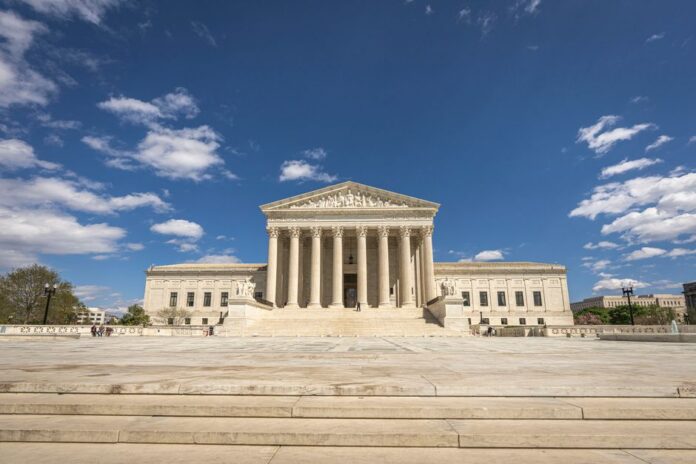
Photo: Mark Stebnicki / Pexels
By Political Watch Newsroom, National Desk — Published September 17, 2026
Table of Contents
- Key Takeaways
- The Background & Context
- Why This Matters
- Reactions & Analysis
- What Happens Next
- Frequently Asked Questions
The Supreme Court has temporarily blocked President Donald Trump’s attempt to restrict mail-in voting for the 2026 midterm elections, delivering a significant setback to the administration’s effort to reshape how Americans cast their ballots. Trump celebrates supreme court action in keeping his executive order alive procedurally, even as the justices rejected its immediate implementation. The decision leaves voters in states like California and across the nation with unchanged access to mail-in ballots for now, while the legal battle continues to unfold in lower courts.
The high court’s intervention comes amid escalating tensions between the federal government and states over election administration. Multiple news outlets reported the decision, with reactions ranging from celebration among voting rights advocates to frustration within the administration. The temporary nature of the ruling means this fight is far from over.
Senate members have already begun weighing in on the implications. Senator Ruben Gallego publicly celebrated the Supreme Court’s decision to preserve mail-in voting access, calling it a victory for democratic participation. The Arizona Democrat’s response reflects broader concerns in Congress about executive overreach into state-run election systems.
Key Takeaways
- The Supreme Court has rejected Trump’s restrictions on mail-in voting for the 2026 midterm elections, keeping current voting procedures in place temporarily.
- California’s mail-in voting system remains unchanged following the court’s decision to block presidential restrictions on ballot access.
- Senator Gallego celebrated the Supreme Court’s mail-in voting decision while simultaneously calling for Senate committee action on artificial intelligence regulation.
- The administration continues to defend its position despite the judicial setback, with Trump publicly celebrating the court’s procedural handling of his order.
- The ruling represents a temporary stay rather than a final determination, meaning the legal battle will continue in lower courts.
- State election officials can proceed with existing mail-in voting protocols for the upcoming election cycle without federal interference.
The Background & Context
Mail-in voting has become a flashpoint in American politics over the past several election cycles. What was once a relatively noncontroversial accommodation for military personnel, elderly voters, and those unable to reach polling places on election day has transformed into one of the most contentious issues in electoral politics.
The Trump administration has long maintained skepticism about mail-in voting. Claims of fraud and security vulnerabilities have driven policy proposals aimed at restricting or eliminating widespread mail ballot access. These concerns, while widely disputed by election security experts and multiple court findings, have nonetheless shaped the administration’s approach to federal election policy.
The executive order at the center of this Supreme Court case sought to impose new restrictions on how states could administer mail-in voting for federal elections. While the specific provisions remain subject to litigation, the order represented an unprecedented assertion of federal authority over state election administration—a domain traditionally reserved to state governments under the Constitution.
California, with its extensive vote-by-mail infrastructure, stood to be significantly affected by any federal restrictions. The state has invested heavily in mail ballot systems, with millions of voters relying on this method in recent elections. The prospect of sudden changes to these procedures raised alarm among state officials and election administrators.
The Supreme Court’s intervention came through an emergency application—a procedural mechanism that allows the justices to act quickly on matters of urgent national importance. These decisions typically come with limited or no written explanation, leaving the legal reasoning somewhat opaque. The court’s choice to block implementation suggests at least five justices had serious concerns about allowing the restrictions to take effect while litigation proceeds.
Why This Matters
The stakes extend far beyond procedural questions of election administration. At its heart, this case concerns who controls how Americans vote—state governments exercising their traditional authority, or the federal executive branch asserting new powers over the electoral process.
For millions of voters, mail-in ballots represent not just convenience but necessity. Elderly citizens with mobility challenges, workers with inflexible schedules, rural voters living far from polling places, and military personnel stationed overseas all depend on mail voting to exercise their franchise. Sudden restrictions could effectively disenfranchise significant portions of the electorate.
Election administrators face their own challenges. Planning for major elections requires months of preparation. Ballot printing, postal coordination, poll worker training, and voter education campaigns all demand advance notice. Last-minute changes to voting procedures create chaos, increase costs, and risk errors that undermine public confidence in election integrity—the very concern the administration claims to address.
The constitutional questions are equally profound. The tension between federal and state authority over elections has persisted throughout American history. While the Constitution grants Congress certain powers over federal elections, states have traditionally administered the mechanics of voting. Presidential assertions of unilateral authority to rewrite these rules test the boundaries of executive power in ways that could reshape the balance between branches and levels of government.
Public trust in elections hangs in the balance. Regardless of one’s views on mail-in voting, stability and predictability in election procedures help maintain confidence in outcomes. Voters need to know the rules won’t change arbitrarily. When courts intervene to block sudden changes—especially this close to an election cycle—they’re defending not just specific voting methods but the principle that electoral rules should be settled, transparent, and applied consistently.
Reactions & Analysis
The administration’s response has been notably mixed. Despite the court blocking his restrictions, Trump has chosen to frame the Supreme Court’s action as a partial victory, focusing on the fact that the order remains under consideration rather than permanently struck down. This interpretation reflects a broader pattern of claiming wins even in setbacks—a communications strategy that keeps supporters energized while legal battles continue.
Congressional reactions have split along predictable lines. Senator Gallego’s celebration of the decision represents the Democratic perspective that mail-in voting access must be protected. His simultaneous call for Senate committee action on artificial intelligence—mentioned in the same breath as the voting decision—suggests lawmakers are grappling with multiple challenges to democratic processes, from election administration to emerging technology threats.
State officials, particularly in California and other states with extensive mail-in voting systems, have expressed relief. The ability to proceed with established procedures for the 2026 midterms removes significant uncertainty from their planning. California election officials can now move forward with ballot printing, voter outreach, and logistical arrangements without worrying about last-minute federal intervention.
Legal experts note the temporary nature of the Supreme Court’s action. This is not a final ruling on the merits of Trump’s executive order. Lower courts will continue examining whether the president has the authority to impose such restrictions, whether the specific provisions violate constitutional rights, and whether adequate justification exists for federal intervention in state election administration. The Supreme Court may ultimately take up the case for full briefing and argument.
Voting rights organizations have hailed the decision as a crucial defense of ballot access. These groups argue that mail-in voting has proven secure and reliable, with fraud rates comparable to or lower than in-person voting. They view attempts to restrict mail ballots as solutions in search of a problem—measures that would reduce turnout without addressing genuine security concerns.
What Happens Next
The immediate effect is clear: the 2026 midterm elections will proceed under current rules. Voters in California and across the nation can request and cast mail-in ballots according to their state’s existing procedures. Election officials can finalize their preparations without fear of sudden federal mandates.
But the underlying legal battle continues. Lower courts must still rule on the merits of Trump’s executive order. These proceedings will examine the president’s constitutional authority, the factual basis for the claimed security concerns, and the practical impact of the proposed restrictions. Expect extensive litigation, with multiple rounds of appeals likely regardless of how district and circuit courts rule.
The Supreme Court itself may eventually take up the case for a full hearing. If lower courts split on the legal questions, or if the issues are deemed sufficiently important, the justices could grant certiorari and issue a definitive ruling on presidential power over state election administration. Such a decision would have implications reaching far beyond mail-in voting, potentially reshaping federal-state relations across numerous policy areas.
Politically, this issue will remain contentious through the 2026 midterms and beyond. Both parties see electoral advantage in their positions. Republicans argue they’re defending election integrity; Democrats counter they’re protecting voting rights. This framing ensures the debate continues regardless of legal outcomes.
Congress could intervene. Federal legislation setting nationwide standards for mail-in voting would supersede executive orders and potentially resolve some legal uncertainties. However, the deeply divided nature of Congress makes such legislation unlikely absent a significant shift in political dynamics.
State responses will vary. Some states may tighten mail-in voting procedures independent of federal mandates, while others may expand access as a deliberate counterpoint to administration priorities. This patchwork approach could lead to increasingly divergent voting experiences across the country, raising questions about equal treatment of voters in federal elections.
Frequently Asked Questions
What exactly did the Supreme Court decide?
The Supreme Court temporarily blocked President Trump’s executive order that would have restricted mail-in voting for the 2026 midterm elections. This means current state procedures for mail-in ballots remain in effect while lower courts continue examining the legal questions. The decision is procedural rather than a final ruling on whether the president has authority to impose such restrictions.
Will this affect how I vote in the 2026 midterms?
For now, no. Voters will cast ballots according to their state’s existing rules. If your state offers mail-in voting, you can continue using that option without changes. The Supreme Court’s decision ensures stability in election procedures for the upcoming cycle, though the legal battle over presidential authority continues in lower courts.
Why is Trump celebrating if the court blocked his order?
The administration appears to be framing the court’s action as keeping the executive order alive procedurally rather than permanently striking it down. This allows Trump to claim the fight continues and that ultimate victory remains possible. It’s a communications strategy that emphasizes ongoing legal viability rather than acknowledging the immediate setback.
Could the Supreme Court reverse this decision later?
Yes. This is a temporary stay pending further litigation, not a final judgment. If lower courts uphold Trump’s authority to restrict mail-in voting, the administration could return to the Supreme Court seeking implementation of the order. Conversely, if lower courts strike down the order entirely, the administration might appeal that decision. The Supreme Court could eventually take up the case for full consideration and issue a definitive ruling.
As the 2026 midterms approach, this Supreme Court decision provides clarity for voters and election officials alike. Mail-in ballots remain available under current state rules. Yet the broader questions about executive power, election administration, and federal-state relations remain unresolved. Americans can vote with confidence in the upcoming cycle, but the legal and political battles over how we cast our ballots are far from finished. The court has bought time for deliberation, but the fundamental tensions driving this dispute persist.