
Climate Adaptation vs Mitigation: A Policy Breakdown
By Newsroom, Opinion Desk — Published August 22, 2026
Table of Contents
- Defining the Core Difference in Climate Adaptation and Mitigation
- Why Both Strategies Demand Political Attention
- How Different Sectors Balance the Two Approaches
- The Political Economy of Climate Policy Choices
- Finding the Right Policy Mix
- Frequently Asked Questions
When policymakers talk about tackling climate change, two terms dominate the conversation: climate adaptation mitigation. They sound similar, but they represent fundamentally different approaches to one of the most complex challenges facing governments worldwide. Understanding the distinction matters because it shapes where money flows, which communities receive help first, and what kind of future we’re building. One strategy tries to prevent the worst outcomes; the other prepares us to live with the changes already underway.
This isn’t just semantic hairsplitting. The balance between these two approaches influences infrastructure spending, international development aid, insurance markets, and local zoning laws. Getting the mix wrong can leave vulnerable populations exposed or waste resources on solutions that arrive too late.
Defining the Core Difference in Climate Adaptation and Mitigation
Mitigation aims to reduce the severity of climate change itself. It targets the root cause: greenhouse gas emissions. Every policy designed to cut carbon dioxide, methane, or other heat-trapping gases falls under this umbrella. Think renewable energy subsidies, fuel efficiency standards, carbon pricing mechanisms, or reforestation programs. The goal is straightforward: slow down or reverse the warming trend.
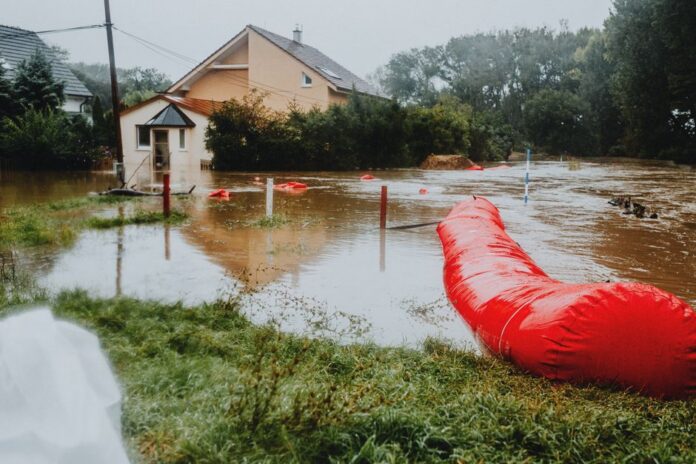
Adaptation, by contrast, accepts that some degree of climate change is already locked in. It focuses on adjusting systems, infrastructure, and behaviors to cope with new realities. Coastal cities building seawalls, farmers switching to drought-resistant crops, or public health systems preparing for heat waves—all adaptation. The premise: we must learn to live with a changed climate, regardless of how successful mitigation efforts prove.
The policy tension emerges because resources are finite. A dollar spent on solar panels cannot simultaneously fund flood barriers. Governments must constantly weigh immediate protective measures against long-term preventive investments, knowing that underinvesting in either carries serious risks.
Why Both Strategies Demand Political Attention
Mitigation enjoys a certain moral clarity. If we stop pumping carbon into the atmosphere, future generations face less severe consequences. The challenge lies in its delayed gratification. Benefits accrue over decades, while costs hit today’s voters and industries. Carbon taxes face fierce political resistance. Renewable energy transitions threaten fossil fuel employment. The political calculation often favors short-term economic concerns over distant environmental gains.
Adaptation offers more immediate, visible returns. A community that builds better stormwater systems sees flooding decrease within years. Farmers adopting new irrigation techniques protect their livelihoods now, not in 2050. This tangibility makes adaptation politically easier to sell, especially in regions already experiencing climate impacts.
Yet adaptation carries its own complications. It can create a false sense of security, suggesting we can simply engineer our way out of trouble without addressing root causes. Some critics worry that overemphasizing adaptation reduces political will for the harder work of emissions reduction. There’s also the equity problem: wealthier nations and communities can afford sophisticated adaptation infrastructure, while poorer populations face displacement and loss.
The Resource Allocation Dilemma
International climate finance illustrates this tension clearly. Development banks and donor countries must decide how to split funding. Wealthy nations historically responsible for most emissions often favor mitigation projects in developing countries—renewable energy installations, forest conservation. Recipient nations, meanwhile, frequently prioritize adaptation: drought-resistant agriculture, early warning systems for extreme weather, relocated infrastructure away from rising seas. Their populations face immediate threats that cannot wait for global emissions to decline.
Neither side is wrong. The disconnect reflects different timescales and vulnerabilities. A small island nation watching its shoreline erode needs seawalls now, even if every country eliminated emissions tomorrow. But without mitigation, no amount of adaptation will suffice once warming exceeds certain thresholds.
How Different Sectors Balance the Two Approaches
The adaptation-mitigation balance plays out differently across policy domains. Energy and transportation lean heavily toward mitigation. Electrifying vehicle fleets, shutting coal plants, improving building efficiency—these reduce emissions directly. Success is measurable in tons of carbon avoided.
Agriculture straddles both categories. Precision farming technologies can reduce fertilizer use, cutting nitrous oxide emissions (mitigation). Simultaneously, developing heat-tolerant crop varieties helps farmers maintain yields as temperatures rise (adaptation). Water management, similarly, involves both conserving resources to reduce energy-intensive pumping and building storage to buffer against droughts.
Urban planning increasingly integrates both perspectives. Green building codes reduce energy consumption. But cities also redesign parks and plazas to provide cooling during heat waves, install permeable pavement to handle heavier rainfall, and rethink development patterns to avoid flood-prone areas. A well-designed urban policy pursues both goals without treating them as competitors.
Public health offers another example. Reducing air pollution from fossil fuels delivers immediate health benefits while cutting emissions. Meanwhile, health systems prepare for climate-related challenges: training emergency responders for heat emergencies, monitoring disease vectors spreading into new regions, stockpiling medications for disaster response. The two strategies reinforce rather than contradict each other.
The Political Economy of Climate Policy Choices
Follow the money, and the political incentives become clearer. Mitigation often requires upfront capital expenditures with uncertain timelines for return. A government installing solar capacity may not see the full economic benefit for years. Adaptation projects, particularly infrastructure, create construction jobs and visible improvements that politicians can tout at ribbon-cutting ceremonies.
Industry lobbying shapes the landscape too. Fossil fuel interests resist mitigation policies that threaten their business models. Construction and engineering firms, conversely, see adaptation as a growth market—seawalls, levees, and climate-proofed buildings mean contracts. Insurance companies occupy an interesting middle ground, supporting both stronger building codes (adaptation) and emissions reduction (mitigation) to limit their long-term exposure.
The international dimension adds complexity. Countries with large fossil fuel reserves face economic pressures that make aggressive mitigation politically difficult. Meanwhile, nations already experiencing severe climate impacts—prolonged droughts in East Africa, intensifying cyclones in the Pacific—cannot afford to wait for global mitigation efforts to bear fruit. They need adaptation funding now, and they argue that historical emitters bear responsibility for providing it.
Finding the Right Policy Mix
Expert consensus suggests the “versus” framing itself is misleading. Effective climate policy requires both adaptation and mitigation, calibrated to specific contexts. A few principles emerge from policy analysis:
- Prioritize mitigation to limit long-term warming, since adaptation has physical limits beyond certain temperature thresholds
- Invest in adaptation for communities facing immediate threats, recognizing that some warming is already inevitable
- Favor policies that deliver co-benefits across both categories, such as nature-based solutions that sequester carbon while protecting against floods
- Ensure adaptation spending doesn’t create moral hazard by encouraging development in high-risk areas or reducing mitigation urgency
- Address equity explicitly, since vulnerable populations often lack resources for either effective adaptation or participation in mitigation benefits
The balance shifts depending on geography and development status. A low-lying island nation rationally emphasizes adaptation, given its negligible contribution to global emissions but acute vulnerability. A major industrial economy bears greater responsibility for ambitious mitigation, though it still needs adaptation for its own climate impacts.
Timing matters too. Early, aggressive mitigation reduces the need for costly adaptation later. But delayed mitigation forces greater adaptation spending as impacts intensify. The economic case for front-loading mitigation investments grows stronger as scientists refine understanding of tipping points and irreversible changes.
Frequently Asked Questions
Can adaptation alone solve climate change?
No. Adaptation helps communities cope with climate impacts, but it has limits. Beyond certain levels of warming, adaptation becomes prohibitively expensive or physically impossible. Sea level rise will eventually overwhelm even the most sophisticated coastal defenses. Crop varieties can tolerate only so much heat before yields collapse. Without mitigation to limit warming, adaptation efforts will eventually fail in many regions, forcing mass displacement and economic collapse.
Why don’t governments just focus all resources on mitigation to prevent the problem?
Because some climate change is already inevitable due to past emissions and the delayed response of the climate system. Even if all emissions stopped immediately, warming would continue for decades due to carbon already in the atmosphere and ocean heat absorption. Communities facing floods, droughts, and heat waves today cannot wait for mitigation to work. They need immediate protective measures. The question is not either-or but how to allocate resources across both strategies.
How do economists evaluate trade-offs between adaptation and mitigation spending?
Economists use cost-benefit analysis, comparing the present value of avoided damages against investment costs. Mitigation typically shows better long-term returns because preventing warming is cheaper than managing its consequences. But adaptation often delivers faster, more certain benefits to specific communities. Discount rates—how much we value future benefits versus present costs—heavily influence these calculations. Lower discount rates favor mitigation; higher rates favor adaptation. The ethical question of obligations to future generations complicates purely economic analysis.
What role does technology play in both approaches?
Technology is central to both strategies but in different ways. Mitigation relies on renewable energy, battery storage, carbon capture, and energy efficiency innovations to reduce emissions. Adaptation depends on climate modeling, early warning systems, drought-resistant crops, and advanced materials for resilient infrastructure. Some technologies serve both purposes: smart grids reduce emissions while improving resilience to extreme weather. The pace of technological development affects which strategies become cost-effective, but technology alone cannot substitute for policy choices about deployment and investment.
The adaptation-mitigation divide ultimately reflects deeper questions about how societies manage risk, distribute resources, and balance present needs against future obligations. No single formula works everywhere. But recognizing that these are complementary strategies, not competing priorities, helps policymakers craft more effective responses to a challenge that demands both prevention and preparation.