
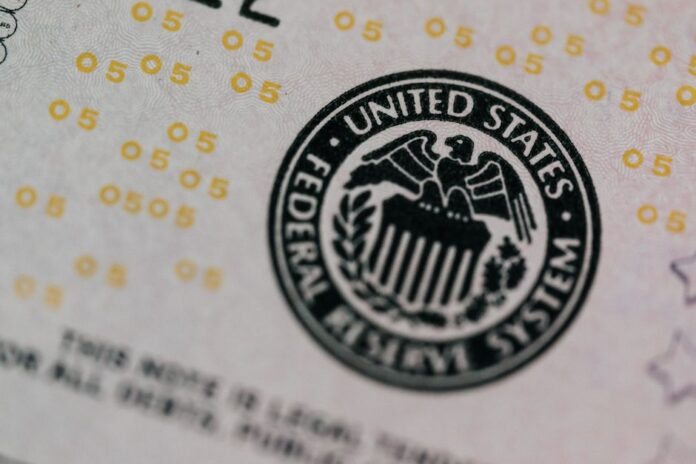
Photo: https://kaboompics.com/ / Pexels
By Political Watch Newsroom, Economy Desk — Published September 16, 2026
Table of Contents
- Key Takeaways
- The Background & Context
- Why This Matters
- Reactions & Analysis
- What Happens Next
- Frequently Asked Questions
The Federal Reserve faces a delicate dilemma. Wall Street is gripped by artificial intelligence fever, with tech stocks soaring to dizzying heights on promises of revolutionary productivity gains. Yet beneath the euphoria, seasoned market observers detect warning signs of a classic speculative bubble—one that could complicate the central bank’s efforts to manage inflation, stabilize the economy, and protect American jobs and savings.
The question of how the Federal Reserve should deal with an emerging AI bubble has moved from academic debate to urgent policy concern. Markets are experiencing what some analysts describe as “crazy days” and “silly season,” language that evokes memories of past manias before they burst. At the same time, artificial intelligence is genuinely transforming productivity and business models, making it extraordinarily difficult for policymakers to distinguish between rational exuberance and dangerous excess.
This tension puts Federal Reserve officials in an unenviable position. Raise interest rates too aggressively to cool speculative fervor, and they risk strangling genuine innovation and economic growth. Move too slowly, and they could enable a bubble that devastates household wealth and pension funds when it eventually pops. The stakes for ordinary Americans—whose retirement accounts, job prospects, and cost of living all hang in the balance—could not be higher.
Key Takeaways
- The Federal Reserve confronts growing concerns about a potential AI bubble in financial markets, with observers noting signs of late-stage speculative excess.
- Artificial intelligence is simultaneously complicating the Fed’s traditional interest-rate decisions by introducing genuine uncertainty about productivity and economic growth.
- Market commentary has shifted to warning language—”crazy days” and “silly season”—that historically precedes major corrections.
- The central bank must balance the risk of enabling a destructive bubble against the danger of prematurely curtailing transformative technological innovation.
- The outcome will directly affect American households through impacts on retirement savings, employment markets, and the broader economic stability.
- Federal Reserve officials lack clear historical precedent for managing monetary policy during a potential AI-driven asset bubble.
The Background & Context
Asset bubbles have plagued economies for centuries. From Dutch tulip mania to the dot-com crash to the housing crisis, history shows that when speculation detaches from fundamental value, the consequences ripple through society. The Federal Reserve learned painful lessons from the 2008 financial crisis, when lax monetary policy contributed to unsustainable housing prices that eventually collapsed, triggering the worst recession since the Great Depression.
Today’s AI enthusiasm bears some uncomfortable similarities to past manias. Technology stocks have surged on the promise that artificial intelligence will revolutionize everything from healthcare to manufacturing. Companies adding “AI” to their business descriptions have seen valuations soar, regardless of actual implementation or revenue. Investors, fearful of missing out on the next big thing, have poured money into anything connected to the technology.
Yet there’s a critical difference this time. Unlike tulip bulbs or many dot-com ventures, artificial intelligence represents genuine technological advancement. Large language models, machine learning systems, and automation tools are already changing how businesses operate. Productivity gains, while difficult to measure in real-time, appear real. This creates profound uncertainty for Federal Reserve policymakers who must distinguish between justified optimism and irrational speculation.
The Fed’s traditional tools—primarily interest rates—work by making borrowing more or less expensive, thereby cooling or stimulating economic activity. Higher rates typically deflate asset bubbles by making alternative investments more attractive and reducing the cheap money that fuels speculation. But those same rate increases also slow genuine business investment, potentially choking off the very innovation that could drive future prosperity.
Why This Matters
The Federal Reserve’s handling of a potential AI bubble will shape the financial security of millions of Americans. Roughly 58 percent of U.S. households own stock, either directly or through retirement accounts. When markets crash, it’s not just wealthy investors who suffer—it’s teachers, nurses, factory workers, and retirees who watch their 401(k) balances evaporate.
The employment picture adds another layer of urgency. If AI genuinely delivers the productivity revolution its advocates promise, it could displace workers across multiple industries even as it creates new opportunities. The Federal Reserve’s mandate includes maintaining maximum employment, not just controlling inflation. Premature rate hikes that stifle AI development could cost American workers the competitive advantages that preserve high-wage jobs in a global economy.
Inflation concerns compound the challenge. If speculation drives up asset prices without corresponding real economic growth, it can create wealth effects that fuel consumer spending and price increases. The Fed spent much of 2022 and 2023 battling inflation that reached forty-year highs, causing real pain for American families at the grocery store and gas pump. Officials remain wary of any development that could reignite price pressures.
There’s also a broader question of economic stability. Financial crises don’t stay confined to Wall Street. When bubbles burst, they destroy capital, freeze credit markets, and trigger cascading failures across the economy. Small businesses can’t get loans. Homeowners face foreclosure. State and local governments, their tax revenues collapsing, cut essential services. The Fed’s decisions about how to handle AI-related speculation could determine whether the economy experiences a healthy correction or a catastrophic crash.
Reactions & Analysis
Market observers have begun sounding alarms about speculative excess. The characterization of current conditions as “crazy days” and “silly season” reflects growing unease among experienced investors and analysts. Such language typically emerges when market behavior disconnects from rational valuation methods—when stories and momentum replace earnings and fundamentals as investment drivers.
The notion that markets may be in the “late-stage” of an AI bubble carries particular weight. Late-stage bubbles exhibit distinctive characteristics: retail investors piling in after institutional money has already positioned itself, increasingly absurd valuations justified by increasingly creative metrics, and a pervasive fear of missing out that overrides risk assessment. If observers are correct that these dynamics are now present, the Federal Reserve’s window for preventive action may be closing.
The complexity AI introduces to interest-rate decisions represents a new challenge for monetary policymakers. Traditional economic models struggle to account for rapid technological change. Productivity statistics lag real-world developments by months or years. The Fed must essentially make billion-dollar decisions based on incomplete information about whether AI represents transformative change or just another overhyped technology cycle.
Some economists argue the Fed should ignore asset prices altogether, focusing solely on its dual mandate of price stability and maximum employment. By this view, if AI speculation doesn’t directly threaten inflation or jobs, it’s not the central bank’s problem. Others counter that large asset bubbles always eventually threaten the real economy, making prevention a legitimate Fed concern.
What Happens Next
The Federal Reserve faces several possible paths forward, none without risk. One option is maintaining higher interest rates longer than markets expect, deliberately cooling speculation even at the cost of slower growth. This approach prioritizes financial stability over short-term economic expansion, betting that preventing a bubble now avoids worse pain later.
Alternatively, the Fed could adopt a more accommodative stance, reasoning that genuine AI-driven productivity gains justify current valuations and that premature tightening would be a historic mistake. This path accepts greater bubble risk in exchange for not stifling potentially transformative innovation.
A middle course might involve what economists call “leaning against the wind”—modest rate adjustments designed to temper speculation without crushing it, combined with enhanced regulatory oversight of financial institutions’ AI-related exposures. This approach requires exceptional skill and luck, threading a needle that central banks have historically struggled to find.
Market dynamics will also play a role beyond Fed control. If investors themselves begin reassessing AI valuations, a correction could occur regardless of monetary policy. Such market-driven corrections can be healthy, clearing out excess without broader economic damage. Or they can cascade into panic, especially if leverage and complex financial instruments amplify losses.
The global dimension adds further uncertainty. AI development and deployment is a worldwide phenomenon, with major investments flowing through international capital markets. The Federal Reserve’s actions affect global conditions, but foreign central banks, governments, and investors will also shape how any AI bubble evolves. Coordination—or the lack thereof—among major central banks could prove decisive.
Frequently Asked Questions
What exactly is an AI bubble and how does it form?
An AI bubble occurs when investor enthusiasm for artificial intelligence drives asset prices—particularly technology stocks—far above what companies’ actual earnings and prospects justify. Bubbles form when speculation feeds on itself: rising prices attract more investors, whose buying pushes prices higher still, creating a self-reinforcing cycle that eventually breaks when reality reasserts itself. The AI bubble debate centers on whether current valuations reflect genuine revolutionary potential or unsustainable hype.
Why can’t the Federal Reserve just prevent all asset bubbles?
The Federal Reserve’s tools are blunt instruments. Interest rates affect the entire economy, not just speculative sectors. Raising rates high enough to definitely prevent a bubble in tech stocks would also slow business investment, increase unemployment, and potentially trigger a recession. Moreover, identifying bubbles in real-time is notoriously difficult—what looks like irrational speculation might actually be justified by fundamental changes in technology or productivity that aren’t yet visible in traditional economic data.
How would an AI bubble bursting affect ordinary Americans?
A bursting AI bubble would hit Americans through multiple channels. Retirement accounts holding tech stocks would lose value, potentially forcing older workers to delay retirement. Job losses would likely follow as affected companies cut costs, while reduced business investment would slow hiring elsewhere. If the bubble’s collapse triggered broader financial instability, credit could become scarce, making it harder for families to get mortgages or car loans and for small businesses to access working capital.
Could AI actually justify current market valuations?
This remains the central unknown. If artificial intelligence truly delivers the transformative productivity gains its advocates predict—revolutionizing healthcare, education, manufacturing, and services—then current valuations might prove prescient rather than excessive. The challenge is that such transformations take years to materialize and measure, while markets move on expectations and stories. History suggests that even genuinely revolutionary technologies often go through boom-bust cycles as reality catches up with imagination.
The Federal Reserve’s navigation of a potential AI bubble will test the institution’s wisdom and skill. There are no perfect answers, only difficult tradeoffs between competing risks. What’s certain is that the decisions made in the coming months will reverberate through the American economy for years, affecting the financial security and economic opportunity of millions of citizens who never asked to be caught in the crossfire between speculation and innovation.