
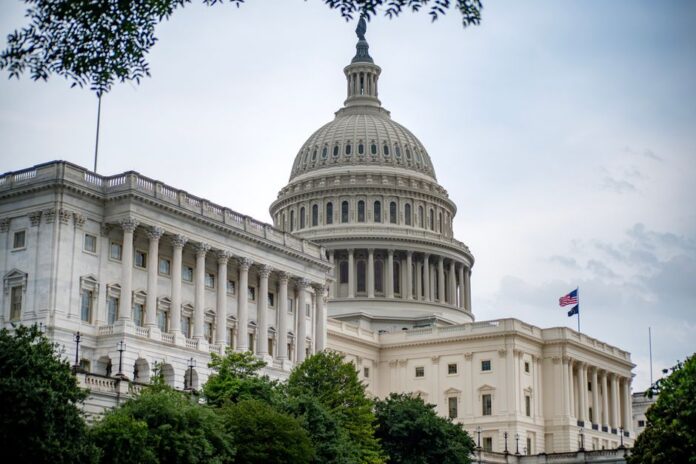
Photo: Ramaz Bluashvili / Pexels
By Political Watch Newsroom, Politics Desk — Published September 16, 2026
Table of Contents
- Key Takeaways
- The Background & Context
- Why This Matters
- Reactions & Analysis
- What Happens Next
- Frequently Asked Questions
The U.S. House of Representatives has taken a decisive step to rein in presidential war powers, directing the Trump administration to halt military operations against Iran unless Congress grants explicit authorization. The move marks a critical reassertion of legislative authority over matters of war and peace, reflecting growing unease on Capitol Hill about executive overreach in foreign military engagements.
As tensions with Tehran escalate and the specter of armed conflict looms, lawmakers from both parties are grappling with fundamental questions about the constitutional balance of power. The House directs Trump through resolutions that invoke Congress’s authority under the War Powers Act, legislation designed decades ago to prevent presidents from unilaterally committing American forces to prolonged hostilities without legislative consent.
This confrontation between the executive and legislative branches arrives at a moment when American voters are increasingly skeptical of endless military commitments abroad. The debate touches core campaign issues heading into election season: presidential accountability, the proper role of Congress in national security decisions, and whether the United States should continue bearing the costs—in lives and treasure—of Middle Eastern conflicts.
Key Takeaways
- The House has issued directives requiring the Trump administration to either cease military operations against Iran or obtain formal congressional approval before proceeding.
- The action represents Congress attempting to reclaim its constitutional war-making authority from the executive branch through legislative means.
- Legal experts are examining what these congressional resolutions actually mean for ongoing and potential military operations in Iran.
- The debate centers on how Congress can effectively end unauthorized military action and establish mechanisms to prevent future presidential wars without legislative consent.
- This political showdown occurs against a backdrop of heightened tensions in the Persian Gulf and broader questions about America’s military commitments overseas.
- The resolutions test the practical limits of congressional power when a president is determined to act unilaterally in national security matters.
The Background & Context
The constitutional framers deliberately split war powers between Congress and the president. Article I grants Congress the power to declare war. Article II makes the president commander-in-chief. For generations, this division has generated friction, particularly as modern presidents have ordered military strikes and sustained operations without formal declarations of war.
The War Powers Resolution of 1973 attempted to clarify these boundaries. Passed over President Nixon’s veto in the wake of Vietnam, the law requires presidents to notify Congress within 48 hours of committing armed forces to military action. It further mandates that forces be withdrawn within 60 days unless Congress authorizes continued action or declares war.
Yet enforcement has proven elusive. Presidents of both parties have claimed inherent constitutional authority to defend national interests. They’ve cited standing authorizations—some dating back decades—to justify new operations. Congress, meanwhile, has often proved reluctant to force confrontations, fearing accusations of undermining troops in harm’s way or appearing weak on national security.
The current Iran situation reignites these tensions. Relations between Washington and Tehran have deteriorated sharply in recent years, with military incidents, economic sanctions, and proxy conflicts creating a combustible mix. American forces remain deployed throughout the region, and the risk of miscalculation or deliberate escalation runs high.
Against this backdrop, House members are asserting that the president cannot wage war against Iran without coming to Congress first. The resolutions under consideration would formally direct the administration to cease unauthorized military operations and establish clearer boundaries for executive action going forward.
Why This Matters
For American taxpayers and military families, the stakes could hardly be higher. A full-scale war with Iran would likely dwarf recent Middle Eastern conflicts in scope and cost. Iran boasts a substantial military, a large population, and strategic depth. Any conflict would risk drawing in regional powers, disrupting global energy markets, and potentially lasting years.
The financial burden would fall on ordinary citizens. Defense spending would surge. Economic disruption from oil price spikes could ripple through household budgets. And American service members would face deployment to yet another theater, with all the attendant risks of casualties and long-term health consequences.
Beyond the immediate Iran question, this confrontation addresses a fundamental issue of democratic governance. If presidents can launch wars unilaterally, the people’s elected representatives lose their most consequential check on executive power. Congress controls the purse strings and the authority to declare war precisely because the framers wanted such momentous decisions to require broad consensus, not individual presidential judgment alone.
The politics cut across traditional partisan lines in complex ways. Some conservatives champion robust presidential authority in foreign affairs, viewing legislative constraints as dangerous micromanagement. Others, particularly libertarian-leaning Republicans, worry about unchecked executive power and endless wars. Progressives generally favor congressional reassertion but face pressure to support Democratic presidents when their party holds the White House. Moderate Democrats often split between hawkish national security positions and dovish constituent preferences.
Voters, meanwhile, consistently tell pollsters they’re weary of protracted Middle Eastern conflicts. Campaign rhetoric frequently promises to bring troops home and avoid new wars. Yet once in office, presidents of both parties have found reasons to maintain or expand military commitments. This gap between campaign promises and governing reality fuels public cynicism about Washington’s responsiveness to popular will.
Reactions & Analysis
Legal scholars examining the House resolutions note they raise thorny questions about enforceability and practical effect. Congressional directives carry moral and political weight, but can a resolution actually stop a president determined to act? The Constitution provides impeachment as the ultimate remedy for executive overreach, yet that process is politically fraught and rarely employed.
Some analysts suggest Congress’s real power lies in its control of military funding. Lawmakers could theoretically refuse to appropriate money for unauthorized operations. But such moves risk being portrayed as abandoning troops already deployed, a politically toxic position that has deterred Congress from using its fiscal authority aggressively in war powers disputes.
Others point to the judiciary as a potential arbiter. Courts have historically been reluctant to wade into war powers disputes, often dismissing them as “political questions” best resolved between the elected branches. Still, sufficiently clear congressional directives might give judges a framework for intervention if the executive branch simply ignores legislative will.
Within the administration, officials have typically asserted broad presidential authority to defend American interests and personnel abroad. They argue that waiting for congressional approval in fast-moving security situations could prove catastrophic. They cite previous military authorizations as providing sufficient legal basis for operations against Iran, particularly those targeting terrorist organizations with Iranian connections.
Congressional supporters of the resolutions counter that the framers deliberately made war-making difficult, requiring consensus precisely because the decision is so consequential. They argue that genuine defensive emergencies—repelling sudden attacks—fall within presidential authority, but initiating hostilities or conducting sustained campaigns demands legislative approval.
What Happens Next
The immediate trajectory depends partly on events beyond Washington’s control. If tensions with Iran cool, the resolutions may become largely symbolic, marking congressional displeasure without forcing an immediate crisis. If hostilities escalate, however, the confrontation between legislative directive and executive action could come to a head rapidly.
Should the administration proceed with military operations despite congressional directives, lawmakers would face difficult choices. They could pursue legal action, though courts might decline jurisdiction. They could threaten funding cutoffs, risking political backlash. They could escalate to impeachment proceedings, a move that would consume Congress and divide the country.
More likely, the resolution represents an opening salvo in ongoing negotiations over war powers. Congress may extract commitments to consult more thoroughly before military action. The administration might agree to narrower interpretations of existing authorizations. Both sides could claim partial victory while avoiding constitutional crisis.
Looking ahead to future administrations and Congresses, this episode will inform how the branches interact on military matters. If congressional directives prove effective in constraining presidential action, lawmakers may employ them more frequently. If they prove toothless, presidents will feel emboldened to act unilaterally, and the War Powers Resolution will continue its slide toward irrelevance.
The outcome also shapes America’s broader strategic posture. Allies and adversaries alike watch to see whether the U.S. political system can produce coherent, sustained foreign policy or whether partisan division and institutional conflict paralyze decision-making. That perception affects everything from deterrence credibility to alliance cohesion to adversaries’ willingness to test American resolve.
Frequently Asked Questions
What exactly is a War Powers Resolution and how does it work?
The War Powers Resolution is a 1973 federal law designed to check presidential power to commit U.S. forces to armed conflict without congressional consent. It requires the president to notify Congress within 48 hours of military action and to withdraw forces within 60 days unless Congress authorizes continuation or declares war. The law has been controversial since passage, with presidents of both parties questioning its constitutionality while generally complying with its notification requirements, if not always its spirit.
Can Congress actually force a president to stop military operations?
Congress possesses several tools to constrain presidential military action, though each presents practical and political challenges. Lawmakers control military appropriations and can theoretically refuse funding for unauthorized operations. They can pass binding legislation directing force withdrawals, though presidents might veto such measures. Ultimately, Congress could pursue impeachment for defying clear legislative directives. However, these remedies are politically difficult to employ, and presidents have often found ways to act despite congressional opposition, creating ongoing tension between the branches.
Why does this matter for regular American citizens?
War powers disputes directly affect American lives and wallets. Military conflicts require service members to deploy, risking death and injury. Wars cost taxpayers hundreds of billions or even trillions of dollars that could otherwise fund domestic priorities. Regional conflicts can disrupt energy markets, raising prices at the pump. More broadly, these constitutional battles determine whether elected representatives—accountable to voters—retain meaningful say over the most consequential decisions government makes, or whether presidents can commit the nation to war based on individual judgment alone.
What makes the Iran situation different from other military conflicts?
Iran presents a particularly complex challenge because of its size, capabilities, and regional position. Unlike smaller adversaries the U.S. has faced in recent decades, Iran has a substantial military, a large population, and strategic depth. It maintains proxy forces across the Middle East and could retaliate against American allies and interests throughout the region. A conflict with Iran would likely be far more costly and protracted than recent operations in Iraq, Syria, or Afghanistan. These high stakes make the question of proper authorization especially urgent and consequential for Congress and the American public.
As this political and constitutional drama unfolds, Americans are watching to see whether their government can balance security imperatives with democratic accountability. The House’s directive to the Trump administration represents more than partisan maneuvering—it’s a test of whether the constitutional system of checks and balances can function effectively in an era of rapid-fire global threats and polarized domestic politics. The answer will shape not just policy toward Iran, but the fundamental relationship between war, power, and popular consent in American democracy.