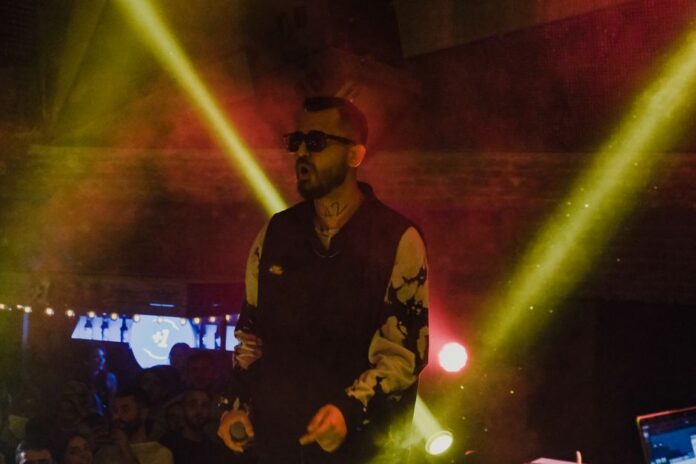
Photo: Faruk Tokluoğlu / Pexels
By Political Watch Newsroom, Entertainment Desk — Published September 20, 2026
Table of Contents
- Key Takeaways
- The Background & Context
- Why This Matters
- Reactions & Analysis
- What Happens Next
- Frequently Asked Questions
Karan Aujla announces a major expansion of his live performance calendar, bringing his “P-Pop Culture Tour” to American arenas in 2026. The Punjabi music sensation has confirmed fall dates across the United States, marking another milestone in the growing crossover appeal of South Asian artists in mainstream entertainment markets. According to reports, the tour will feature arena-scale productions, signaling the artist’s confidence in drawing large crowds across multiple cities.
The announcement comes as streaming platforms and pop culture consumption patterns continue to reshape the music industry landscape. Aujla’s decision to book arena venues rather than smaller theaters reflects the expanding audience for Punjabi pop music in North America, where diaspora communities and broader pop culture enthusiasts have driven demand for live performances. This tour represents a significant bet on the staying power of what industry observers call “P-Pop”—a fusion of Punjabi lyrics, hip-hop production, and contemporary pop sensibilities.
While specific venue names and ticket pricing have not yet been disclosed in initial reports, the confirmation of fall 2026 US arena shows positions Aujla among a select group of South Asian artists commanding major concert infrastructure in American markets. The timing also places his tour within a crowded entertainment calendar that includes announcements from legacy acts like Death Cab for Cutie, who recently revealed their own 2027 North American tour plans.
Key Takeaways
- Karan Aujla has confirmed fall 2026 US arena dates for his “P-Pop Culture Tour,” expanding his live performance footprint in American markets.
- The tour announcement reflects growing mainstream acceptance of Punjabi pop music and South Asian artists in the US entertainment industry.
- Arena-scale bookings indicate significant audience demand and mark a departure from smaller venue tours typical of emerging international acts.
- The timing places Aujla’s tour within a competitive 2026-2027 concert landscape as live music continues its post-pandemic recovery.
- Streaming platforms and pop culture trends have helped build Aujla’s US fanbase beyond traditional diaspora audiences.
- Specific cities, venues, and ticketing details remain pending as the tour rollout continues.
The Background & Context
Karan Aujla has emerged as one of the most commercially successful Punjabi artists of the past decade, building a catalog that blends traditional Punjabi musical elements with modern hip-hop and trap production. His rise mirrors broader trends in how streaming has democratized music discovery, allowing artists from non-English-language markets to build substantial followings in the United States without traditional radio support or major label backing in their early careers.
The term “P-Pop” itself represents an attempt to brand Punjabi popular music with the same cultural cachet as K-Pop, which has successfully crossed over into American mainstream consciousness over the past decade. While the comparison has its critics, the branding strategy acknowledges that American audiences increasingly consume music across linguistic and cultural boundaries, particularly younger demographics who discover new artists through TikTok, Instagram, and algorithm-driven streaming playlists.
Aujla’s previous US performances have drawn enthusiastic crowds, particularly in cities with significant South Asian populations such as New York, Chicago, San Francisco, and Houston. However, the jump to arena-level bookings represents a calculated gamble that his appeal has broadened sufficiently to fill venues typically reserved for platinum-selling American artists. Arena tours require substantial upfront investment in production, marketing, and logistics, with break-even points often requiring sellouts or near-sellouts across multiple markets.
The broader context includes a live music industry still recalibrating after pandemic-era disruptions. Touring revenue has become increasingly critical for artists as streaming payments remain contentious and album sales continue their long-term decline. Major tours now often book dates years in advance to secure premium venues and coordinate complex production schedules. Aujla’s 2026 booking timeline is consistent with industry norms for arena-level acts planning major tours.
Why This Matters
For American entertainment consumers, Aujla’s arena tour represents the continued diversification of mainstream pop culture. The success or failure of this tour will send signals to promoters, venue operators, and other international artists about the viability of large-scale South Asian music events in markets beyond traditional diaspora strongholds.
The economic implications extend beyond ticket sales. Major tours generate significant revenue for local economies through hotel bookings, restaurant spending, and related tourism. Arena shows typically employ hundreds of local workers in security, concessions, and venue operations. For cities on the tour route, these events represent tangible economic activity tied to cultural programming that reflects America’s changing demographics.
From a cultural perspective, the normalization of non-English-language arena tours challenges longstanding assumptions about American entertainment consumption. For decades, international artists typically needed English-language crossover hits to justify major US tours. Aujla’s arena bookings suggest that model may be evolving, with streaming metrics and social media engagement providing alternative pathways to commercial viability.
The announcement also matters for younger South Asian Americans who have historically seen limited representation in mainstream entertainment spaces. Arena tours by artists who perform primarily in Punjabi validate cultural identities often marginalized in American pop culture discourse. This representation carries particular weight for second- and third-generation diaspora youth navigating hybrid cultural identities.
Reactions & Analysis
Industry observers have noted the strategic timing of the announcement, coming more than a year before the actual tour dates. This extended lead time allows for multi-phase marketing campaigns, strategic partnerships with streaming platforms, and coordination with potential sponsors targeting South Asian and multicultural audiences. It also provides ample runway for ticket sales, which increasingly occur in waves through presales, general sales, and dynamic pricing models.
The decision to brand the tour as the “P-Pop Culture Tour” rather than simply a concert series reflects sophisticated marketing thinking. By invoking “culture” explicitly, the tour positions itself as an event rather than merely a performance—a strategy that has proven effective in driving attendance and creating social media buzz. Concertgoers increasingly view major tours as cultural moments worth documenting and sharing, a dynamic that benefits from aspirational branding.
Some music industry analysts have questioned whether arena capacities can be sustained across multiple markets, particularly in regions with smaller South Asian populations. However, defenders point to the success of other diaspora-driven tours and the crossover appeal demonstrated by streaming numbers that include significant non-South Asian listenership. The ultimate verdict will depend on actual ticket sales and attendance figures once the tour launches.
The broader entertainment landscape provides both opportunities and challenges. On one hand, competition for entertainment dollars remains fierce, with consumers choosing among concerts, movies, streaming subscriptions, and other leisure options. On the other hand, live music has demonstrated resilience as an experience that cannot be replicated digitally, potentially giving tours an advantage in an increasingly virtual entertainment ecosystem.
What Happens Next
The immediate next steps will involve detailed tour routing announcements, including specific cities, venues, and dates. Promoters will likely target markets with proven track records for South Asian entertainment events while potentially testing newer markets where demographic trends suggest growing audiences. Ticket pricing strategies will be closely watched, as they must balance revenue maximization with accessibility for core fan bases.
Marketing campaigns will ramp up across multiple channels, with particular emphasis on social media platforms where Aujla has built substantial followings. Expect partnerships with streaming services to promote tour-exclusive content, behind-the-scenes footage, and potentially special releases timed to coincide with the tour announcement. These strategies have become standard practice for major tours seeking to maintain momentum during extended pre-sale periods.
The success of this tour will likely influence booking decisions for other South Asian artists considering US arena tours. A successful run could open doors for similar acts, while disappointing sales might reinforce conservative booking strategies that favor smaller, safer venues. Either outcome will shape the landscape for international artists seeking to expand their American footprints.
Longer term, the tour represents a test case for whether streaming-era fandom translates to live attendance at premium price points. The music industry continues grappling with how digital consumption patterns predict real-world behavior, and tours like Aujla’s provide valuable data points for future planning across the entertainment sector.
Frequently Asked Questions
When will Karan Aujla’s P-Pop Culture Tour come to the United States?
According to reports, Karan Aujla has confirmed fall 2026 dates for US arena shows as part of his P-Pop Culture Tour. Specific dates, cities, and venues have not yet been publicly announced, but the fall 2026 timeframe provides a general window for when fans can expect performances. Additional details are expected to be released as tour planning progresses.
What is P-Pop and how does it relate to Karan Aujla’s music?
P-Pop refers to Punjabi pop music that blends traditional Punjabi musical elements with contemporary production styles including hip-hop, trap, and electronic influences. The term borrows branding strategies from K-Pop to position Punjabi music as a distinct cultural export with crossover appeal. Aujla’s music exemplifies this fusion, combining Punjabi lyrics with production that resonates with broader pop culture audiences familiar with hip-hop and contemporary music trends.
Why are arena shows significant for an international artist like Karan Aujla?
Arena bookings represent a major commercial milestone, as these venues typically seat between 10,000 and 20,000 people and require substantial ticket sales to be financially viable. For an artist performing primarily in a non-English language, arena tours demonstrate crossover appeal beyond core diaspora audiences. The decision to book arenas rather than theaters signals confidence in broad market demand and represents a significant investment in production, marketing, and tour infrastructure.
How has streaming changed opportunities for international artists in the US market?
Streaming platforms have fundamentally altered how international artists reach American audiences by removing traditional gatekeepers like radio programmers and major label A&R departments. Algorithm-driven discovery and playlist placement allow artists to build fanbases based on listener preferences rather than language or geography. This has enabled artists like Aujla to accumulate millions of streams and develop touring viability without traditional crossover singles or English-language releases, fundamentally changing the economics and accessibility of the American entertainment market.
As 2026 approaches, the entertainment industry will be watching closely to see whether Aujla’s arena gambit pays off. The outcome will matter not just for one artist’s career trajectory, but for the broader question of how American pop culture continues to evolve in an era of global connectivity and demographic change. For now, fans have a date to anticipate, and the industry has a test case to study.