
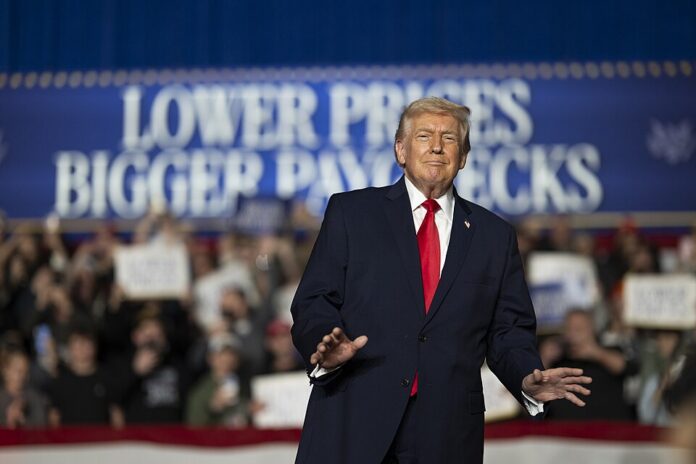
Republican candidates across battleground states are distancing themselves from President Trump’s support for artificial intelligence data centers as voter opposition mounts ahead of the 2026 midterm elections, creating a rare policy split within the party.
Widespread Republican Retreat on Data Centers
Former Representative Mike Rogers, running for Senate in Michigan, announced support for a one-year moratorium on data center construction after previously welcoming the expansion. Rogers stated his position aims to protect community control, prevent utility price increases, safeguard water resources, and eliminate political corruption. In Ohio, the National Republican Senatorial Committee warned that data center opposition could help Democrats flip a crucial Senate seat currently held by appointed Republican Senator Jon Husted.
Texas Attorney General Ken Paxton, now seeking a Senate seat, released a four-point plan to limit data center growth. Governor Greg Abbott halted new data center connections to the state’s power grid pending a regulatory review. Ohio gubernatorial nominee Vivek Ramaswamy pledged to stop all new data center approvals on his first day in office until implementing proposed safeguards.
Polling Shows Voter Concerns
A recent Fox News poll found seventy percent of voters want to halt data center construction in their communities, with only thirty percent supporting new development. Opposition crosses party lines, with just forty percent of Republicans and forty-six percent of MAGA Republicans backing new facilities. Voters cite concerns about rising electricity costs plus energy and water consumption as primary reasons for their opposition to data center expansion.
Trump Defends Technology Investment
President Trump defended data center development on social media Monday, arguing that communities wanting success and prosperity with lower taxes and abundant jobs should embrace the technology. His position stands in sharp contrast to the growing number of Republican candidates backing away from data center support. Representative Byron Donalds of Florida, who opposes moratoriums and received significant AI industry support during his primary campaign, introduced legislation requiring large data centers to generate their own power and water rather than drawing from public utilities.
Political Implications for 2026
The divide represents a significant shift for Republicans who previously embraced the artificial intelligence industry without reservation. GOP strategists now describe data centers as politically radioactive heading into November’s elections. Democratic groups have invested millions in advertisements connecting Republican candidates to unpopular data center projects, particularly targeting Husted in Ohio as the face of data center expansion. Pennsylvania Treasurer Stacy Garrity and Wisconsin Representative Tom Tiffany have also called for pauses or strict conditions on new developments in their respective gubernatorial campaigns.