
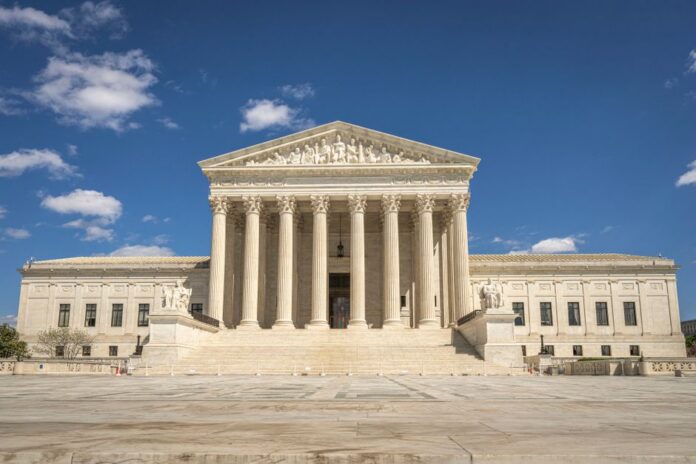
Photo: Mark Stebnicki / Pexels
By Political Watch Newsroom, National Desk — Published November 24, 2026
Table of Contents
- Key Takeaways
- The Background & Context
- Why This Matters
- Reactions & Analysis
- What Happens Next
- Frequently Asked Questions
The nation’s highest court has opened a controversial door. In a decision that arrives with midterm elections on the horizon, the Supreme Court has cleared the Trump administration to deploy a modified voter verification database designed to check citizenship status. The ruling revives a data system that had been challenged on multiple fronts, raising immediate questions about voter access, election integrity, and the balance between federal oversight and individual rights.
The decision lands at a politically charged moment. Election officials across the country are already navigating heightened scrutiny of voter rolls, while civil rights advocates warn that aggressive citizenship verification measures could disenfranchise eligible voters. The Supreme Court clears the path for the federal government to move forward despite these concerns, setting up a potential test case for how far states can go in policing who casts a ballot.
At its heart, this case touches on fundamental questions about American democracy. Who gets to vote? How do we verify eligibility without creating barriers? And what role should the federal government play in answering those questions?
Key Takeaways
- The Supreme Court has authorized the Trump administration to use a modified database system for verifying voter citizenship, reviving a controversial tool that had faced legal challenges.
- The decision arrives as midterm elections approach, creating immediate implications for voter registration and verification processes across multiple states.
- Civil rights groups have raised concerns that citizenship checks could disproportionately affect naturalized citizens and eligible voters from immigrant communities.
- The ruling represents a victory for advocates of stricter voter verification measures who argue such systems are necessary to prevent non-citizens from casting ballots.
- Election administrators now face the challenge of implementing the database system while ensuring eligible voters are not wrongly flagged or removed from rolls.
- The decision may influence similar voter verification efforts in other states and could shape the broader national debate over election security versus voter access.
The Background & Context
Voter verification databases have been flashpoints in American politics for years. The tension is simple to state but complex to resolve: election officials need tools to maintain accurate voter rolls, but aggressive purging or verification measures risk removing legitimate voters from the system.
The Trump administration has made voter verification a priority, arguing that ensuring only citizens vote is fundamental to election integrity. Critics counter that documented cases of non-citizen voting are extremely rare, while verification systems often generate false positives that burden naturalized citizens and others with legitimate voting rights.
This particular database system cross-references multiple government records to flag potential non-citizens on voter rolls. Proponents say such matching provides an efficient way to identify ineligible voters. Opponents warn that government databases are notoriously error-prone, with mismatches occurring due to name variations, data entry mistakes, and outdated information.
The legal battle over the database has wound through lower courts, with challenges focusing on both the accuracy of the matching system and the potential for voter suppression. Some judges expressed concern that the database could disproportionately flag voters with foreign-sounding names or those who have naturalized more recently.
The Supreme Court’s intervention came through its emergency docket, a path increasingly used for consequential decisions that bypass the usual lengthy appellate process. The justices did not issue a full opinion explaining their reasoning, leaving election officials and legal experts to interpret the practical implications.
Why This Matters
For millions of Americans, this decision could directly affect their ability to vote. Naturalized citizens who followed every rule to become Americans may find themselves having to prove their citizenship again. Voters flagged by the database may face additional hurdles at the polls or discover they have been removed from rolls entirely.
The timing amplifies the stakes. Midterm elections serve as crucial referendums on the party in power and determine control of Congress. Any system that affects who can vote inevitably becomes entangled in partisan calculations, regardless of its stated purpose.
Election administrators face a difficult balancing act. They have legal obligations to maintain accurate voter rolls and prevent ineligible voting. They also have obligations to ensure every eligible citizen can exercise their franchise without unnecessary obstacles. Database matching systems can help with the first goal but may undermine the second.
The decision also reflects broader tensions in American democracy. Trust in elections has become increasingly polarized, with different camps emphasizing different threats. Some focus on voter suppression and access barriers. Others emphasize fraud prevention and election security. This case sits squarely at that intersection.
For taxpayers, there are practical questions about cost and implementation. Database systems require funding, maintenance, and oversight. If the system generates large numbers of false positives, election offices will need additional resources to process challenges and correct errors. Those costs ultimately fall on the public.
The precedent matters too. If the Supreme Court allows this verification system to proceed, other states may adopt similar approaches. The decision could establish new parameters for what kinds of voter verification measures pass constitutional muster, shaping election administration for years to come.
Reactions & Analysis
The response to the Supreme Court’s decision has split along predictable lines, but with some nuance worth examining. Supporters of stricter voter verification measures have welcomed the ruling as common sense. They argue that citizenship is a basic requirement for voting, and checking that requirement through available government data is both logical and necessary.
State officials who have pushed for enhanced verification tools see the decision as vindication. They contend that concerns about database accuracy are overblown and that safeguards exist to protect legitimate voters who are incorrectly flagged. These officials emphasize that flagged voters typically receive notice and opportunity to correct any errors before being removed from rolls.
Civil rights organizations have expressed alarm. They point to historical patterns where verification measures, even when race-neutral on their face, have disproportionately burdened minority voters. Immigrant communities, they argue, may be especially vulnerable to database errors given variations in how names are recorded across different government systems.
Legal scholars note that the Supreme Court’s use of its emergency docket for this decision continues a controversial trend. Major policy questions are being decided without full briefing or oral argument, and often without detailed written opinions explaining the court’s reasoning. This approach, critics say, provides little guidance for lower courts or election officials trying to understand the boundaries of permissible action.
Some election administrators have expressed frustration at being caught in the middle. They face pressure from multiple directions: advocacy groups threatening litigation if verification measures go too far, political leaders demanding action on election security, and voters who want assurance the system works fairly. Database tools that seem straightforward in theory become complicated in practice.
What Happens Next
Implementation begins immediately. The Trump administration can now move forward with deploying the modified database system, and states that wish to use it have the green light to do so. Election officials will need to determine how to integrate the system into existing voter registration processes.
Litigation is likely to continue. While the Supreme Court has cleared the way for the database to be used, legal challenges on other grounds may proceed through lower courts. Plaintiffs could argue that specific applications of the database violate voting rights laws or that particular states are implementing the system in discriminatory ways.
Voters flagged by the system will begin receiving notices. How states handle that notification process will be crucial. Clear communication, adequate time to respond, and accessible procedures for correcting errors can mitigate some concerns. Confusing notices, short deadlines, or burdensome documentation requirements could exacerbate problems.
Congress may weigh in. Federal legislation could establish standards for voter verification databases, require accuracy audits, or create additional protections for voters who are incorrectly flagged. However, given partisan divisions over voting issues, such legislation faces long odds in the current political environment.
The midterm elections will serve as a real-world test. If the database system functions smoothly and generates few problems, concerns may diminish. If eligible voters are turned away or removed from rolls in significant numbers, pressure for reform will intensify. Either way, the experience will inform ongoing debates about election administration.
Other states are watching closely. The Supreme Court’s decision may encourage adoption of similar verification systems elsewhere. States considering such measures will look at both the legal landscape and the practical results to guide their decisions.
Frequently Asked Questions
What exactly is this voter verification database?
The database system cross-references voter registration information with other government records to identify potential non-citizens on voter rolls. It uses data matching techniques to flag individuals whose records suggest they may not be U.S. citizens, triggering additional verification steps before those individuals can vote or remain registered.
Will this affect my ability to vote if I am a U.S. citizen?
Most citizens will see no impact. However, if you are flagged by the database system—which can happen due to data errors or mismatches—you may receive a notice requiring you to provide additional documentation of your citizenship. Naturalized citizens may be more likely to be flagged than those born in the United States, though the system can generate false positives for any voter.
How accurate are these database matching systems?
Accuracy varies depending on the quality of underlying data and the matching algorithms used. Government databases often contain errors, outdated information, or inconsistent formatting that can lead to incorrect matches. Critics argue these systems generate too many false positives, while supporters contend that notification and correction procedures prevent eligible voters from being wrongly disenfranchised.
Could this decision influence other voting-related cases?
Yes. The Supreme Court’s willingness to allow this verification system to proceed may signal its broader approach to balancing election security measures against voter access concerns. Lower courts considering similar cases will likely interpret this decision as giving states more latitude to implement citizenship verification tools, potentially influencing voting rules in multiple jurisdictions.
The Supreme Court’s decision settles one legal question but opens many practical ones. As election officials begin implementing the database system and voters navigate its requirements, the true impact will become clear. Democracy depends on getting the details right—ensuring every eligible citizen can vote while maintaining public confidence in election integrity. That balance has never been easy to strike, and this decision adds new complexity to an already challenging task.