
Photo: Rafael Minguet Delgado / Pexels
By Political Watch Newsroom, Economy Desk — Published September 18, 2026
Table of Contents
- Key Takeaways
- The Background & Context
- Why This Matters
- Reactions & Analysis
- What Happens Next
- Frequently Asked Questions
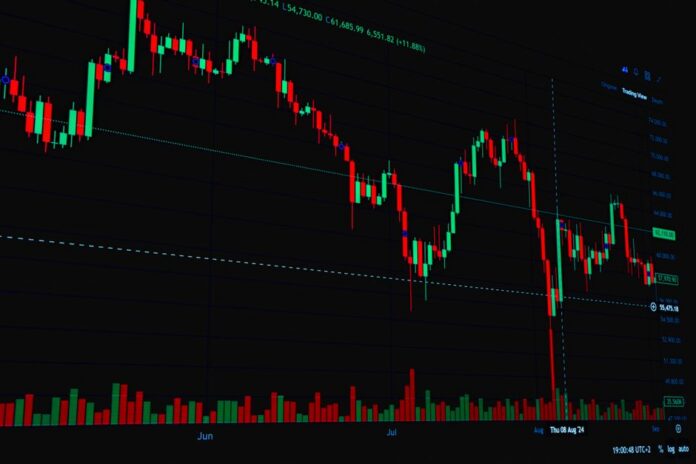
Wall Street stumbled Wednesday as investors absorbed the Federal Reserve‘s latest interest rate increase and braced for yet another hike before year’s end. The view stocks pull back sharply reflected mounting anxiety over the central bank’s aggressive stance against inflation, with major indices surrendering gains accumulated over recent weeks. The Dow Jones Industrial Average fell roughly 500 points, signaling that markets remain jittery about the Fed’s commitment to keeping borrowing costs elevated even as economic uncertainty grows.
The selloff came immediately after the Federal Reserve announced its decision to raise the key interest rate, continuing a campaign that has reshaped the economic landscape for American families, businesses, and investors alike. What spooked traders most was not the rate hike itself—which many had anticipated—but rather the Fed’s indication that at least one more increase lies ahead this year. That forward guidance dashed hopes among some market participants that the central bank might soon pause its tightening cycle.
For everyday Americans, the implications ripple far beyond Wall Street trading floors. Higher interest rates mean costlier mortgages, pricier car loans, and more expensive credit card debt. The Fed’s battle against inflation, while aimed at protecting purchasing power over the long term, inflicts short-term pain on households already stretched thin by elevated prices for groceries, gasoline, and housing.
Key Takeaways
- Major stock indices declined sharply following the Federal Reserve’s announcement of a new interest rate increase, with the Dow falling approximately 500 points.
- The Fed signaled that another rate hike is likely before the end of the year, surprising some investors who had hoped the tightening cycle might be nearing its conclusion.
- The market pullback reflects ongoing concern about the central bank’s aggressive approach to combating inflation through higher borrowing costs.
- Higher interest rates directly impact American consumers through increased costs for mortgages, auto loans, and credit card balances.
- The Fed’s stance suggests policymakers remain unconvinced that inflation has been sufficiently tamed, despite recent encouraging data.
- Investors now face renewed uncertainty about the trajectory of both monetary policy and economic growth heading into the final months of the year.
The Background & Context
The Federal Reserve embarked on one of its most aggressive interest rate hiking campaigns in decades beginning in early 2022, responding to inflation that reached four-decade highs. Consumer prices had surged as the economy reopened from pandemic lockdowns, supply chains snarled, and massive government stimulus flooded the system with cash. By mid-2022, inflation had climbed above nine percent on an annual basis, eroding paychecks and stoking public frustration.
The central bank’s primary tool for fighting inflation is raising interest rates, which works by making borrowing more expensive and thereby cooling demand across the economy. When businesses and consumers pull back on spending, price pressures theoretically ease. But the medicine comes with side effects: slower economic growth, potential job losses, and financial market volatility.
Over the past eighteen months, the Fed has lifted its benchmark rate from near zero to levels not seen since before the 2008 financial crisis. Each hike has reverberated through the economy. Mortgage rates have more than doubled from their pandemic-era lows, chilling the once-red-hot housing market. Corporate borrowing costs have climbed, prompting some companies to delay expansion plans or cut jobs. And stock markets have gyrated wildly as investors try to guess when the Fed might finally declare victory over inflation.
Earlier this year, some hopeful signs emerged. Inflation began to moderate from its peaks, though it remained well above the Fed’s two-percent target. The labor market stayed remarkably resilient, with unemployment holding near historic lows even as interest rates climbed. This “Goldilocks” scenario—cooling inflation without a recession—seemed possible. Markets rallied on optimism that the Fed might pause or even begin cutting rates in the near future.
Wednesday’s announcement shattered that optimism. The Fed made clear it sees more work ahead.
Why This Matters
The Federal Reserve’s decisions rank among the most consequential for ordinary Americans, even if the mechanics of monetary policy seem abstract or technical. Interest rates touch nearly every corner of economic life.
Consider housing, the largest expense for most families. When the Fed raises rates, mortgage rates typically follow. A homebuyer who could have afforded a $400,000 house at three-percent interest suddenly finds that same monthly payment only covers a $320,000 house at six-percent interest. First-time buyers get priced out. Existing homeowners stay put rather than trade up, freezing the market. Real estate agents, construction workers, and furniture sellers all feel the pinch.
Or take credit card debt, which now burdens the average American household to the tune of thousands of dollars. As the Fed’s benchmark rate rises, so do credit card interest rates, which are already punishingly high. Families carrying balances find themselves paying more each month just to service debt, leaving less for groceries, healthcare, or saving for retirement.
Businesses face similar pressures. Small companies that rely on lines of credit to manage cash flow or invest in equipment now pay more to borrow. That can mean fewer hires, smaller raises for workers, or higher prices passed along to customers—perpetuating the very inflation the Fed is trying to quash.
The stock market selloff matters too, even for Americans who don’t actively trade. Roughly half of U.S. households own stocks directly or through retirement accounts like 401(k)s. When markets tumble, nest eggs shrink. A worker nearing retirement may need to delay that milestone. A family saving for college sees their 529 plan balance drop.
Beyond these immediate impacts, the Fed’s actions shape the broader economic trajectory. Push rates too high, and the economy could tip into recession, costing millions of jobs. Keep rates too low, and inflation could become entrenched, requiring even more painful measures down the road. The central bank walks a tightrope, and every American’s financial security hangs in the balance.
Reactions & Analysis
The market’s swift negative reaction to the Fed’s announcement revealed how sensitive investors have become to any hint that interest rates might stay elevated longer than anticipated. The 500-point drop in the Dow represented more than just numbers on a screen; it reflected a collective reassessment of risk and return across thousands of stocks.
Financial analysts noted that the pullback stemmed not from the rate hike itself but from the Fed’s forward guidance about another increase to come. Many market participants had positioned themselves for a scenario in which the central bank might hold rates steady through year’s end, allowing the economy to adjust to the cumulative impact of previous hikes. The prospect of additional tightening forced a rapid recalibration.
The view stocks pull back phenomenon extended across sectors. Technology companies, which tend to suffer most when rates rise because their valuations depend heavily on future earnings, led the decline. Financial stocks showed mixed results—higher rates can boost bank profits, but they also raise recession risks that could trigger loan defaults. Energy and consumer staples held up relatively better, as they often do when investors seek defensive positions.
Bond markets also reacted, with yields on government securities climbing as traders priced in the likelihood of another rate increase. Higher bond yields make fixed-income investments more attractive relative to stocks, pulling money out of equities and into safer assets.
For the Fed itself, the decision to signal another hike reflects ongoing concern that inflation, while improved, has not been decisively beaten. Central bankers have repeatedly warned against declaring victory prematurely, pointing to historical episodes when inflation resurged after policy eased too soon. They appear determined to err on the side of overtightening rather than risk allowing price pressures to accelerate again.
What Happens Next
The coming months will test whether the Federal Reserve can achieve the delicate balance it seeks: bringing inflation down to target without triggering a severe recession. Economic data will be scrutinized with unusual intensity as policymakers look for confirmation that their medicine is working.
Key indicators to watch include monthly inflation reports, which will show whether price pressures continue to moderate or prove more stubborn than expected. The labor market will be equally important—if unemployment begins rising sharply, it could signal that the Fed has tightened too much, potentially prompting a policy reversal. Consumer spending patterns will offer clues about whether higher interest rates are sufficiently cooling demand.
For investors, uncertainty likely persists. Markets historically dislike ambiguity, and the Fed’s commitment to data-dependent decision-making means each new economic release could trigger volatility. Stock prices may remain choppy as traders game out various scenarios for rate policy, inflation, and growth.
American consumers and businesses, meanwhile, must navigate an environment where borrowing costs remain elevated for the foreseeable future. Families considering major purchases may need to adjust expectations or delay decisions. Companies will continue weighing whether to invest in expansion or hunker down until the economic outlook clarifies.
The political dimension also bears watching. With a presidential election cycle heating up, economic policy will take center stage. Critics of the Fed’s approach may argue that rate hikes are unnecessarily punishing workers and risking recession, while defenders will contend that tough medicine now prevents worse pain later. Public sentiment about the economy—shaped by inflation, jobs, and financial markets—will influence voter attitudes heading into 2024.
Ultimately, the Fed’s path forward depends on how inflation evolves. If price pressures continue easing, the central bank may indeed pause after one more hike, as currently signaled. But if inflation proves resilient, additional increases could follow, prolonging the pain for markets and the economy alike.
Frequently Asked Questions
Why does the Federal Reserve raise interest rates?
The Federal Reserve raises interest rates primarily to combat inflation by making borrowing more expensive. When rates go up, consumers and businesses typically reduce spending and investment, which cools demand for goods and services. This reduced demand helps bring prices down. The Fed uses this tool to maintain price stability and keep inflation near its two-percent target, protecting the purchasing power of American households over time.
How do interest rate increases affect my personal finances?
Higher interest rates impact your finances in multiple ways. If you carry credit card debt or have a variable-rate loan, your monthly payments will increase. Mortgage rates climb, making home purchases more expensive. Car loans cost more. On the positive side, savings accounts and certificates of deposit typically offer better returns when rates rise. The overall effect depends on whether you’re primarily a borrower or a saver, though most Americans feel the squeeze from higher borrowing costs more immediately.
What does a stock market pullback mean for my retirement savings?
A stock market decline reduces the current value of retirement accounts like 401(k)s and IRAs that hold equities. However, the impact on your long-term financial security depends on your timeline. If you’re decades from retirement, short-term volatility matters less because markets historically recover and grow over extended periods. If you’re near or in retirement, a significant pullback can be more concerning, potentially requiring adjustments to withdrawal strategies or spending plans. Diversification across different asset types helps cushion the blow.
Could the Fed’s actions trigger a recession?
Yes, aggressive interest rate increases carry the risk of pushing the economy into recession. When borrowing becomes expensive enough, businesses may cut back on hiring or investment, and consumers may sharply reduce spending. This can create a downward spiral of falling demand, rising unemployment, and contracting economic activity. The Fed attempts to avoid this outcome by calibrating rate hikes carefully, but history shows that engineering a “soft landing”—taming inflation without causing recession—is extremely difficult. The central bank believes the risk of persistent inflation outweighs the risk of temporary economic contraction.
As Americans watch their investment statements and calculate monthly budgets, the Federal Reserve’s latest move serves as a reminder that the fight against inflation remains unfinished. The central bank has chosen continued vigilance over premature celebration, a decision that will shape economic fortunes for months to come. Whether this approach ultimately succeeds in restoring price stability without excessive economic damage remains the defining question of this economic moment.