
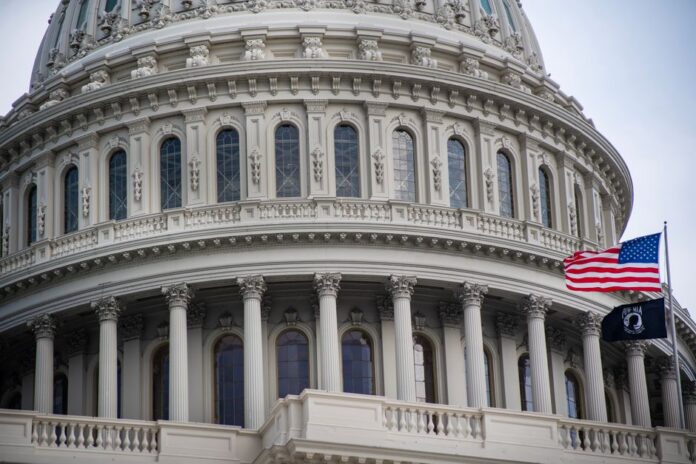
Photo: Ramaz Bluashvili / Pexels
By Political Watch Newsroom, Politics Desk — Published September 12, 2026
Table of Contents
- Key Takeaways
- The Background & Context
- Why This Matters
- Reactions & Analysis
- What Happens Next
- Frequently Asked Questions
America’s military stockpiles are dwindling. The United States is running out of weapons, and the blame falls squarely on Congress. As geopolitical tensions escalate and allies demand support, lawmakers on Capitol Hill have failed to authorize the replenishment funding needed to maintain the nation’s defense readiness. This isn’t just a procurement problem or a Pentagon planning failure—it’s a political crisis born from legislative gridlock, campaign posturing, and the dysfunction that has come to define modern American governance.
The issue has emerged at a critical juncture. With conflicts stretching American commitments across multiple theaters and midterm elections reshaping the balance of power in Washington, the weapons shortage exposes a dangerous gap between America’s global responsibilities and its domestic political capacity to meet them. Wall Street analysts are already betting on a split Congress following the upcoming midterms, a scenario that would likely deepen the legislative paralysis preventing swift action on defense appropriations.
For ordinary Americans, this may seem like an inside-the-Beltway problem. It’s not. The consequences ripple through national security, international credibility, and the economic health of communities dependent on defense manufacturing jobs.
Key Takeaways
- The United States faces a significant depletion of military weapons stockpiles due to ongoing international commitments and support to allies.
- Congressional inaction and legislative gridlock have prevented timely authorization of replenishment funding for defense inventories.
- Political dynamics surrounding midterm elections and the prospect of a divided Congress complicate efforts to address the weapons shortage.
- The situation raises serious questions about America’s military readiness and ability to respond to multiple simultaneous threats.
- Defense industry communities and workers face economic uncertainty as production schedules remain in limbo pending Congressional action.
- The weapons crisis reflects broader dysfunction in how Congress handles urgent national security legislation amid partisan division.
The Background & Context
Understanding how America arrived at this precarious position requires examining both recent policy decisions and long-standing Congressional dysfunction. The depletion of weapons stockpiles didn’t happen overnight. Years of sustained military aid to foreign partners, coupled with the drawdown of equipment from ongoing operations, have steadily reduced the Pentagon’s inventory of critical munitions and systems.
Defense planners traditionally maintain stockpiles based on projected conflict scenarios. These reserves exist to ensure the military can sustain operations while new production ramps up. But the calculus has changed. Extended commitments have drawn down these buffers faster than peacetime production rates can replace them.
Congress holds the constitutional power of the purse. No military spending occurs without legislative authorization and appropriation. In theory, this system ensures civilian control and democratic accountability over defense policy. In practice, it has become a bottleneck. Partisan battles over spending priorities, disputes about foreign policy direction, and the use of must-pass legislation as leverage for unrelated political goals have all contributed to delays in funding defense replenishment.
The political landscape has grown more complicated as midterm elections approach. Financial markets and political observers anticipate a split Congress—one chamber controlled by each party—which historically produces legislative stalemate. When neither party commands unified control, even urgent matters like national defense can become hostage to broader political warfare.
Campaign season amplifies these dynamics. Lawmakers face pressure from constituents with competing priorities: some demand robust military support for allies, while others question the cost and wisdom of sustained foreign commitments. Voting on defense spending becomes a political calculation rather than a strategic assessment, with members weighing how their votes will play in campaign advertisements and primary challenges.
Why This Matters
The weapons shortage carries profound implications that extend far beyond Pentagon spreadsheets. For American taxpayers, it represents a failure of governance. Citizens fund the military through their taxes with the expectation that leaders will maintain readiness and protect national interests. When political dysfunction prevents basic inventory management, it betrays that trust.
National security hangs in the balance. Military planners design strategies around available capabilities. Depleted stockpiles constrain options. If a crisis erupts requiring rapid military response, commanders may find themselves without adequate munitions to execute their missions. The risk isn’t hypothetical—it’s a real vulnerability that adversaries can exploit.
America’s credibility with allies suffers. Partners who depend on U.S. security guarantees watch Congressional debates closely. When lawmakers can’t agree on replenishing weapons stocks, it raises doubts about American reliability. Will the United States have the means to honor its commitments? Can allies count on American support in a crisis? These questions undermine deterrence and embolden adversaries.
Economic consequences touch communities across the country. Defense manufacturing sustains thousands of jobs in districts nationwide. Production facilities, suppliers, and skilled workers depend on steady orders. When Congress delays funding, production lines idle. Workers face layoffs. Small businesses in the defense supply chain struggle with uncertainty. The ripple effects damage local economies that can least afford the disruption.
The situation also exposes a troubling pattern in American governance. Critical national security needs should transcend partisan politics. The fact that weapons replenishment—a relatively straightforward matter of maintaining existing capabilities—becomes mired in Congressional dysfunction suggests deeper problems with how the political system handles urgent priorities.
Reactions & Analysis
The weapons shortage has sparked concern across the defense establishment and political spectrum, though responses vary based on ideological perspective and institutional role. Defense officials, constrained by their non-political positions, have emphasized readiness concerns in carefully worded testimony and briefings. They describe inventory levels in technical terms, avoiding direct criticism of Congress while making clear the operational implications.
Lawmakers themselves are divided. Some members have sounded alarms about the depletion, framing it as a national security emergency requiring immediate action. They argue that partisan disagreements must be set aside when military readiness is at stake. These voices span both parties but struggle to build the coalition necessary to overcome procedural hurdles and political resistance.
Others in Congress question whether the shortage represents genuine crisis or manufactured urgency. Skeptics point to the defense budget’s overall size and ask whether the Pentagon is efficiently managing existing resources. Some argue that sustained foreign commitments creating the shortage should be reconsidered rather than automatically replenished. This perspective reflects broader debates about America’s global role and the sustainability of its security commitments.
According to reports, Wall Street’s anticipation of a split Congress following the midterms reflects investor recognition that legislative gridlock will likely persist or worsen. Financial analysts assess political risk as part of their modeling, and current indicators suggest continued difficulty passing major legislation. For defense contractors, this uncertainty complicates business planning and investment decisions.
Industry representatives have largely avoided public lobbying, recognizing the political sensitivity. Behind closed doors, however, defense manufacturers have communicated to lawmakers the practical consequences of funding delays: disrupted production schedules, workforce instability, and potential supply chain complications that could drive up costs and extend timelines even after funding eventually materializes.
What Happens Next
The path forward depends heavily on political developments and legislative maneuvering in coming months. Several scenarios could unfold, each with distinct implications for addressing the weapons shortage.
If Congress manages to pass comprehensive defense appropriations before the midterms, replenishment could begin relatively quickly. The defense industrial base can respond to clear funding signals, ramping up production to rebuild stockpiles. However, this optimistic scenario requires overcoming current gridlock—a tall order given the political climate.
More likely, the issue will extend into a lame-duck session after the elections. Outgoing members sometimes show greater willingness to compromise, freed from immediate electoral concerns. A post-election spending package could include defense replenishment, though negotiations would likely involve concessions on unrelated priorities. The delay would extend the readiness gap and increase costs as industry maintains reduced production rates.
A split Congress emerging from the midterms would complicate matters significantly. Divided government can produce compromise, but recent history suggests it more often yields stalemate. Defense spending might become leverage in broader fiscal battles, tied to demands on taxes, entitlements, or other contentious issues. The weapons shortage could persist for months or longer as political combat continues.
Beyond immediate funding questions, the crisis may prompt broader reforms. Some analysts suggest Congress should create automatic replenishment mechanisms for critical munitions, reducing political interference in routine inventory management. Others propose multi-year authorizations that provide industry more predictable demand signals. Whether political will exists for such structural changes remains uncertain.
International factors will also shape outcomes. If geopolitical tensions escalate or new crises emerge, pressure on Congress to act will intensify. Conversely, a period of relative calm might reduce urgency, allowing political considerations to continue dominating security needs. External events often prove decisive in breaking Washington gridlock.
Frequently Asked Questions
Why can’t the Pentagon simply use existing funds to replenish weapons stockpiles?
Federal agencies, including the Department of Defense, can only spend money that Congress has specifically authorized and appropriated for particular purposes. The Pentagon cannot simply shift funds from one account to another without Congressional approval. Replenishing weapons stockpiles requires new authorization and appropriation legislation, which must pass through the regular legislative process with all its political complexities and potential delays.
How does a split Congress affect defense legislation?
When different parties control the House and Senate, passing legislation becomes significantly more difficult because both chambers must agree on identical bills. Defense spending often becomes entangled with partisan disputes over other priorities, with each side using leverage to advance unrelated goals. While defense has historically enjoyed bipartisan support, the current political environment has made even traditionally consensus issues subject to partisan warfare and procedural obstruction.
What types of weapons are most critically depleted?
While specific inventory levels are often classified for security reasons, public reporting and Congressional testimony have indicated particular concerns about precision-guided munitions, artillery shells, and air defense systems. These categories have seen sustained use in support of allies and partners, drawing down stockpiles faster than peacetime production rates can replace them. The exact details remain sensitive information that defense officials are reluctant to publicize.
Could this weapons shortage affect America’s ability to defend itself?
Defense planners maintain that the United States retains overwhelming military capability and could defend the homeland if required. However, depleted stockpiles do constrain options for sustained operations, particularly if the nation faced multiple simultaneous conflicts. The concern is less about immediate defensive capability and more about the capacity to conduct extended operations while supporting allies. Reduced inventories create risk and limit strategic flexibility that adversaries might attempt to exploit.
The weapons shortage ultimately reflects a failure of political leadership to prioritize national security over partisan advantage. Congress has the tools to address this problem quickly if members choose to act. Whether they will remains to be seen. For now, America’s military stockpiles continue to dwindle while lawmakers debate, campaign, and maneuver. The nation’s security depends on ending this dysfunction before the consequences become irreversible.