
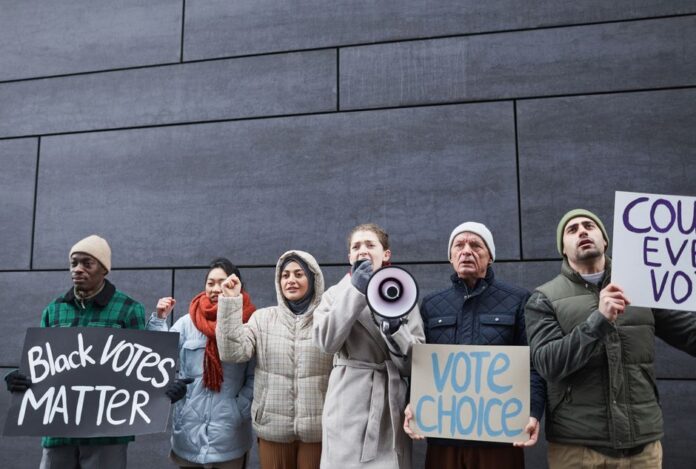
Photo: Edmond Dantès / Pexels
By Political Watch Newsroom, Politics Desk — Published October 22, 2026
Table of Contents
- Key Takeaways
- The Background & Context
- Why This Matters
- Reactions & Analysis
- What Happens Next
- Frequently Asked Questions
As the nation pivots toward the 2026 midterm elections, three issues defining the political landscape have already begun to crystallize. The Supreme Court‘s recent rulings, immigration enforcement policies, and state-level ballot initiatives are reshaping how candidates campaign and how voters will cast their ballots. These forces are converging to create an electoral environment unlike any in recent memory.
With control of Congress hanging in the balance, both parties are recalibrating their messaging around judicial decisions that have upended precedent, deportation policies that dominate daily headlines, and local questions that reflect deeper national anxieties. The three issues defining this cycle cut across traditional partisan lines in unexpected ways, forcing campaigns to navigate terrain that shifts almost weekly.
For American voters, understanding these dynamics matters now. The legislation passed in the next Congress will shape everything from healthcare access to tax policy, from immigration enforcement to judicial appointments. What happens in November 2026 will echo for years.
Key Takeaways
- Supreme Court rulings have fundamentally altered the midterm election battlefield, creating new political fault lines for congressional campaigns to address.
- Immigration policy, particularly mass deportation initiatives, has emerged as a central campaign issue that candidates cannot avoid as they seek voter support.
- State-level ballot questions, including Maryland’s Question 3 and similar measures nationwide, are driving turnout and shaping the electoral conversation beyond federal races.
- The intersection of judicial decisions, executive action on immigration, and local governance questions is forcing both parties to craft more complex, nuanced campaign strategies.
- Early positioning on these three defining issues will likely determine which party controls the House and Senate after 2026.
The Background & Context
Midterm elections traditionally function as a referendum on the sitting president’s first two years in office. But the 2026 cycle is shaping up differently. The Supreme Court has handed down decisions that reverberate through the political system, creating new urgency around issues that might otherwise have remained in the background.
According to reports, these judicial rulings have reshaped the battlefield itself. When the nation’s highest court issues landmark decisions, it doesn’t simply settle legal questions. It redraws the map of what’s politically possible and what’s at stake in the next election.
Immigration has long been a flashpoint in American politics, but the current focus on mass deportation represents something qualitatively different. As noted by observers tracking the campaign landscape, the deportation agenda is not merely a policy debate. It’s becoming a defining question that shapes how voters perceive governance, law enforcement, and community safety.
State ballot initiatives add another layer of complexity. Maryland’s Question 3, for example, represents the kind of direct democracy measure that can drive turnout independent of federal races. When voters head to the polls to decide local questions, they simultaneously make choices about congressional representation. These ballot measures often reflect national tensions playing out at the community level.
The confluence of these three forces creates what political analysts call a “multi-dimensional” electoral environment. Candidates can’t simply run on economic performance or party loyalty. They must address judicial outcomes they didn’t control, immigration policies that generate passionate responses, and local questions that reveal deeper values conflicts.
Why This Matters
For ordinary Americans, the 2026 midterms carry consequences that extend far beyond partisan scorekeeping. The composition of Congress determines which bills become law, which nominees receive confirmation, and which investigations move forward.
Supreme Court decisions don’t implement themselves. Congress writes the legislation that responds to judicial rulings, appropriates the funds that enforce or undermine them, and confirms the judges who will interpret them in future cases. When the Court reshapes the political battlefield, it’s Congress that must navigate the new terrain.
Immigration policy affects communities across the country, not just border states. Mass deportation initiatives touch employers who rely on immigrant labor, schools that educate immigrant children, churches that serve immigrant congregations, and neighborhoods where immigrants live alongside native-born citizens. The ripple effects reach into local economies, law enforcement priorities, and social cohesion.
State ballot questions like Maryland’s Question 3 matter because they represent direct citizen participation in governance. Unlike congressional races where voters choose representatives, ballot initiatives let voters directly decide policy. The issues that appear on state ballots often signal emerging national concerns before they fully crystallize in federal politics.
Taxpayers have a stake in all three defining issues. Court decisions affect how tax dollars are spent on enforcement, social programs, and government operations. Immigration policy shapes labor markets, which in turn affect wages, prices, and economic growth. State ballot measures often involve spending commitments or tax changes that hit wallets directly.
The accountability function of midterm elections becomes especially important when multiple complex issues intersect. Voters must evaluate not just whether they approve of the president, but how their representatives have responded to judicial decisions, immigration challenges, and state-level governance questions. This requires a more sophisticated civic engagement than simple approval ratings can capture.
Reactions & Analysis
Political campaigns are already adjusting their strategies to address the three defining issues. Democratic candidates in competitive districts are calibrating their messages around Supreme Court rulings, seeking to energize base voters who oppose recent decisions while not alienating moderates. Republican candidates face their own balancing act, supporting immigration enforcement while addressing constituent concerns about economic disruption and community impacts.
As journalists covering the campaign trail have noted, the deportation agenda generates particularly intense reactions. Town halls and candidate forums increasingly feature questions about how mass deportation would work in practice, who would be affected, and what safeguards would protect against errors. Candidates who dismiss these concerns risk appearing out of touch; those who engage too deeply risk getting mired in controversial specifics.
State-level officials are finding that ballot questions drive media coverage and voter attention in ways that sometimes overshadow federal races. In Maryland, the explanation of Question 3 and similar measures requires voter education efforts that competing congressional campaigns must work around or incorporate into their own messaging.
Legal experts and political scientists are watching how the Supreme Court’s role in reshaping the electoral battlefield plays out in practice. When judicial decisions create new political realities, the electoral response can take time to develop. Voters need to understand what changed, why it matters, and what their representatives can or should do about it.
Advocacy groups on both sides of the political spectrum are mobilizing around all three defining issues. Organizations focused on judicial nominations, immigration reform, and state governance are pouring resources into voter education, candidate recruitment, and turnout operations. The midterm elections are becoming a testing ground for competing visions of American governance.
What Happens Next
The next eighteen months will see these three issues evolve and intersect in unpredictable ways. Additional Supreme Court decisions could further reshape the battlefield. Immigration enforcement actions could generate new controversies or fade from headlines depending on implementation and public reaction. More states will finalize their ballot questions, potentially creating new focal points for voter engagement.
Congressional candidates will refine their positions as polling data reveals which messages resonate with persuadable voters. Early missteps will be corrected; successful framing will be copied. The national party committees will invest heavily in races where these three issues create opportunities or vulnerabilities.
Voter registration and turnout efforts will intensify as election day approaches. The side that more effectively mobilizes supporters around Supreme Court decisions, immigration policy, and state ballot measures will gain a significant advantage. Midterm elections typically see lower turnout than presidential years, making mobilization especially crucial.
The media landscape will continue to shape how voters understand these complex issues. Simplified narratives may dominate despite the nuanced realities. Misinformation and deliberate distortion will compete with factual reporting. Voters will need to navigate competing claims about what court decisions actually mean, what immigration policies actually do, and what ballot questions actually change.
Ultimately, the 2026 midterms will render a verdict on how Americans want their government to respond to judicial decisions, immigration challenges, and state-level governance questions. That verdict will determine the legislative agenda for the final two years of the current presidential term and set the stage for the 2028 presidential election.
Frequently Asked Questions
How do Supreme Court rulings affect midterm elections?
Supreme Court decisions reshape the political landscape by changing what’s legally permissible and what’s at stake in elections. When the Court issues major rulings, it creates new issues that candidates must address and voters must consider. These decisions can energize voters who strongly support or oppose them, driving turnout and shaping campaign messaging. Congressional candidates must explain how they would respond legislatively to judicial decisions, making the Court’s work directly relevant to legislative races.
What is the mass deportation agenda and why does it matter for 2026?
The mass deportation agenda refers to immigration enforcement policies focused on removing large numbers of undocumented immigrants from the United States. This matters for the 2026 midterms because it affects millions of people, touches communities nationwide, and generates strong reactions across the political spectrum. Candidates must explain their positions on enforcement priorities, due process protections, economic impacts, and community effects. How voters respond to deportation policies could determine control of Congress.
What are state ballot questions and how do they influence federal races?
State ballot questions are direct democracy measures that let voters decide specific policy issues rather than electing representatives to decide for them. These questions influence federal races by driving turnout among voters passionate about particular issues, shaping the overall political environment, and sometimes creating advantages for candidates whose positions align with popular ballot measures. Maryland’s Question 3 exemplifies how state-level questions can become focal points for voter engagement that affects all races on the ballot.
Why are these three issues considered the most defining for 2026?
These three issues are considered defining because they represent distinct forces reshaping the electoral landscape: judicial decisions that candidates didn’t control but must respond to, executive immigration policies that generate intense public reaction, and state-level democratic participation that drives turnout and shapes the political environment. Together, they create a complex, multi-dimensional campaign environment that goes beyond traditional midterm dynamics. Candidates who successfully navigate all three will likely prevail; those who mishandle any of them risk defeat.
As campaigns accelerate and voters begin paying closer attention, these three defining issues will continue to evolve. The 2026 midterms will test whether American democracy can handle complex, intersecting challenges while maintaining the accountability and representation that elections are meant to provide. The answers voters give will shape the nation’s direction for years to come.



