Photo: Mark Stebnicki / Pexels
By Political Watch Newsroom, National Desk — Published August 28, 2026
Table of Contents
- Key Takeaways on Trump asks Supreme Court ruling
- The Background & Context
- Why This Matters
- Reactions & Analysis
- What Happens Next
- Frequently Asked Questions
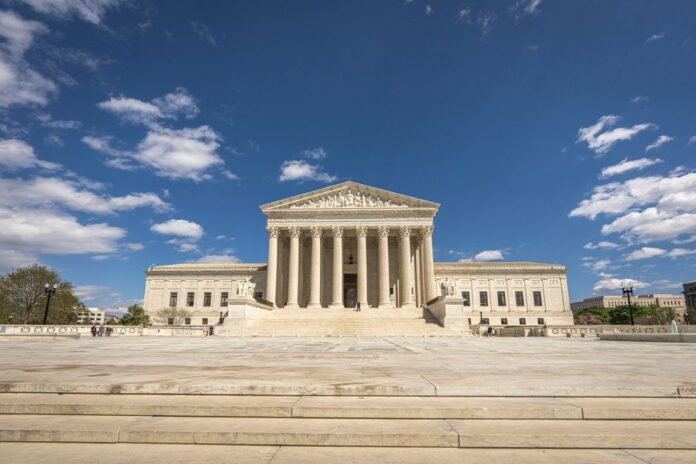
The Trump administration has turned to the nation’s highest court in an urgent bid to keep construction moving on a controversial $400 million White House ballroom project. Trump asks Supreme Court intervention comes as lower courts have raised questions about the scope and legality of the massive construction effort on federal property. The request places Chief Justice John Roberts and his colleagues at the center of a dispute that blends questions of executive authority, federal spending, and the appropriate use of government resources.
The Supreme Court has temporarily allowed work to proceed while the legal challenge makes its way through the appeals process. This interim decision prevents what the administration argued would be costly delays and disruptions to a project already underway on White House grounds.
The ballroom construction represents one of the most ambitious physical expansions of the White House complex in modern history. Its price tag and purpose have drawn scrutiny from watchdog groups and members of Congress who question whether such expenditures align with taxpayer interests during a time of fiscal pressure.
Key Takeaways on Trump asks Supreme Court ruling
- The Trump administration filed an emergency request with the Supreme Court to allow continued construction of a White House ballroom project estimated at $400 million.
- Chief Justice John Roberts granted temporary permission for construction to proceed while the underlying legal appeal is considered.
- The case involves questions about executive authority to undertake major construction projects on federal property without explicit congressional approval.
- Lower courts had raised concerns about the project, prompting the administration to seek intervention from the nation’s highest court.
- The Supreme Court’s decision to allow work to continue is procedural and does not represent a final ruling on the merits of the legal challenge.
- The project has become a flashpoint in broader debates about government spending, transparency, and the limits of presidential power.
The Background & Context
The White House has undergone numerous renovations and expansions throughout its more than two-century history. From the Truman reconstruction to the addition of the West Wing and various security enhancements, each administration has left its mark on the iconic building. Yet few projects have approached the scale or cost of the proposed ballroom construction now at the center of this legal dispute.
According to multiple reports, the project carries a $400 million price tag. That figure places it among the most expensive single construction efforts ever proposed for the executive mansion. The ballroom would provide space for large-scale diplomatic receptions, state dinners, and official ceremonies that currently strain the capacity of existing White House facilities.
Supporters of the project argue that the White House has long needed expanded entertainment and ceremonial space. The State Dining Room, the largest current venue for formal dinners, can accommodate only about 140 guests. By contrast, comparable facilities in other world capitals offer far more capacity for hosting foreign dignitaries and conducting the business of international diplomacy.
Critics counter that such an expenditure represents poor stewardship of taxpayer dollars. They question whether the project received proper oversight and whether alternative, less costly solutions were adequately explored. Some have raised concerns about the procurement process and whether the construction contracts were awarded with appropriate transparency and competitive bidding.
The legal challenge that prompted the Supreme Court filing appears to center on whether the executive branch possesses the authority to undertake such a significant construction project without explicit congressional authorization. Federal law generally requires congressional approval for major capital projects, though the boundaries of that requirement remain subject to interpretation, particularly when it comes to White House operations and security.
Why This Matters
This case matters because it tests fundamental questions about how taxpayer money gets spent and who gets to decide. Every dollar allocated to White House construction is a dollar that could fund other priorities. For citizens watching their own budgets tighten, a $400 million ballroom raises obvious questions about proportionality and necessity.
The dispute also illuminates the balance of power between the executive and legislative branches. If a president can unilaterally authorize massive construction projects on federal property, what limits exist on executive spending authority? Congress holds the constitutional power of the purse, but the practical boundaries of that power in relation to White House operations have never been perfectly defined.
For federal workers and contractors, the case has immediate practical implications. Construction crews need to know whether they can continue work or must halt operations pending legal resolution. Stopping and restarting large construction projects typically generates significant additional costs, which ultimately fall on taxpayers.
The Supreme Court’s willingness to allow construction to continue, even temporarily, signals the justices’ recognition that halting the project could impose its own harms. Once construction begins, stopping it mid-stream often proves more expensive than seeing it through to completion. The Court appears to be weighing these practical considerations alongside the legal questions at stake.
More broadly, the case reflects ongoing tensions about government transparency and accountability. Major decisions about federal facilities and spending increasingly occur with limited public input or congressional oversight. This pattern concerns advocates for open government, regardless of which party controls the White House.
Reactions & Analysis
The Supreme Court’s decision to allow construction to continue has drawn mixed reactions across the political spectrum. The administration likely views the interim ruling as a victory, preventing what it characterized as unnecessary and costly delays to an important project. Allowing work to proceed maintains momentum and avoids the expense of demobilizing and later remobilizing construction teams.
Congressional critics have expressed frustration that the Court permitted construction to move forward before fully resolving the underlying legal questions. They argue that once a $400 million building is substantially completed, the practical and political barriers to undoing it become nearly insurmountable, regardless of what the courts ultimately decide about its legality.
Legal experts note that the Chief Justice’s decision to allow construction represents a procedural ruling on the specific question of whether to halt work during the appeal, not a judgment on the merits of the case itself. The Supreme Court frequently issues such interim orders to maintain the status quo while it considers more complex underlying issues.
Government watchdog organizations have called for greater transparency about the project’s scope, financing, and justification. They argue that major expenditures of public funds deserve robust public debate and congressional scrutiny, particularly when they involve construction that will permanently alter iconic federal property.
The case has also attracted attention from scholars of executive power and administrative law. They see it as part of a broader pattern of presidents testing the boundaries of their unilateral authority. How the courts ultimately resolve this dispute could establish precedents that extend well beyond a single construction project.
What Happens Next
Construction will continue for now, but the legal battle is far from over. The underlying appeal must still work its way through the courts. That process could take months or even years, depending on how various parties pursue their legal options and whether the Supreme Court ultimately agrees to hear the case on its merits.
If the courts eventually rule against the administration, the government could face difficult questions about what to do with a partially or fully completed $400 million ballroom. Demolishing it would waste the money already spent. Keeping it would reward what courts might determine was an illegal expenditure. These practical dilemmas often influence how courts approach cases involving ongoing construction projects.
Congress retains the power to weigh in through legislation. Lawmakers could pass bills explicitly authorizing or prohibiting the project, though such legislation would likely face a presidential veto. They could also use appropriations riders to restrict funding for the construction, though that approach raises its own legal and practical complications.
The case may also influence how future administrations approach major White House construction and renovation projects. If the courts establish clear guidelines about what requires congressional approval, that could provide useful clarity. Alternatively, if the ruling is narrow and fact-specific, ambiguity may persist.
Public attention to the case will likely ebb and flow as it moves through the legal system. Major developments, such as appellate court rulings or Supreme Court decisions to grant or deny review, will generate renewed scrutiny. In the meantime, construction equipment will continue operating on White House grounds, building what may become either a lasting addition to the nation’s most famous residence or a cautionary tale about executive overreach.
Frequently Asked Questions
What is the White House ballroom construction project?
The project involves building a new ballroom facility at the White House complex with an estimated cost of $400 million. The ballroom would provide expanded space for diplomatic receptions, state dinners, and official ceremonies. The project’s scale and cost have made it one of the most ambitious construction efforts in the White House’s modern history, though specific architectural details and square footage have not been widely publicized.
Why did Trump ask the Supreme Court to intervene?
The Trump administration sought Supreme Court intervention after lower courts raised questions about the project’s legality and authority. Facing the possibility that courts might halt construction, the administration filed an emergency request asking the Supreme Court to allow work to continue during the appeals process. The administration argued that stopping construction mid-stream would cause costly delays and disruptions to a project already underway.
What did the Supreme Court decide?
Chief Justice John Roberts granted the administration’s request to allow construction to continue temporarily while the legal appeal proceeds through the courts. This represents a procedural decision about whether to maintain the status quo during litigation, not a final ruling on whether the project itself is legal or appropriate. The underlying legal questions about executive authority and congressional approval remain unresolved and subject to further court proceedings.
How much will the ballroom cost taxpayers?
Reports indicate the ballroom project carries a $400 million price tag, making it one of the most expensive construction efforts ever undertaken at the White House. This figure represents a significant expenditure of federal funds and has prompted questions about cost justification, alternative options, and whether such spending represents appropriate use of taxpayer dollars. The exact breakdown of costs and funding sources has not been fully disclosed publicly.
As construction equipment continues its work behind the White House gates, this legal battle serves as a reminder that even the most powerful office in the land operates within a system of laws and institutional constraints. Whether those constraints prove meaningful in this case remains to be seen. For now, the concrete gets poured and the framework rises while judges deliberate and citizens watch.