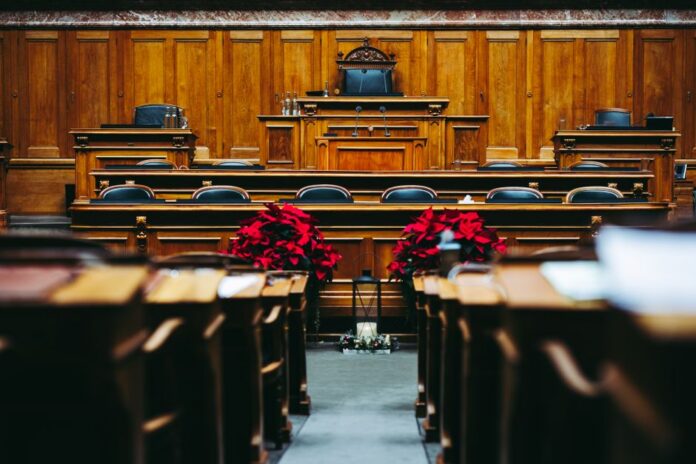
Photo: Christian Wasserfallen / Pexels
By Political Watch Newsroom, Politics Desk — Published October 17, 2026
Table of Contents
- Key Takeaways
- The Background & Context
- Why This Matters
- Reactions & Analysis
- What Happens Next
- Frequently Asked Questions
An appeals court is challenging a fundamental assertion by the Justice Department about presidential records, raising questions that strike at the heart of governmental transparency and accountability. The legal dispute centers on whether former President Donald Trump has ownership rights over documents created during his time in the White House—a claim that, if upheld, could reshape how Americans access the historical record of their government.
The appeals court questions come at a moment when the boundaries between public and private presidential materials remain hotly contested. At stake is not merely a technical legal question but a broader principle: Do the papers, emails, and records generated by a sitting president belong to that individual, or do they belong to the American people?
This controversy unfolds against a backdrop of intensifying debates over executive power, government transparency, and the preservation of historical records. As the judiciary weighs in on these competing claims, the outcome could have lasting implications for how future administrations handle—and potentially control—the documentary evidence of their actions in office.
Key Takeaways
- An appeals court is scrutinizing the Justice Department’s position that former President Trump may have ownership rights over White House records from his administration.
- The legal question centers on whether presidential papers belong to the individual who served as president or to the American public.
- The dispute raises fundamental issues about government transparency, accountability, and citizens’ access to historical records.
- The court’s eventual ruling could establish important precedents for how presidential records are classified, stored, and made available to the public.
- This legal battle intersects with broader political tensions over executive power and the preservation of governmental documentation.
- The outcome may influence future legislation and campaign promises regarding government transparency and records management.
The Background & Context
Presidential records have long occupied a complex legal space in American governance. For much of the nation’s history, presidents treated their papers as personal property. They took documents with them when they left office, donated them to libraries, or even destroyed them at will.
That changed in the wake of Watergate. Congress passed the Presidential Records Act in 1978, establishing that documents created or received by the president and his staff in the course of official duties are public property. The law was designed to ensure that the historical record of each presidency would be preserved and eventually made available to researchers, journalists, and citizens.
Under this framework, presidential records are supposed to be transferred to the National Archives at the end of an administration. After a period of restricted access—during which former presidents can assert certain privileges—the materials gradually become available to the public. The system represents a careful balance between protecting sensitive information and ensuring democratic accountability.
Yet the practical application of these principles has proven contentious. Questions persist about what constitutes an “official” record versus personal material. Digital communications have blurred traditional boundaries. And disagreements over executive privilege continue to generate litigation that can stretch for years.
The current legal challenge brings these tensions into sharp focus. When the Justice Department advanced arguments suggesting that a former president might retain ownership of White House records, it appeared to contradict decades of established practice. The appeals court’s skepticism signals that judges may not be willing to accept such a dramatic reinterpretation without rigorous scrutiny.
Why This Matters
For ordinary Americans, the question of who owns presidential records might seem abstract. But the implications are concrete and consequential.
Government transparency depends on public access to official documents. Historians rely on presidential papers to understand how major decisions were made. Journalists use these records to hold power accountable. Citizens have a right to know how their elected officials conducted the people’s business.
If former presidents can claim ownership of White House records, they could potentially control what information becomes public and when. Documents that reveal controversial decisions, ethical lapses, or policy failures might never see the light of day. The historical record could be sanitized, with unflattering materials withheld indefinitely.
The financial stakes matter too. Taxpayers fund the creation and maintenance of presidential records. Federal employees produce these documents on government time, using government resources. The notion that such materials could then become the private property of one individual raises fundamental questions about the use of public funds and the nature of public service.
Congress has a direct interest in this dispute as well. Legislative oversight depends on access to executive branch documents. If former presidents can assert ownership rights over their records, it could hamper congressional investigations and weaken the system of checks and balances that underpins American democracy.
The timing also carries political weight. As the 2024 campaign season intensifies, questions about government transparency and accountability resonate with voters across the political spectrum. Candidates from both parties have made promises about restoring trust in government and ensuring that officials answer to the people. How the courts resolve this records dispute will test whether those commitments have real substance.
Reactions & Analysis
The appeals court’s questioning of the Justice Department’s position has drawn attention from legal scholars, archivists, and government watchdog organizations. Many express concern that allowing former presidents to claim ownership of White House records would represent a significant step backward for transparency.
Archivists and historians have long championed robust enforcement of the Presidential Records Act. They argue that the law reflects a crucial principle: in a democracy, the people have a right to know what their government does. Weakening that framework would make it harder to study presidential decision-making, understand policy evolution, and learn from past mistakes.
Government accountability advocates see the dispute as part of a broader pattern. In recent years, debates over executive privilege, classification authority, and records retention have multiplied. Each controversy tests the boundaries between legitimate privacy concerns and the public’s right to information. The cumulative effect, critics warn, could be a steady erosion of transparency norms.
Legal experts note that the appeals court’s skepticism may reflect concern about setting dangerous precedents. If one former president can successfully claim ownership of White House records, future presidents might follow suit. The result could be a patchwork system in which access to presidential papers depends on individual whims rather than consistent legal standards.
Political observers point out that this issue cuts across traditional partisan lines. While the immediate controversy involves a specific former president, the principles at stake affect all administrations. Democrats and Republicans alike have an interest in ensuring that presidential records remain public property, subject to established rules rather than personal discretion.
What Happens Next
The appeals court will now weigh the competing arguments and issue a ruling. That decision could come within months, though complex legal questions sometimes take longer to resolve. Whatever the court decides, further appeals are likely, potentially sending the case to the Supreme Court.
If the judiciary rejects the Justice Department’s position and reaffirms that presidential records belong to the public, it would strengthen existing transparency frameworks. The ruling would clarify that former presidents cannot assert ownership rights over documents created during their time in office, ensuring that the National Archives retains control over these materials.
Conversely, if courts accept arguments for presidential ownership of White House records, Congress might need to intervene. Legislators could amend the Presidential Records Act to close any loopholes and explicitly prohibit former presidents from claiming such rights. The political will for such legislation would depend on public pressure and the composition of Congress after upcoming elections.
The broader implications extend beyond any single case. How courts handle this dispute will influence future battles over executive power, government transparency, and democratic accountability. It will shape expectations about what citizens can know about their leaders and when they can know it.
Archivists and records managers are watching closely as well. The outcome will affect how they advise current and future administrations on document retention, classification decisions, and the transition process when presidents leave office. Clear legal standards make their jobs easier and help ensure consistent treatment of historical materials.
Frequently Asked Questions
What is the Presidential Records Act and why does it matter?
The Presidential Records Act, passed in 1978, established that documents created by the president and White House staff during official duties are public property, not personal belongings. The law requires these records to be transferred to the National Archives at the end of each administration and made available to the public after appropriate review periods. This framework ensures that Americans can eventually access the historical record of how their government operated, supporting transparency and accountability.
How is this different from previous disputes over presidential papers?
Before the Presidential Records Act, presidents routinely took their papers when leaving office and treated them as personal property. The current dispute is unusual because it involves a Justice Department argument that appears to challenge the fundamental premise of the 1978 law—that White House records belong to the public. Previous controversies typically focused on narrower questions about specific documents or the timing of public access, not on whether a former president can claim ownership of official records.
Could this affect what we learn about past administrations?
Yes, potentially. If courts allow former presidents to assert ownership rights over White House records, it could restrict public access to important historical materials. Documents revealing controversial decisions, policy debates, or ethical questions might be withheld longer or never released at all. This would make it harder for historians, journalists, and citizens to understand how major decisions were made and hold officials accountable for their actions in office.
What can citizens do about presidential records transparency?
Citizens can contact their elected representatives in Congress to express support for strong presidential records laws and robust enforcement. They can also support organizations that advocate for government transparency and file Freedom of Information Act requests to access available documents. Paying attention to how candidates address transparency issues during campaigns and holding elected officials accountable for their records practices also helps maintain public pressure for openness in government.
As this legal battle unfolds, it will test whether the principles of government transparency and public ownership of presidential records can withstand new challenges. The appeals court’s questions suggest that judges understand what’s at stake. How they ultimately rule will help determine whether Americans retain meaningful access to the documentary evidence of how their presidents governed—or whether that access becomes subject to individual discretion and control.