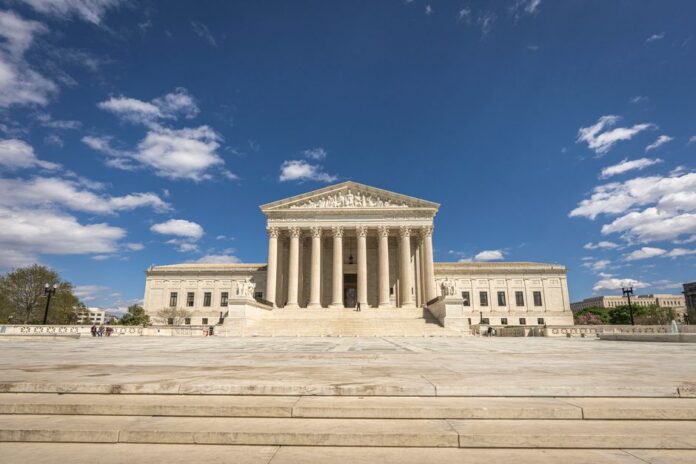
Photo: Mark Stebnicki / Pexels
By Political Watch Newsroom, National Desk — Published October 20, 2026
Table of Contents
- Key Takeaways
- The Background & Context
- Why This Matters
- Reactions & Analysis
- What Happens Next
- Frequently Asked Questions
The nation’s highest court is preparing to wade into a surprisingly spirited debate about Americans’ right to distill liquor in their own homes. The Supreme Court has been asked to rule on whether the federal government can constitutionally ban citizens from producing distilled spirits for personal consumption—a prohibition that has stood for nearly a century but now faces a constitutional challenge that could reshape the landscape of home alcohol production.
While Americans can legally brew beer and ferment wine in their basements and garages, distilling whiskey, vodka, or gin at home remains a federal crime punishable by fines and imprisonment. The case arrives at a moment when craft distilling has exploded in popularity and questions about federal overreach resonate across the political spectrum. What started as Prohibition-era policy now confronts twenty-first-century arguments about personal liberty, states’ rights, and the limits of congressional power.
The justices’ decision to consider this case signals potential scrutiny of regulations that touch millions of hobbyists and home enthusiasts. Whether the Supreme Court asked to hear arguments represents a genuine threat to longstanding alcohol policy or merely a technical review of federal authority remains to be seen, but the implications stretch far beyond bathtub gin.
Key Takeaways
- The Supreme Court has agreed to consider whether the federal ban on home distillation of spirits violates the Constitution
- Current federal law allows Americans to brew beer and make wine at home but criminalizes distilling liquor for personal use
- The prohibition dates back to the Prohibition era and has remained in place even after alcohol production became legal again
- The case raises fundamental questions about federal regulatory power and individual liberty in the context of home production
- A ruling could affect thousands of Americans interested in craft distilling and potentially reshape federal alcohol policy
- The decision may have broader implications for how courts interpret federal authority over personal consumption activities
The Background & Context
To understand why the Supreme Court is being asked to weigh in now, we need to look back nearly a century. When Prohibition ended in 1933, Congress didn’t simply flip a switch back to the pre-1920 status quo. Instead, lawmakers constructed a complex regulatory framework designed to control alcohol production, distribution, and sale. Home brewing of beer remained illegal until 1978, when President Jimmy Carter signed legislation permitting it. Home winemaking followed a similar path to legalization.
But distilled spirits never received the same treatment. The federal government maintained an absolute ban on home distillation, even for personal consumption. No amount. No exceptions. The rationale combined public safety concerns—distillation involves heat, flammable vapors, and potential for dangerous methanol contamination if done incorrectly—with tax enforcement interests. Spirits have long been a significant source of federal excise tax revenue, and regulators worried that permitting home distillation would create enforcement nightmares.
The legal architecture rests primarily on federal tax law. Title 26 of the U.S. Code makes it illegal to operate a distillery without registering with the federal government and paying applicable taxes. While commercial craft distillers can obtain permits, no such option exists for individuals who simply want to make small batches of whiskey or gin for themselves and their friends, just as home brewers make beer.
This asymmetry has long frustrated hobbyists and libertarian-minded critics. Why can someone legally ferment fifty gallons of wine annually but face federal prosecution for distilling a single bottle of brandy? The distinction between fermentation and distillation is chemical, not moral, they argue. Both processes produce alcohol; distillation simply concentrates it.
Why This Matters
For the average American, this case might seem like an obscure technical dispute about hobby alcohol production. Look closer, and the stakes become clearer. At its heart, this challenge tests how much control the federal government can exercise over what citizens do in the privacy of their own homes when those activities don’t directly harm others.
The craft beverage movement has transformed American drinking culture over the past two decades. Small-batch distilleries have proliferated across the country, from bourbon makers in Kentucky to gin distillers in the Pacific Northwest. Enthusiasts who brew their own beer or ferment their own mead naturally wonder why they can’t take the next step. The current ban feels increasingly anachronistic to a generation comfortable with DIY culture and artisanal production.
Beyond the hobbyist community, the case carries constitutional weight. If the federal government’s authority to ban home distillation rests on its taxing power, how far does that power extend? Could Congress prohibit other home production activities simply by imposing taxes that apply only to commercial operations? The precedent could reach into unexpected corners of American life.
There’s also a federalism dimension. States regulate alcohol extensively within their borders. Some states have their own prohibitions on home distillation; others might permit it if federal law didn’t preempt them. A Supreme Court ruling could shift the balance of power between Washington and state capitals on matters of local consumption and personal liberty.
Public safety arguments deserve serious consideration too. Distillation does pose genuine risks. Improperly built stills can explode. Methanol contamination can cause blindness or death. But advocates counter that education and reasonable safety standards could address these concerns without a total prohibition. After all, home brewing involves boiling large quantities of liquid, and home winemaking involves potentially dangerous fermentation, yet both are legal with minimal regulation.
Reactions & Analysis
The Supreme Court’s decision to take up this case has generated interest across an unusual coalition of constituencies. Libertarian organizations have long opposed the ban as government overreach. Craft beverage advocates see an opportunity to expand their hobby. Constitutional scholars view it as a test of federal enumerated powers and the scope of Congress’s taxing authority.
Federal authorities, meanwhile, face the challenge of defending a policy that even some enforcement officials privately acknowledge is difficult to justify in its current absolute form. The Treasury Department’s Alcohol and Tobacco Tax and Trade Bureau, which enforces these regulations, has historically pointed to safety concerns and tax compliance as twin pillars supporting the ban.
Legal experts note that the case could turn on several different constitutional theories. Challengers might argue the ban exceeds Congress’s enumerated powers, that it violates due process by prohibiting harmless private conduct, or that it runs afoul of other constitutional protections. The government will likely defend the regulation as a valid exercise of the taxing power and a reasonable public safety measure.
The current Supreme Court has shown willingness to scrutinize federal regulatory authority in recent terms. Whether that skepticism extends to Prohibition-era alcohol policy remains an open question. The justices must balance respect for congressional judgment against constitutional limits on federal power—a tension that runs through much of the Court’s recent jurisprudence.
What Happens Next
The Supreme Court will hear oral arguments in the coming months, with a decision likely before the end of the current term. Several outcomes are possible, each with distinct implications.
If the Court upholds the federal ban, the status quo continues. Home distillation remains illegal, and enthusiasts must content themselves with beer and wine. Such a ruling would reaffirm broad federal authority to regulate alcohol production and could make future challenges more difficult.
A ruling striking down the ban could take various forms. The Court might find the absolute prohibition unconstitutional while leaving room for reasonable regulation—quantity limits, safety standards, registration requirements. Alternatively, the justices could issue a narrower ruling that leaves most of the regulatory structure intact while carving out exceptions.
The broadest possible ruling would fundamentally question federal authority in this area, potentially forcing Congress to rethink its entire approach to regulating home alcohol production. Such a decision could ripple through other areas of federal regulation, particularly those touching on personal consumption and home-based activities.
Congress could also act before or after a Court ruling. Legislation permitting limited home distillation under appropriate safeguards might preempt constitutional concerns while addressing legitimate safety and tax interests. Some lawmakers have floated such proposals in the past, though none has gained significant traction.
State governments would need to respond as well. Even if federal law changes, states retain authority to regulate alcohol within their borders. The result could be a patchwork of different rules across the country, much like current marijuana policy.
Frequently Asked Questions
Is it currently legal to distill spirits at home anywhere in the United States?
No. Federal law prohibits distilling spirits at home for personal consumption throughout the United States, regardless of state law. While you can legally brew beer or make wine at home in limited quantities, distilling liquor without a federal permit remains a crime punishable by fines and potential imprisonment. Some people do operate illegal home stills, but they risk federal prosecution.
Why is home distillation banned when home brewing and winemaking are legal?
The distinction is largely historical. When Prohibition ended, the federal government maintained tight control over distilled spirits while eventually relaxing rules for beer and wine. Congress legalized home brewing in 1978 and permits home winemaking, but never extended the same treatment to distillation. Officials cite safety concerns about distillation equipment and processes, plus the difficulty of enforcing tax collection on spirits, as reasons for maintaining the ban.
What are the safety risks associated with home distillation?
Distillation involves heating flammable alcohol vapors, which can ignite or explode if equipment is faulty or improperly used. Additionally, the distillation process can concentrate methanol, a toxic alcohol that causes blindness and death if consumed. Commercial distillers use proper equipment and techniques to separate dangerous compounds from drinkable spirits. Amateur distillers without proper knowledge or equipment could accidentally produce dangerous products or cause fires and explosions.
How would a Supreme Court ruling affect existing commercial craft distillers?
A ruling permitting home distillation would likely have minimal direct impact on commercial craft distilleries, which operate under separate licensing and tax structures. However, it could expand the pool of enthusiasts interested in spirits production and potentially create a pipeline of hobbyists who eventually start commercial operations. The craft brewing industry, for example, benefited from the passionate community of home brewers who later went professional. Some commercial distillers might welcome the change, while others could worry about competition or safety incidents that tarnish the industry’s reputation.
As the Supreme Court prepares to hear this case, Americans interested in personal liberty, craft beverages, and the proper scope of federal power will be watching closely. The decision may not make headlines like abortion or gun rights cases, but it touches fundamental questions about what citizens can do in their own homes and how far government authority extends into private life. Whether you dream of distilling your own whiskey or simply care about constitutional limits on federal power, this case deserves your attention.