Appropriations Process: How Congress Controls Spending
By Newsroom, Congressional Affairs Desk — Published August 9, 2026
Table of Contents
- The Constitutional Foundation and the Power of the Purse
- How the Appropriations Process Congress Uses Actually Works
- When the Process Breaks Down: Continuing Resolutions and Omnibus Bills
- Earmarks, Transparency, and Reform Debates
- Frequently Asked Questions
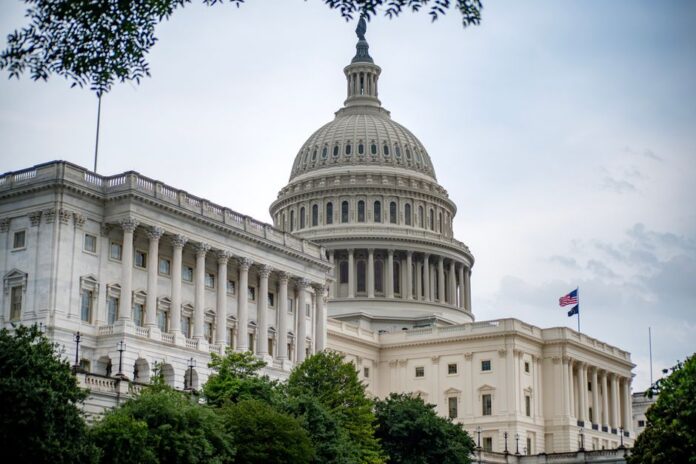
Every dollar the federal government spends—from aircraft carriers to park rangers’ salaries—exists because Congress said so. The appropriations process congress uses to control spending is one of the legislative branch’s most fundamental powers, enshrined in Article I of the Constitution. It’s also one of its messiest. Understanding how lawmakers and representatives translate budget wishes into actual money reveals much about how Capitol Hill legislation really works, and why government funding fights dominate so many congressional sessions.
At its simplest, appropriations is the process by which Congress provides legal authority for federal agencies to spend money. A program might be authorized by law, but without an appropriation, not a cent can be spent. This two-step dance—authorization, then appropriation—forces the bicameral legislature to revisit spending decisions annually, giving both chambers leverage over executive branch priorities.
The Constitutional Foundation and the Power of the Purse
The framers deliberately placed spending power in the hands of the legislative branch. They’d lived under a king who taxed and spent without consent, and they weren’t keen to repeat the experience. So they wrote into the Constitution that “No Money shall be drawn from the Treasury, but in Consequence of Appropriations made by Law.” That single sentence makes Congress the gatekeeper.
This power extends across the entire federal budget, which divides into mandatory and discretionary spending. Mandatory spending—Social Security, Medicare, most safety net programs—runs on autopilot under permanent law. Discretionary spending, roughly one-third of the budget, requires annual action. Defense, education, transportation, foreign aid, environmental protection: all need fresh appropriations each fiscal year, which begins October 1.
The House of Representatives holds a special role here. All appropriations bills must originate in the House, a constitutional requirement that mirrors the rule for tax bills. The Senate can amend, but the House moves first. This gives House leadership and the House Appropriations Committee significant agenda-setting power.
How the Appropriations Process Congress Uses Actually Works
The process unfolds in stages, ideally following a predictable calendar. Reality often diverges, but the formal structure matters because it shapes what’s possible.
It begins with the president’s budget request, typically delivered in early February. This document, hundreds of pages thick, proposes spending levels for every federal agency. It’s a wish list, not a command. Congress can ignore it entirely, though in practice it serves as a starting point for negotiations.
Next comes the budget resolution, a framework developed by the Budget Committees in both chambers. This resolution sets overall spending targets and divides the pie among congressional committees. The resolution doesn’t become law—the president never signs it—but it establishes guardrails for the appropriators who follow.
Then the real work begins. The House and Senate Appropriations Committees each divide into twelve subcommittees, one for each major spending category:
- Agriculture, Rural Development, and FDA
- Commerce, Justice, and Science
- Defense
- Energy and Water Development
- Financial Services and General Government
- Homeland Security
- Interior and Environment
- Labor, Health and Human Services, and Education
- Legislative Branch
- Military Construction and Veterans Affairs
- State and Foreign Operations
- Transportation and Housing and Urban Development
Each subcommittee holds hearings, questions agency officials, and drafts its bill. These committee hearings and investigations offer lawmakers a chance to probe how money was spent previously and what agencies plan to do with new funds. The bills that emerge include not just dollar figures but policy riders—provisions that prohibit certain activities or mandate specific actions.
Once a subcommittee approves its bill, the full Appropriations Committee takes it up. If the committee approves, the bill heads to the floor of the House or Senate. House and Senate floor debates on appropriations can be lengthy, with members offering amendments to shift funding, add restrictions, or make political points. The House typically moves faster, operating under rules that limit debate. The Senate allows more open amendment processes, and the threat of a filibuster can slow or stop bills, requiring sixty votes to proceed on controversial measures.
After both chambers pass their versions, differences must be reconciled. Sometimes this happens through a formal conference committee where lawmakers from both bodies negotiate. More often in recent years, leaders hash out deals behind closed doors and present a final package for up-or-down votes.
When the Process Breaks Down: Continuing Resolutions and Omnibus Bills
Congress rarely completes all twelve appropriations bills by October 1. Partisan disagreements, leadership transitions, election-year politics, and sheer workload conspire to create delays. When that happens, lawmakers turn to workarounds.
The continuing resolution, or CR, is the most common. A CR keeps the government funded at roughly the previous year’s levels for a set period—a few weeks, a few months, sometimes longer. It’s a placeholder that prevents shutdowns but frustrates agencies trying to start new programs or adjust to changed circumstances. CRs can include anomalies, specific adjustments to the baseline, but they’re fundamentally about treading water.
When time runs out and compromise is finally reached, Congress often bundles multiple appropriations bills into a single massive package called an omnibus. These bills can run thousands of pages, passed with little time for members to read them. Critics call this irresponsible legislating. Defenders note it’s sometimes the only way bipartisan negotiations and compromises can succeed, by allowing each side to claim wins buried in the fine print.
Shutdown threats loom when even stopgap measures fail. Without new appropriations or a CR, agencies must cease non-essential operations. Some functions continue—air traffic control, Social Security checks, military operations—but hundreds of thousands of federal workers face furloughs. These standoffs are political brinkmanship, each side gambling that the public will blame the other.
The Role of Congressional Oversight and Accountability
Appropriations isn’t just about allocating money. It’s a tool for congressional oversight and accountability. By attaching conditions, demanding reports, or zeroing out specific line items, Congress can steer executive branch behavior without passing new laws.
A subcommittee might fund a program but require quarterly updates on its progress. Or it might prohibit an agency from using funds to enforce a regulation lawmakers dislike. These provisions test the boundaries between legislative branch powers and executive authority, sometimes ending up in court.
The process also reflects congressional district representation. Lawmakers fight for projects and funding that benefit their constituents—a new veterans clinic, highway improvements, research grants for local universities. Critics call this pork-barrel spending. Supporters call it responsive representation. The truth is both. Members serve national interests, but they’re elected by specific communities and judged on what they deliver.
Earmarks, Transparency, and Reform Debates
For decades, appropriations bills included earmarks: funding for specific projects requested by individual members. Earmarks greased legislative wheels, giving leadership tools to secure votes. They also fed corruption scandals and public cynicism.
Congress banned earmarks in 2011. The ban reduced some abuses but also eliminated a mechanism for bipartisan deal-making. In recent years, earmarks have returned in modified form, rebranded as community project funding, with new transparency requirements. Members must publicly disclose requests and certify they have no financial interest.
Broader reforms are periodically debated. Should Congress move to biennial budgeting, reducing the annual scramble? Should appropriations and authorizations be better synchronized? Should the president have line-item veto power? Each proposal involves trade-offs between efficiency and legislative prerogative, speed and deliberation.
Frequently Asked Questions
What happens if Congress doesn’t pass appropriations bills on time?
The government faces a potential shutdown unless Congress passes a continuing resolution to temporarily extend funding at prior levels. If no funding mechanism is in place when the fiscal year begins on October 1, federal agencies must cease non-essential operations. Essential services continue, but many employees are furloughed without pay until funding resumes. Congress typically resolves these impasses within days or weeks, though shutdowns have occasionally lasted longer, disrupting services and creating economic uncertainty.
How is the appropriations process different from the budget process?
The budget process sets overall spending targets and priorities through a budget resolution, which is a framework that doesn’t become law. The appropriations process follows, translating those targets into actual funding bills that do become law and allow agencies to spend money. Think of the budget resolution as a blueprint and appropriations bills as the construction contracts. Congress can skip the budget resolution—and sometimes does—but appropriations bills are essential for government operations.
Can the president refuse to spend money Congress appropriated?
Not without consequences. Impoundment—refusing to spend appropriated funds—was restricted by the Congressional Budget and Impoundment Control Act of 1974 after President Nixon withheld funds for programs he opposed. Now the president can propose deferrals or rescissions, but Congress must agree. Spending appropriated money without authorization is illegal, and withholding it unilaterally violates the separation of powers. This tension occasionally surfaces when administrations and Congress clash over priorities.
Why are there twelve separate appropriations bills instead of one big spending bill?
Breaking appropriations into twelve bills allows congressional committees to specialize and conduct detailed oversight of specific policy areas. Each subcommittee develops expertise in its domain—defense, agriculture, health—enabling more informed decisions than a single committee could manage. The division also spreads workload and allows bills to move on different timelines. In practice, Congress often ends up combining several bills into larger packages anyway, but the subcommittee structure shapes how negotiations unfold and which lawmakers hold influence over particular spending decisions.
The appropriations process is messy, frustrating, and indispensable. It’s where constitutional principles meet political reality, where national priorities collide with local needs, and where the legislative branch exercises its most tangible check on executive power. For all its dysfunction, the annual fight over spending forces elected officials to make choices and defend them. That’s not a bug. That’s democracy doing its work, one budget line at a time.