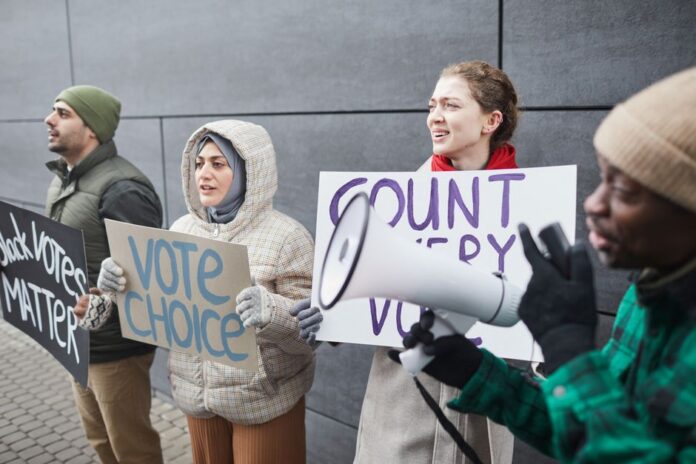
Photo: Edmond Dantès / Pexels
By Political Watch Newsroom, Politics Desk — Published September 5, 2026
Table of Contents
- Key Takeaways
- The Background & Context
- Why This Matters
- Reactions & Analysis
- What Happens Next
- Frequently Asked Questions
The right to vote stands as the cornerstone of American democracy. Yet this fundamental freedom remains under constant pressure from shifting legislation, legal battles, and competing visions of election administration. For millions of citizens, the question of who can vote, when, and under what conditions directly shapes their ability to participate in choosing their representatives and determining the direction of their communities.
Understanding why voting rights matters today requires looking beyond partisan talking points. At stake is the practical machinery of democracy itself: voter registration systems, polling place access, identification requirements, early voting windows, and the rules governing ballot counting. These seemingly technical details determine whether casting a ballot is straightforward or fraught with obstacles.
The debate over voting rights has intensified in recent election cycles. State legislatures across the country have passed hundreds of bills affecting how Americans vote, while Congress has grappled with competing federal proposals. Courts at every level continue to interpret constitutional protections and statutory requirements, creating a patchwork of rules that varies dramatically by jurisdiction.
Key Takeaways
- Voting rights legislation affects every aspect of elections, from registration deadlines to ballot access and counting procedures that determine how citizens exercise their constitutional franchise.
- State-level changes to election laws have created significant variation in voting procedures across the country, impacting millions of voters differently depending on where they live.
- Federal oversight of state election practices remains contested, with ongoing debates about the proper balance between national standards and state authority over election administration.
- Court decisions continue to reshape the voting rights landscape, interpreting decades-old civil rights protections in light of contemporary political and demographic realities.
- Both major political parties frame voting access questions through competing narratives about election security versus voter suppression, making compromise difficult.
- The practical impact on citizens includes changes to voter ID requirements, mail-in ballot rules, early voting periods, polling place locations, and registration processes.
The Background & Context
The struggle over voting rights is as old as the republic itself. The Constitution originally left voting qualifications largely to states, resulting in restrictions based on property ownership, race, and gender that excluded most Americans. Only through constitutional amendments, federal legislation, and sustained activism did the franchise gradually expand.
The Fifteenth Amendment prohibited racial discrimination in voting after the Civil War, though it took another century of struggle before the Voting Rights Act of 1965 made that promise real. The Nineteenth Amendment extended the vote to women in 1920. The Twenty-Sixth Amendment lowered the voting age to eighteen in 1971. Each expansion came after prolonged political battles.
For decades, the Voting Rights Act served as the primary federal tool for preventing discriminatory voting practices. Its preclearance provision required certain jurisdictions with histories of discrimination to obtain federal approval before changing election procedures. This mechanism blocked thousands of potentially discriminatory changes over the years.
The legal landscape shifted dramatically when the Supreme Court struck down the preclearance formula in 2013. The decision freed covered jurisdictions from federal oversight, arguing that the formula relied on outdated data. Within hours, some states began implementing voting changes that previously would have required federal review.
Since then, state legislatures have become the primary battleground. Some states have expanded access through automatic voter registration, extended early voting, and easier absentee ballot procedures. Others have tightened identification requirements, reduced early voting periods, and imposed new restrictions on mail-in voting and ballot collection.
Why This Matters
The practical consequences of voting rights policies ripple through American life. When registration becomes more difficult, fewer citizens participate. When polling places close or move, voters in affected neighborhoods face longer travel times and wait times. When ID requirements change, citizens without proper documentation must navigate bureaucratic processes to obtain acceptable credentials.
These changes do not affect all communities equally. Research consistently shows that voting restrictions disproportionately impact specific demographic groups: younger voters, racial minorities, low-income citizens, and people with disabilities. These populations often face greater challenges in meeting new requirements, whether obtaining specific forms of identification, taking time off work to vote in person, or navigating complex registration rules.
The stakes extend beyond individual elections. Voting rights policies shape the electorate itself, influencing which voices are heard in the democratic process. When certain communities face higher barriers to participation, their concerns may receive less attention from elected officials. This creates a feedback loop where those already marginalized find their interests further sidelined.
Election administration also carries significant costs. States and localities must fund voting equipment, train poll workers, maintain registration databases, and process ballots. Changes to voting procedures require retraining staff, educating voters, and updating systems. These expenses ultimately fall on taxpayers, making voting rights a fiscal issue as well as a civil rights concern.
Business communities increasingly recognize that voting access affects workforce participation and civic stability. When employees struggle to vote, companies face decisions about paid time off and workplace policies. Controversial voting laws can also affect corporate reputation and recruitment, particularly among younger workers who prioritize civic engagement.
Reactions & Analysis
The political parties have staked out sharply divergent positions. Republicans generally emphasize election security, arguing that stricter identification requirements and tighter controls on mail-in voting prevent fraud and maintain public confidence in election results. They point to polls showing broad public support for voter ID laws and express concern about the integrity of expanded mail voting.
Democrats typically frame the issue as voter suppression, arguing that restrictive laws solve a virtually nonexistent fraud problem while creating real barriers for legitimate voters. They advocate for expanded access through measures like automatic registration, universal mail voting, and extended early voting periods. Their rhetoric emphasizes protecting the franchise against discriminatory restrictions.
Civil rights organizations have challenged many state voting laws in court, arguing they violate constitutional protections or remaining provisions of the Voting Rights Act. These legal battles have produced mixed results, with some restrictions struck down and others upheld. The litigation continues, creating uncertainty about which rules will govern future elections.
Election administrators themselves often express frustration with the politicization of their work. County clerks and secretaries of state must implement whatever laws their legislatures pass, regardless of practical challenges. Many election officials emphasize that their goal is simply to run secure, accessible elections, but they find themselves caught between competing political demands.
Academic researchers have studied voting laws extensively, though their findings sometimes reach different conclusions depending on methodology and timeframe. Some studies find measurable decreases in turnout following restrictive changes, while others detect minimal effects. The debate over evidence itself has become politicized, with each side citing research supporting their preferred narrative.
What Happens Next
The voting rights landscape will continue evolving through multiple channels. State legislatures remain active, with new bills introduced each session addressing everything from voter ID to mail ballot procedures. The specific changes vary by state political control, creating an increasingly fragmented national picture.
Federal legislation remains possible but difficult. Congress has debated comprehensive voting rights bills that would establish national standards for registration, early voting, and ballot access. These proposals have generated intense debate about federalism and whether Washington should override state election laws. The legislative path forward remains unclear given narrow partisan margins and procedural hurdles.
Courts will continue adjudicating challenges to state laws under the Constitution and remaining Voting Rights Act provisions. These cases may eventually return to the Supreme Court, potentially producing new precedents that reshape voting rights jurisprudence. The composition of federal courts will significantly influence these outcomes.
Technology introduces new variables. Electronic registration systems, online ballot tracking, and voting equipment raise questions about security, accessibility, and cost. States must balance modernization benefits against cybersecurity risks and the need to maintain voter confidence. These technical decisions carry significant implications for voting access.
Demographic changes will also shape the debate. As the electorate becomes more diverse and younger generations with different voting preferences reach maturity, the politics of voting rights may shift. How states adapt their election systems to serve changing populations will determine whether participation expands or contracts.
Frequently Asked Questions
What are the main voting rights issues being debated today?
The primary debates center on voter identification requirements, mail-in ballot procedures, early voting periods, polling place locations and hours, voter registration processes including automatic registration, and the restoration of voting rights for citizens with criminal convictions. Additional controversies involve voter roll maintenance practices, ballot collection rules, and the role of federal versus state authority in setting election standards.
How do voting laws differ between states?
States have wide latitude in administering elections, creating substantial variation. Some states offer automatic voter registration, no-excuse absentee voting, and weeks of early voting, while others require specific identification, limit mail voting to certain circumstances, and provide minimal early voting. Registration deadlines, provisional ballot rules, and poll worker training also vary significantly. This means the ease of voting depends heavily on where a citizen lives.
Can the federal government override state voting laws?
The Constitution grants states authority over election administration, but federal law can impose requirements under constitutional amendments and congressional authority to regulate federal elections. The Voting Rights Act prohibited discriminatory practices, though its enforcement mechanism was weakened by court decisions. Congress can pass legislation affecting federal elections, but the extent of federal power over state election procedures remains contested and subject to judicial interpretation.
How does voter turnout relate to voting rights policies?
Research shows complex relationships between voting laws and turnout. Restrictive policies may reduce participation, particularly among groups facing higher compliance costs, though effects vary by specific policy and context. Conversely, expanded access provisions like early voting and mail ballots can increase turnout, especially when combined with outreach efforts. However, many factors beyond law affect turnout, including candidate appeal, campaign intensity, and the perceived importance of specific elections.
The future of voting rights will be written by citizens, legislators, judges, and election administrators working through these complex questions. What remains constant is that the rules governing ballot access fundamentally shape American democracy. How the nation balances security, access, and fairness will determine whether the promise of government by the people remains vibrant or gradually erodes.