
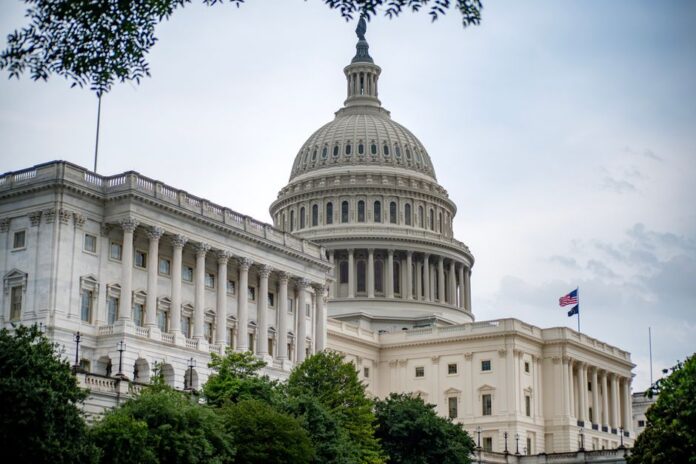
Bipartisan Negotiations: Why Compromise Is So Difficult
By Newsroom, Congressional Affairs Desk — Published August 10, 2026
Table of Contents
- The Electoral Math That Punishes Moderation
- How Congressional Committees Amplify Partisan Division
- The Mechanics of Legislative Gridlock
- When Compromise Does Happen
- Frequently Asked Questions
Bipartisan negotiations compromise the ideals of both parties, yet they remain essential for moving Capitol Hill legislation forward. In a bicameral legislature designed with checks and balances, passing laws requires building coalitions across party lines—at least in theory. But anyone who watches House of Representatives votes or Senate confirmation hearings knows the reality: finding common ground has become extraordinarily difficult. The question isn’t whether compromise matters. It’s why lawmakers and representatives struggle so profoundly to achieve it, even when their constituents demand results.
The friction runs deeper than personality clashes or campaign rhetoric. Structural forces, electoral incentives, and the mechanics of the legislative branch powers all conspire to make bipartisan deals rare and fragile. Understanding why compromise proves so elusive requires looking beyond the floor debates and into the institutional architecture of Congress itself.
The Electoral Math That Punishes Moderation
Representatives face a fundamental calculation: their political survival depends on winning their congressional district, not on earning praise from the opposing party. In most districts, the real threat comes from primary challengers, not general election opponents. This shifts the incentive structure dramatically.
A lawmaker who compromises risks being labeled a traitor by the party base. Primary voters tend to be more ideologically motivated than general election voters. They show up, they organize, and they remember perceived betrayals. A single bipartisan vote on a controversial bill can become fodder for attack ads funded by outside groups with deep pockets and long memories.
Congressional district representation has become increasingly polarized through both demographic sorting and redistricting. When districts are drawn to be safely Democratic or Republican, the general election becomes a formality. The primary becomes everything. And primaries reward purity, not pragmatism.
This creates a paradox: national polling often shows broad public support for compromise and problem-solving, yet individual lawmakers face punishment for delivering exactly that. The disconnect between what voters say they want nationally and how they vote locally makes bipartisan negotiations a high-wire act without a net.
How Congressional Committees Amplify Partisan Division
Congressional committees once served as workshops for bipartisan deal-making. Members developed expertise, built relationships across party lines, and hammered out compromises away from cameras and Twitter feeds. That model has eroded significantly.
Committee assignments now function as ideological sorting mechanisms. Party leadership places members on committees based partly on fundraising ability and loyalty, not just policy expertise. The result is committees stacked with true believers rather than pragmatic negotiators.
The rise of social media has also transformed committee behavior. What happens in committee hearings no longer stays in committee rooms. A fiery exchange becomes a viral clip within minutes. Members play to their base, knowing every question and answer might become a campaign ad—either for them or against them. This performative aspect crowds out the quiet work of finding common ground.
When committees do produce bipartisan bills, those bills often die on the floor. Leadership from either chamber may refuse to bring them up for a vote, fearing they’ll split the caucus or hand the other party a political victory. The Senate confirmation hearings process illustrates this dynamic: nominees who might once have sailed through with broad support now face near party-line votes, regardless of qualifications.
The Mechanics of Legislative Gridlock
The constitutional design of the bicameral legislature creates multiple veto points where legislation can stall. A bill must pass both chambers in identical form before reaching the president’s desk. This structure was intentional—the founders wanted to slow things down, to prevent hasty action. But combined with modern partisan polarization, it creates formidable obstacles.
Consider the typical path of legislation:
- A bill must clear the relevant committee in the House, which requires majority support among committee members
- House leadership must schedule it for a floor vote, a decision driven by political calculation as much as policy merit
- The full House must pass it, often along party lines if the bill touches controversial territory
- The Senate must pass an identical version, but Senate rules allow a single member to slow or block legislation through various procedural tactics
- Any differences between House and Senate versions must be reconciled, typically in a conference committee
- Both chambers must pass the final compromise version
- The president must sign it, or both chambers must override a veto
Each step offers opportunities for obstruction. Filibuster and procedural tactics in the Senate mean that most significant legislation requires sixty votes, not just a simple majority. Finding sixty votes in a polarized Senate means building a supermajority coalition—a tall order when the two parties increasingly see each other as existential threats rather than loyal opposition.
During each congressional session, thousands of bills are introduced. A tiny fraction become law. Many die quietly in committee. Others pass one chamber but never get a vote in the other. The system filters relentlessly for either broad consensus or single-party control of government.
The Role of Leadership and Party Discipline
Congressional leadership wields enormous power over which bills receive votes and which languish. The Speaker of the House and Senate Majority Leader function as gatekeepers, deciding the legislative agenda based on party priorities and political strategy.
This centralization of power has intensified. Rank-and-file members have less autonomy than in previous generations. Party leadership can punish members who stray by denying them coveted committee assignments, withholding campaign support, or primarying them with leadership-backed challengers.
The result is that even when bipartisan coalitions exist on specific issues, leadership may prevent those coalitions from forming around actual legislation. A bill that could pass with a majority drawn from both parties might never get a vote if leadership fears it would divide the caucus or complicate the broader political message.
When Compromise Does Happen
Despite these obstacles, bipartisan legislation does occasionally pass. Understanding when and why offers clues about what conditions enable compromise.
Crisis creates opportunity. When facing urgent deadlines or genuine emergencies, the political cost of inaction can exceed the cost of compromise. Government funding bills, disaster relief, and certain national security measures sometimes force bipartisan cooperation simply because failure would produce unacceptable consequences.
Narrow technical legislation also attracts less partisan fire. Bills addressing obscure regulatory issues or making minor adjustments to existing programs can pass with bipartisan support because they don’t become culture war flashpoints. These victories rarely make headlines, but they represent the routine maintenance work that keeps government functioning.
Occasionally, issues emerge where constituent pressure overwhelms partisan incentives. When voters across the political spectrum demand action on something—whether criminal justice reform, veterans’ benefits, or infrastructure—lawmakers from both parties may find cover to work together. The key is having political permission from back home.
Frequently Asked Questions
Why can’t Congress just focus on areas where both parties agree?
Even issues with broad public support can become partisan once they enter the legislative process. The details matter enormously—how to fund a program, which agency administers it, what regulations attach to it. These details often reflect deeper ideological disagreements about the role of government. Additionally, party leadership may actively avoid bipartisan wins that could benefit the other party politically, especially near elections.
Does divided government make compromise more or less likely?
The evidence is mixed. Divided government forces negotiation because neither party can act unilaterally. But it also creates incentives for obstruction—the party out of power may prefer legislative failure to giving the president a bipartisan victory. Some of the most significant bipartisan legislation has passed under divided government, but so have some of the worst periods of gridlock. Context and personalities matter as much as the party balance.
How do lobbyists and special interests affect bipartisan negotiations?
Interest groups can either facilitate or prevent compromise. Some industries and advocacy organizations work both sides of the aisle, building relationships with lawmakers from both parties and supporting bipartisan solutions that serve their interests. Others fund primary challenges against members who compromise, making bipartisanship politically dangerous. The influence depends largely on whether the interest group’s goals align with partisan division or cut across party lines.
Are there reforms that could make bipartisan compromise easier?
Various proposals aim to reduce partisan polarization: changing primary systems to include all voters rather than just party members, redistricting reform to create more competitive districts, campaign finance changes to reduce the influence of ideological donors, and procedural reforms to give rank-and-file members more power relative to leadership. Each approach has trade-offs, and implementation faces significant political obstacles since current lawmakers would need to vote for systems that might threaten their own positions.
The difficulty of bipartisan negotiations reflects both design and dysfunction. The constitutional system intentionally makes lawmaking hard, requiring broad agreement before government acts. But the current level of polarization goes beyond what the founders envisioned. Bridging that divide requires not just good intentions but changes to the electoral and institutional incentives that currently reward division. Until those incentives shift, compromise will remain the exception rather than the rule, and voters will continue to wonder why their representatives can’t simply work together.



